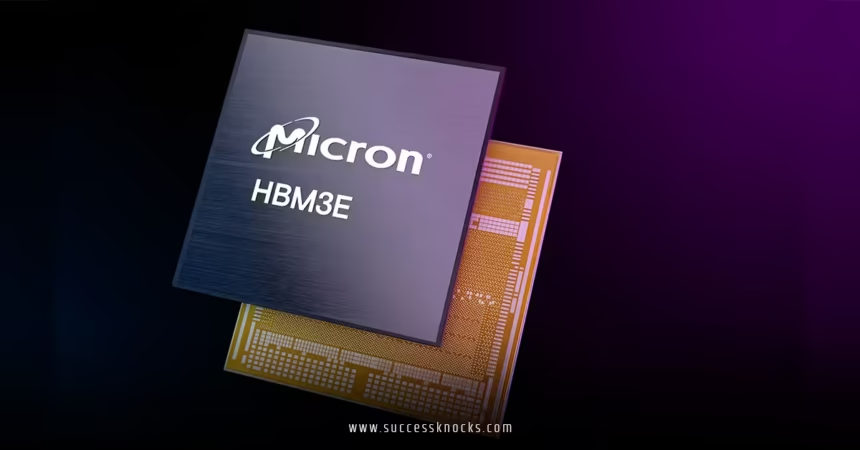
Micron HBM demand 2026 is skyrocketing, and if you’re paying attention to the AI boom, you already know why. High-bandwidth memory isn’t just another chip—it’s the fuel powering the next generation of AI accelerators, and Micron is positioning itself front and center for what’s shaping up to be an explosive year.
Why Micron HBM Demand 2026 Is Exploding
Think about it: AI models are getting bigger and hungrier for data every day. Training massive systems like those behind ChatGPT or advanced image generators requires lightning-fast memory to shuttle information between processors without bottlenecks. That’s where high-bandwidth memory (HBM) shines—stacked DRAM that delivers insane speeds and efficiency.
Micron HBM demand 2026 is being driven by this relentless AI expansion. The company has already finalized price and volume agreements for its entire 2026 HBM supply, with all output committed to customers. Isn’t it wild how quickly things move in tech? Just months ago, discussions were ongoing, and now it’s locked in, signaling unbreakable confidence in sustained growth.
The AI Tailwind Fueling Micron HBM Demand 2026
AI isn’t slowing down—it’s accelerating. Data centers are ramping up server deployments, and each new generation of GPUs from Nvidia or AMD demands more HBM. Micron’s HBM3E products are already in high-volume shipping, leading in power efficiency, while HBM4 is set to ramp in the second half of 2026.
Analogy time: HBM is like the high-octane gas in a race car. Standard memory might get you around the track, but HBM lets you lap the competition. With Micron supplying key players in AI hardware, demand for their stacked memory is outpacing even the wildest forecasts from a year ago.
Micron executives have noted that server unit growth is expected in the high teens for 2025, extending into 2026, with memory content per server rising dramatically. This isn’t cyclical; it’s structural change.
Micron’s Capacity Expansion to Meet HBM Demand 2026
To keep up with Micron HBM demand 2026, the company isn’t sitting idle. They’ve bumped fiscal 2026 capital expenditures to around $20 billion, primarily to boost HBM production and advanced DRAM nodes.
This investment focuses on existing facilities and new ramps, ensuring Micron can deliver on those sold-out commitments. They’re pulling in equipment orders faster to maximize output—smart moves in a supply-constrained world.
For deeper insights into Micron’s financials and guidance, check out their official investor relations page.
HBM Market Size and Micron’s Share in 2026
The overall HBM market is projected to grow massively, with some estimates pointing toward continued doubling or more. Micron aims to capture 20-25% share by 2025-2026, up from lower levels, thanks to superior performance in power and speed.
Rivals like SK Hynix and Samsung are in the race, but Micron’s U.S.-based production and tech leadership give it an edge, especially with CHIPS Act support.

How Recent Earnings Highlight Micron HBM Demand 2026
Micron’s fiscal Q1 2026 results shattered records, with HBM contributing significantly to data center revenue surges. Management highlighted tight supply persisting into 2026, unable to meet all customer requests despite maxed efforts.
This underscores why Micron HBM demand 2026 feels insatiable. Even with expanded capex, constraints will likely keep pricing strong and margins fat.
If you’re wondering how this ties into broader stock performance, recent earnings have fueled optimism around Micron’s positioning—much like the buzz around Micron MU stock price target after Q1 2026 earnings.
Transition to HBM4 and Beyond
Micron HBM demand 2026 will shift toward next-gen products. HBM4 samples are out, offering over 2TB/s bandwidth and better efficiency. Volume ramp in late 2026 positions Micron for even higher premiums.
Rhetorical question: What happens when AI inference workloads explode alongside training? More HBM, that’s what—and Micron is ready.
Risks Affecting Micron HBM Demand 2026
Let’s keep it real—no boom is risk-free. Competition is fierce; if Samsung or SK Hynix flood the market faster, pricing could soften. Geopolitical issues or delays in fab ramps might disrupt supply.
Plus, HBM production is wafer-intensive—three times more than standard DRAM for the same bits. Any yield hiccups could limit output.
Still, with contracts locked and AI demand structural, these risks seem manageable compared to the upside.
Long-Term Outlook for Micron HBM Demand 2026 and Beyond
Looking past 2026, Micron sees the HBM total addressable market hitting $100 billion by 2028—accelerated by two years from prior views. That’s huge, bigger than the entire DRAM market today in some metrics.
Micron HBM demand 2026 is just the start of a multi-year supercycle. As AI permeates edges like autos and smartphones, broader applications will layer on.
For analyst perspectives and market data, Yahoo Finance has solid coverage on Micron’s outlook.
Key Drivers Sustaining Momentum
- Sold-out capacity with fixed pricing agreements.
- Leadership in power-efficient HBM.
- Capex targeted at high-value products.
If execution stays sharp, Micron could dominate a larger slice of this pie.
Conclusion
Micron HBM demand 2026 paints a picture of a company thriving in AI’s golden era. With fully committed supply, record-breaking results, and aggressive investments, Micron is capitalizing on a demand wave that’s far from cresting. Tight markets, premium pricing, and tech advancements set the stage for robust growth—not just in 2026, but well beyond.
Whether you’re an investor or just fascinated by tech trends, this is one space worth watching closely. The AI revolution needs memory heroes, and Micron is stepping up big time. Stay informed, and who knows—you might catch the next leg up.
Frequently Asked Questions
1. What is driving the surge in Micron HBM demand 2026?
AI data center expansion and higher memory content in next-gen GPUs are the main culprits, with Micron’s entire 2026 HBM supply already under finalized agreements.
2. Is Micron’s HBM supply sold out for 2026?
Yes—all price and volume deals for Micron HBM demand 2026 are locked in, reflecting strong customer commitments amid persistent shortages.
3. How does Micron HBM demand 2026 impact overall revenue?
HBM is a high-margin driver, contributing to record data center sales and expected continued tightness boosting profitability into 2026.
4. What risks could temper Micron HBM demand 2026?
Intense competition from SK Hynix and Samsung, potential production delays, or shifts in AI spending could pose challenges, though structural demand appears solid.
5. When will Micron ramp HBM4, affecting 2026 demand?
HBM4 volume production is targeted for the second half of 2026, enhancing performance and further fueling Micron HBM demand 2026 upside.