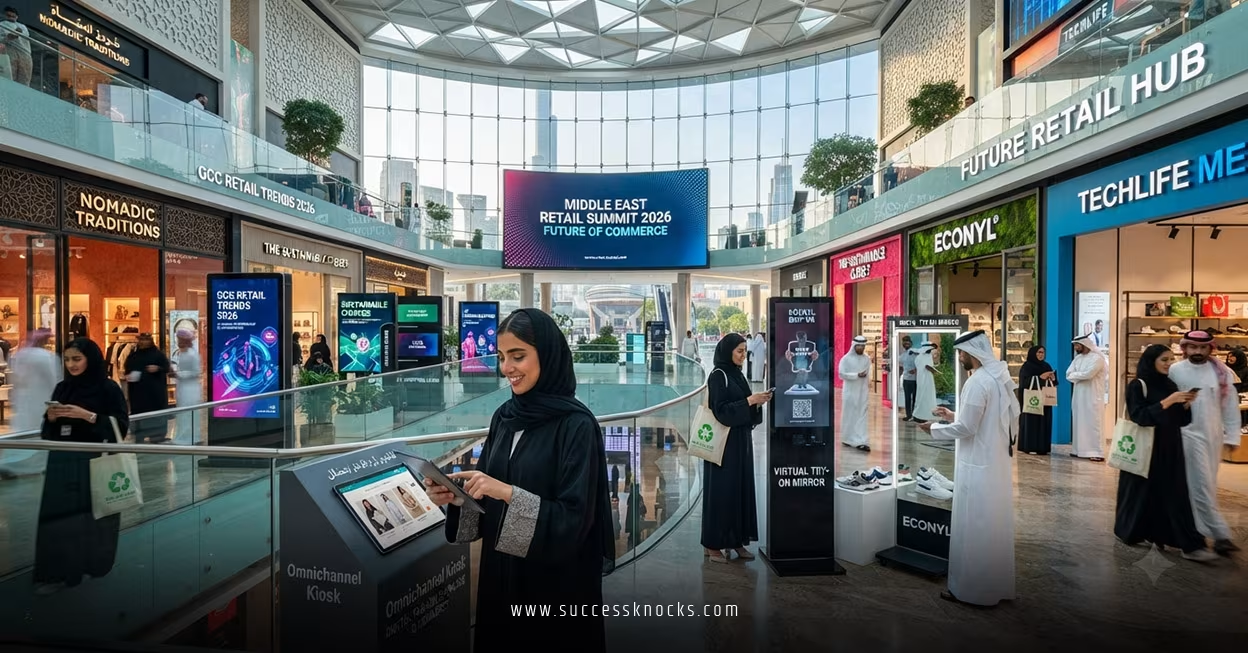
Middle East retail trends 2026 are shaping up to be a practical growth story for founders, operators, and brand owners who know where to look. If you sell products or services into the region, the big opportunity is not just higher demand — it is changing shopper behavior, faster digital adoption, and a stronger focus on value.
We’re going to take a straightforward look at what is happening, where the demand is strongest, and how you can turn this into sales. We’ll also connect the trend back to Middle East consumer spending increase 2026 so you can see the bigger picture without getting lost in jargon.
Pic – CC0 License
Why Middle East retail trends 2026 matter
The Middle East retail market is still expanding in 2026, with market forecasts pointing to continued growth across both physical and online channels. One market outlook estimates the region’s retail market at about USD 932.54 billion in 2026, up from USD 868.89 billion in 2025, driven by youth-led demand, lifestyle spending, and tech-enabled shopping. [1]
That matters because retail growth in this region is not happening in one neat lane. It is showing up in grocery, beauty, convenience stores, luxury, electronics, and online shopping. For entrepreneurs, that means there are multiple entry points, not just one.
There is also a clear shift in how people spend. Recent reporting on UAE and Saudi consumer baskets shows shoppers are being more selective, value-conscious, and willing to spread spend across traditional trade, modern retail, and e-commerce. [3] That makes 2026 less about broad guesswork and more about matching the right offer to the right shopper.
The biggest shifts in Middle East retail trends 2026
The first major shift is the balance between aspiration and value. Some shoppers still buy premium products, but they are more careful about where they spend and what they expect in return. Research from McKinsey on grocery in MENA says consumers are balancing price consciousness and bargain hunting with willingness to spend more on selected products. [5]
The second shift is digital. Online retail continues to gain ground, and e-commerce in the Middle East and Africa is projected to keep growing strongly in 2026. One forecast estimates the market at about USD 177 billion in 2026, with fashion, electronics, beauty, and food delivery all playing a role. [8]
The third shift is the rise of convenience. Fast delivery, easy payment options, and simple buying journeys are becoming part of normal retail expectations. This is one reason quick commerce, omnichannel retail, and local payment tools are getting so much attention across the region. [6]
Where the opportunity is strongest
If you are building a business around Middle East retail trends 2026, the strongest categories are usually the ones tied to repeat demand and lifestyle upgrades.
- Grocery and FMCG
- Beauty and personal care
- Fashion and modest wear
- Electronics and home tech
- Convenience-led retail
- Food service and delivery
- Premium health and wellness products
There is also strong evidence that local consumers are spending more selectively on categories they see as useful or status-building. A regional consumer products report from Bain notes that much of the incremental growth in food and beverage is expected to come from e-commerce and food service channels. [16]
That is useful for you because it shows where the channel shift is happening. It is not enough to have a good product. You need to place it where the customer already likes to buy.
How this links back to Middle East consumer spending increase 2026
If you want to understand Middle East retail trends 2026, you also need to understand the broader spending picture. Consumer spending in the Gulf is still expected to grow in 2026, even if shoppers are more cautious and selective than before. A regional retail forum report said consumer spending in GCC countries is expected to grow by 5 percent in 2026. [11]
That broader spending lift is what supports retail growth. When households spend more, retailers can expand inventory, test new formats, and invest in faster service. When tourists and business travelers add demand, the effect becomes even stronger in cities like Dubai, Riyadh, and Doha. [14]
So if you are linking to Middle East consumer spending increase 2026 from your content strategy, it makes sense. The two topics belong together: one explains the shopper, the other explains the store.
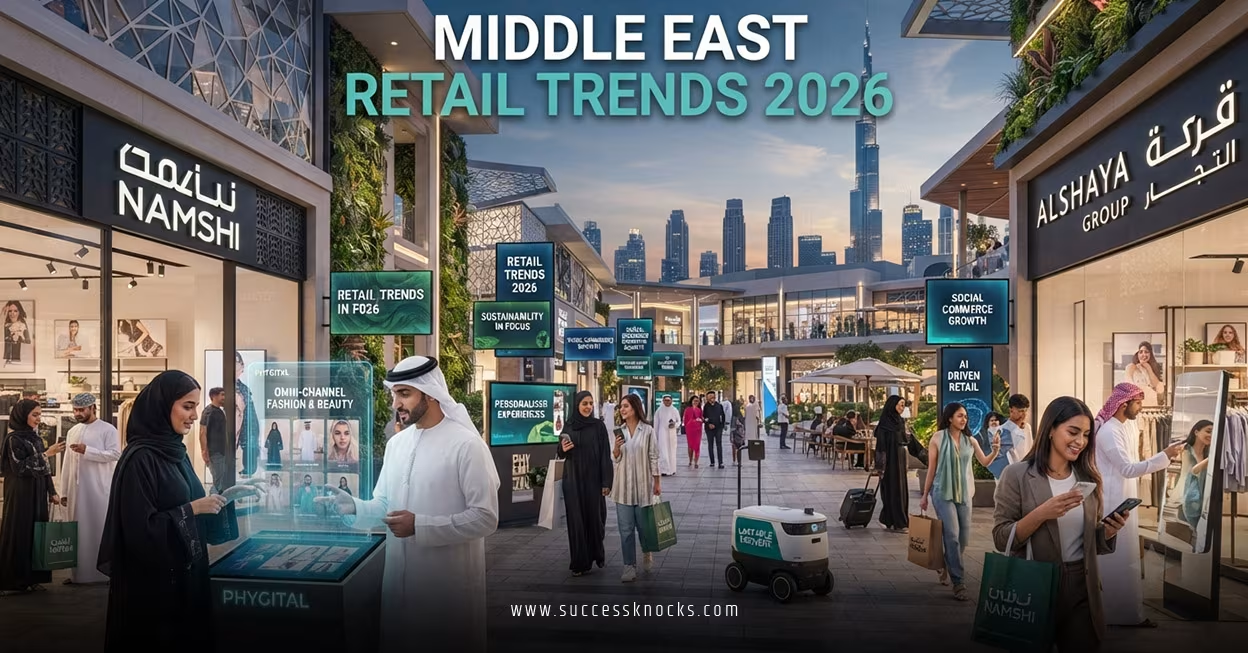
What this means for your business
For beginner and intermediate entrepreneurs, the main lesson is simple: do not try to sell the same way everywhere.
If you are targeting the UAE or Saudi Arabia, focus on convenience, trust, and fast service. If you are selling to higher-income shoppers, premium positioning can still work, but only if your brand feels relevant and reliable. If you are building an online store, your checkout, payment methods, and delivery promise matter just as much as your product.
Retail leaders in the region are also putting digital at the top of their priorities, alongside cost control and talent. PwC Middle East notes that digital is a top retail priority, with beauty, athleisure, healthy eating, and discount-led events like Black Friday all shaping demand. [18]
That tells you something important: the market is modern, but it is still practical. People want products that feel useful, easy to buy, and worth the money.
A simple action plan for 2026
Here is the cleanest way to approach the market:
- Pick one country first, not the whole region.
- Choose one shopper type, such as value-seeking families, urban professionals, or premium buyers.
- Test one channel first, such as marketplaces, direct-to-consumer, or retail partnerships.
- Localize your pricing, product mix, and messaging.
- Watch what sells repeatedly, not just what gets attention.
If you are based in the USA, UK, Australia, Singapore, or Dubai, you already have useful advantages in design, logistics, digital selling, and brand presentation. The key is to stay focused and avoid over-expanding before you understand demand.
What to watch next
The most important thing to watch in Middle East retail trends 2026 is not just growth, but shopper discipline. Consumers are still spending, but they are being more thoughtful about where that money goes. That means retailers and brands that offer convenience, trust, value, and a clear reason to buy will stand out fastest. [3][5]
We hope that you have found this article enlightening in some way, because the real opportunity in the Middle East is not simply “more retail.” It is smarter retail. If you understand the shopper, keep your offer simple, and connect your strategy to Middle East consumer spending increase 2026, you’ll be in a much better position to grow.