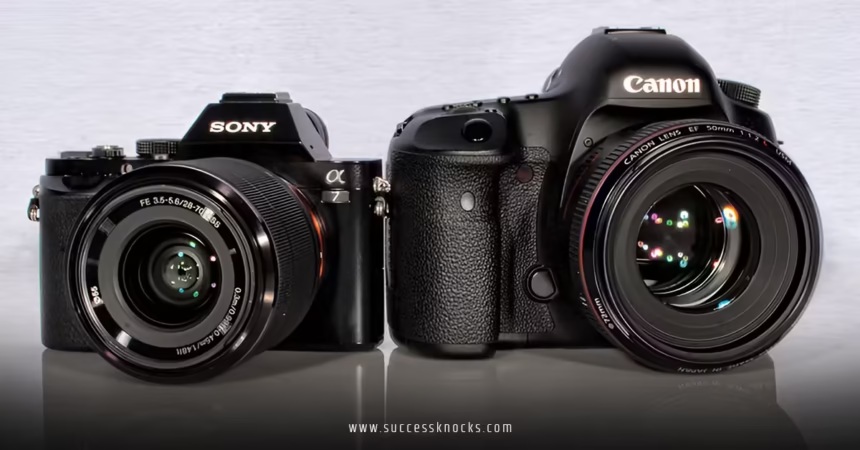
Mirrorless vs DSLR cameras represent the two dominant photography technologies today, and choosing between them can make or break your shooting experience. Here’s the reality: both can capture stunning images, but they work fundamentally differently and excel in distinct scenarios.
Quick Overview:
- Mirrorless cameras use electronic viewfinders and are typically smaller, lighter, and offer superior video features
- DSLR cameras use optical viewfinders, offer longer battery life, and provide a vast selection of native lenses
- Image quality between comparable models is essentially identical in 2026
- Autofocus speed now favors mirrorless systems across most situations
- Price points overlap significantly, making features more important than format
The mirrorless vs DSLR debate isn’t about which is “better”—it’s about which fits your specific needs, shooting style, and future goals.
What Actually Makes Them Different?
Think of it like this: DSLRs are like looking through a window (optical viewfinder), while mirrorless cameras are like watching high-definition TV (electronic viewfinder). Both show you the scene, but the experience feels completely different.
The Core Distinction:
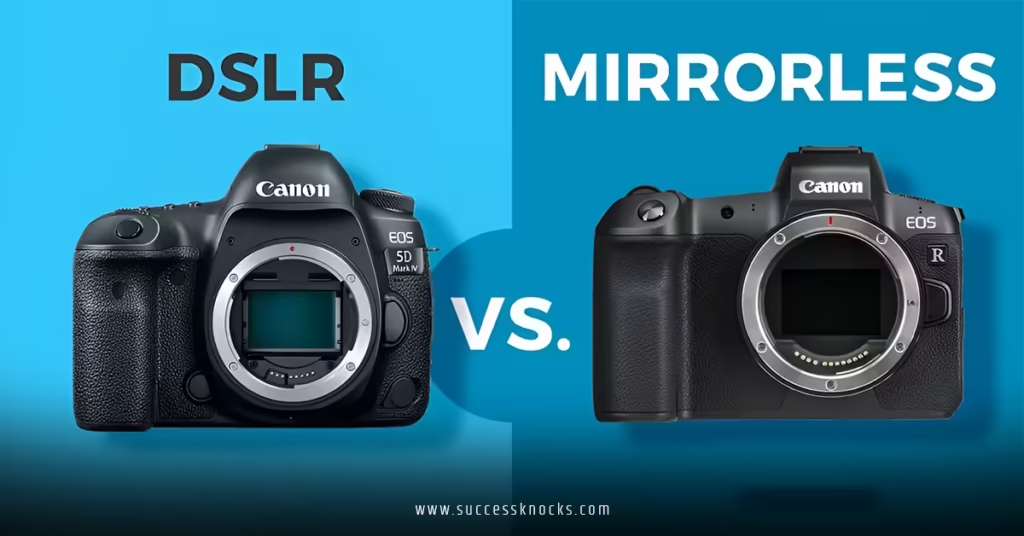
DSLRs flip a mirror up and down to alternate between the viewfinder and sensor. When you look through a DSLR viewfinder, you’re seeing the actual light coming through the lens—no processing, no delay, just pure optics.
Mirrorless cameras skip the mirror entirely. The sensor constantly captures the scene and displays it on a screen, whether that’s the back LCD or an electronic viewfinder.
This fundamental difference cascades into everything else about how these cameras operate.
Mirrorless vs DSLR: Feature-by-Feature Breakdown
| Feature | Mirrorless | DSLR |
|---|---|---|
| Size/Weight | Significantly smaller and lighter | Larger and heavier |
| Battery Life | 300-500 shots typical | 800-1,500+ shots typical |
| Autofocus Speed | Generally faster, especially video | Very fast, but varies by model |
| Lens Selection | Growing rapidly, adapters available | Massive native selection |
| Viewfinder | Electronic (what you see = what you get) | Optical (true-to-life view) |
| Video Features | Superior specs and features | Basic to good (improving) |
| Price Range | $300-$6,000+ | $400-$8,000+ |
Size and Portability: The Obvious Winner
Here’s where mirrorless cameras absolutely crush DSLRs.
A typical mirrorless camera weighs 40-60% less than its DSLR equivalent. We’re talking about the difference between carrying a paperback book versus a hardcover textbook in your bag.
Real-world impact:
- Travel photography becomes less exhausting
- Street photography feels more discreet
- Your neck and shoulders thank you after long shooting sessions
But don’t assume smaller always means better. Some photographers prefer the substantial feel of a DSLR—it feels more stable in your hands, especially with longer lenses.
Battery Life: Where DSLRs Still Dominate
This isn’t even close. DSLRs absolutely demolish mirrorless cameras in battery endurance.
A decent DSLR can shoot 800-1,500 images on a single charge. Most mirrorless cameras tap out around 300-500 shots. Why? That electronic viewfinder and LCD screen constantly drain power.
Practical implications:
- DSLR: Charge your battery the night before a full-day shoot
- Mirrorless: Bring 2-3 spare batteries for serious shooting sessions
The battery situation has improved significantly in 2026, but DSLRs still maintain a substantial advantage here.
Autofocus Performance: The Tables Have Turned
Remember when DSLRs had faster autofocus? Those days are over.
Modern mirrorless cameras use the entire sensor for autofocus detection, giving them thousands of focus points compared to dozens in most DSLRs. They can track subjects across the entire frame with precision that would have seemed magical just a few years ago.
Where mirrorless excels:
- Eye detection (human and animal)
- Subject tracking during video
- Low-light focusing
- Silent shooting modes
DSLRs still perform excellently, but they’re playing catch-up in the autofocus game.
Lens Selection: DSLRs’ Last Major Advantage
This is where DSLR systems still flex their muscles. Canon and Nikon have been making SLR and DSLR lenses for decades. The sheer variety is staggering.
DSLR lens advantages:
- Massive selection of native lenses
- More affordable third-party options
- Specialized glass for niche applications
- Better availability in used markets
Mirrorless systems are catching up fast, though. Sony’s E-mount system now rivals traditional SLR systems in scope, and adapter technology lets you use virtually any lens on any mirrorless camera with minimal performance loss.
Video Capabilities: No Contest
If video matters to you at all, mirrorless cameras win this category so decisively it’s almost embarrassing for DSLRs.
Mirrorless cameras typically offer:
- 4K recording at higher frame rates
- Better in-body stabilization for video
- More advanced codec options
- Superior autofocus during video recording
- Flip-out screens optimized for video work
According to the Consumer Technology Association, over 78% of content creators in 2026 prioritize video capabilities when selecting cameras. Mirrorless systems have responded to this demand while most DSLRs remain primarily focused on still photography.
Image Quality: The Great Equalizer
Here’s the thing nobody wants to admit: image quality differences between comparable mirrorless and DSLR cameras are essentially invisible in real-world use.
Both use similar sensors, similar processors, and similar lens technologies. A $1,200 mirrorless camera will produce images virtually identical to a $1,200 DSLR from the same generation.
What actually affects image quality:
- Sensor size (full-frame vs APS-C vs micro four-thirds)
- Lens quality
- Your shooting technique
- Post-processing skills
The camera format itself? It’s just not a factor anymore.
Cost Analysis: More Complex Than You Think
The mirrorless vs DSLR cost equation isn’t straightforward. Initial camera prices overlap significantly, but the total system cost can vary wildly.
Mirrorless considerations:
- Bodies often cost slightly more than equivalent DSLRs
- Native lenses can be expensive (though improving)
- More battery purchases needed
- Adapter costs for legacy lenses
DSLR considerations:
- Mature market means better deals on bodies
- Abundant lens options at all price points
- Accessories widely available and affordable
- Better resale value (for now)
Step-by-Step Decision Framework
When choosing between mirrorless vs DSLR systems, work through these questions in order:
- Define your primary use case:Are you shooting portraits, landscapes, sports, video, or a mix?
- Assess portability needs: Will you be traveling extensively or shooting handheld for long periods?
- Evaluate video requirements: Do you need professional video features or just occasional clips?
- Consider existing gear: Do you already own lenses that work with one system?
- Set a realistic budget: Include lenses, batteries, and accessories in your calculations
- Test before buying:Rent or borrow both systems to see which feels better in your hands
Common Mistakes to Avoid
Mistake #1: Buying based on megapixels alone Fix: Focus on sensor size, low-light performance, and lens ecosystem instead.
Mistake #2: Ignoring the total system cost Fix: Calculate the cost of 2-3 lenses plus accessories before deciding.
Mistake #3: Choosing format over features Fix: Pick the camera with the specific features you’ll actually use.
Mistake #4: Overthinking the decision Fix: Both formats can produce professional results. Choose based on practical factors like size and battery life.
Mistake #5: Buying too much camera initially Fix: Start with a mid-range body and invest more in quality lenses.
Who Should Choose What?
Go Mirrorless If:
- Size and weight matter significantly
- Video is important to your work
- You want the latest autofocus technology
- You’re starting fresh without existing lenses
- You shoot in situations where silent operation helps
Stick with DSLR If:
- Battery life is crucial for your shooting style
- You already own quality DSLR lenses
- You prefer optical viewfinders
- You want the most lens options possible
- Budget constraints favor the mature DSLR market
Future-Proofing Your Investment
The camera industry has spoken clearly: mirrorless is the future. Major manufacturers have shifted most of their development resources toward mirrorless systems.
That doesn’t mean DSLRs are obsolete—they’ll remain viable for years. But new lens releases, innovative features, and cutting-edge technology will debut in mirrorless systems first.
According to CIPA (Camera & Imaging Products Association), mirrorless camera sales surpassed DSLRs for the first time in 2023 and continue growing while DSLR sales decline steadily.
Key Takeaways
- Performance parity: Image quality is essentially identical between comparable models
- Mirrorless advantages:Smaller size, better video, faster autofocus, silent shooting
- DSLR strengths: Superior battery life, massive lens selection, optical viewfinders
- Cost considerations: Total system cost matters more than initial body price
- Future trends: Industry development heavily favors mirrorless technology
- Decision factors: Prioritize your actual shooting needs over theoretical specifications
- Both work: Professional photographers successfully use both formats
- Try before buying:Hands-on experience trumps online research every time
Conclusion
The mirrorless vs DSLR debate ultimately comes down to your specific needs and shooting style. Both formats can produce stunning images in the right hands.
Mirrorless cameras offer the future of photography with superior video features, compact designs, and lightning-fast autofocus. DSLRs provide traditional reliability, exceptional battery life, and the most comprehensive lens ecosystem available.
Don’t get paralyzed by analysis. Pick the system that fits your immediate needs and start shooting. The best camera is the one you’ll actually use consistently.
Your next step? Visit a camera store and spend 30 minutes with each format. The decision will become much clearer once they’re in your hands.
The gear matters less than your vision.
Frequently Asked Questions
Q: Are mirrorless cameras better than DSLRs in 2026?
A: Neither format is universally “better.” Mirrorless excels in size, video features, and autofocus technology, while DSLRs offer superior battery life and more extensive lens options. Choose based on your specific shooting requirements.
Q: Can I use DSLR lenses on mirrorless cameras?
A: Yes, through adapters. Most DSLR lenses work excellently on mirrorless bodies with proper adapters, often maintaining full autofocus and image stabilization functionality.
Q: Do mirrorless cameras have shorter lifespans due to electronic viewfinders?
A: No. Modern electronic viewfinders are highly reliable and designed to last as long as the camera body. The constant sensor operation doesn’t significantly impact camera longevity.
Q: Which format is better for beginners learning photography?
A: Both formats work well for beginners. Mirrorless cameras often provide more helpful learning features like real-time exposure preview, while DSLRs offer simpler operation and longer battery life for extended practice sessions.
Q: Will DSLRs become obsolete soon?
A: DSLRs won’t disappear overnight, but manufacturers have shifted development focus to mirrorless systems. Existing DSLR systems will remain supported for years, but innovation will primarily occur in the mirrorless space.