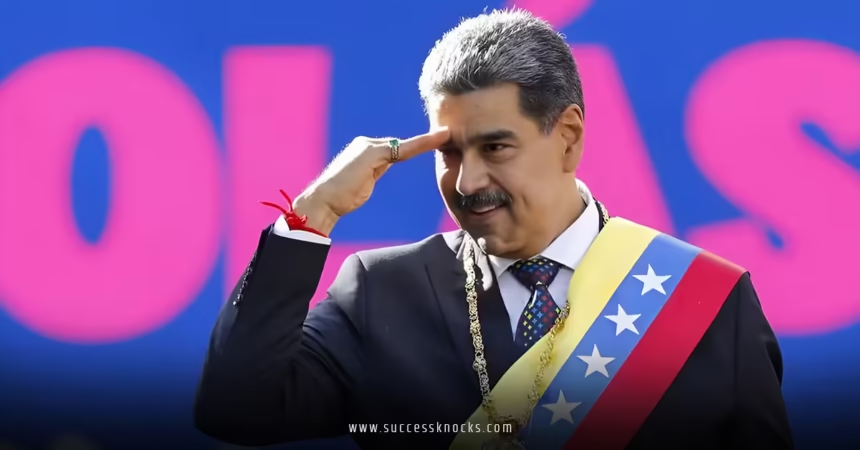
On January 3, 2026, the world woke up to stunning news: Nicolás Maduro capture by US forces had just become reality. In a high-risk, pre-dawn military raid codenamed Operation Absolute Resolve, elite American special forces stormed a fortified compound in Caracas, seized the Venezuelan president and his wife Cilia Flores, and whisked them away to face drug-trafficking charges in New York. This bold move ended over a decade of Maduro’s authoritarian rule — but it also ignited fierce debates about sovereignty, international law, and America’s role in Latin America.
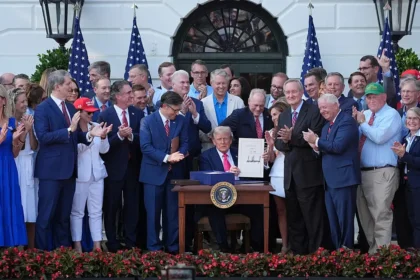
Just days later, on January 15, 2026, Venezuelan opposition leader María Corina Machado gives Nobel Peace Prize medal to Trump during a White House meeting — a symbolic gesture thanking the president for his “unique commitment” to Venezuelan freedom. The two events are deeply intertwined, marking a turning point for a nation long plagued by crisis.
The Build-Up: Why the US Targeted Maduro
Nicolás Maduro had been in Washington’s crosshairs for years. Indicted in 2020 by the US Department of Justice for narco-terrorism, cocaine trafficking conspiracies, and arming terrorist groups, Maduro faced escalating bounties — peaking at $50 million by mid-2025.
The Trump administration labeled him a “narco-dictator” responsible for flooding the US with drugs while crushing democratic hopes at home. After the disputed 2024 elections (widely seen as fraudulent), pressure mounted. Secret CIA teams infiltrated Venezuela, tracking Maduro’s every move — from his sleeping locations to his pets — using drones, human sources, and months of surveillance.
By late 2025, plans solidified. Trump reportedly gave Maduro an ultimatum in a November phone call: step down or face consequences. When that failed, Operation Absolute Resolve launched.
How the Nicolás Maduro Capture by US Forces Unfolded
Imagine the scene: 2 a.m. local time in Caracas. Explosions rock military sites around the city, suppressing air defenses. Delta Force commandos, heavily armed (and carrying blowtorches for locked doors), descend from helicopters into Maduro’s “fortress-like” safe house.
Gunfire erupts — one US helicopter takes a hit but stays airborne. The team moves with precision, guided by real-time intel. Maduro reportedly tries to flee to a safe room but is overwhelmed. Within minutes, he and Cilia Flores are in custody.
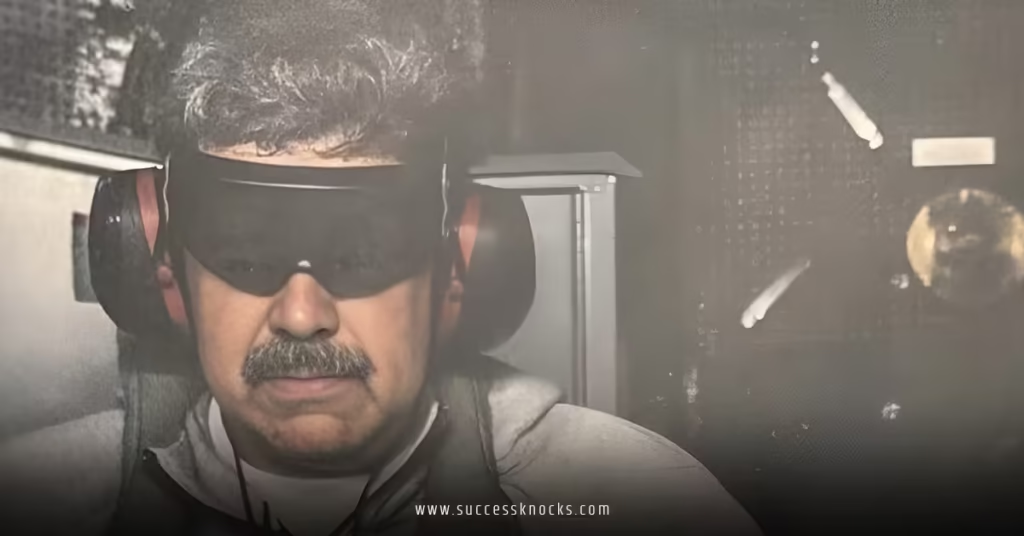
They board the USS Iwo Jima off Venezuela’s coast, then fly to New York via Guantánamo Bay. By afternoon, Maduro flashes a thumbs-up and peace sign from custody — defiant even in handcuffs.
The operation cost lives: over 100 reported dead (including Cuban personnel), seven US troops injured. Trump watched live from Mar-a-Lago, later declaring the US would “run” Venezuela temporarily to restore order and reclaim oil interests.
Immediate Aftermath and Global Reactions to Nicolás Maduro Capture by US Forces
Caracas fell into tense quiet. Pro-government colectivos clashed with celebratory crowds. Vice President Delcy Rodríguez was sworn in as acting leader, denouncing the raid as “kidnapping” while cooperating pragmatically with Washington.
Internationally, reactions split sharply. Allies like France condemned it as a violation of sovereignty. Cuba mourned 32 killed personnel as “heroes.” Colombia braced for refugees, while Guyana quietly supported Maduro’s removal amid border tensions.
In the US, Trump hailed it as a triumph against drugs and dictatorship. Critics questioned legality — comparing it to the 1989 Noriega capture but warning of “international vandalism.”
On January 5, Maduro pleaded not guilty in Manhattan federal court to charges including narco-terrorism and cocaine importation. He insisted: “I am still president of my country.”
The Symbolic Link: How María Corina Machado Gives Nobel Peace Prize Medal to Trump
The Nicolás Maduro capture by US forces directly paved the way for opposition hopes — and drama. María Corina Machado, awarded the 2025 Nobel Peace Prize for her non-violent fight for democracy, had dedicated it partly to Trump.
Sidelined initially (Trump backed Rodríguez over her), Machado made a bold move. On January 15, she presented her 18-karat gold Nobel medal to Trump at the White House, framing it as historical reciprocity — like Lafayette gifting a medal to Simón Bolívar in 1825.
Trump called it a “wonderful gesture of mutual respect.” The Nobel Committee clarified the title remains Machado’s, but the physical symbol now sits with the US president.
This act underscores how the capture shifted power dynamics, boosting opposition visibility while highlighting US strategic interests.
What’s Next After the Nicolás Maduro Capture by US Forces?
Venezuela stands at a crossroads. Interim governance continues under Rodríguez, with talks of oil deals and democratic reforms. Political prisoners are slowly released, but colectivos remain active.
Maduro, detained in Brooklyn, awaits trial — potentially facing life in prison. The US insists it’s law enforcement, not occupation, but questions linger: Will this bring lasting peace or more instability?
For millions of Venezuelans who fled economic collapse, the Nicolás Maduro capture by US forces offers hope — tied symbolically to María Corina Machado gives Nobel Peace Prize medal to Trump as gratitude for change.
Conclusion
The Nicolás Maduro capture by US forces on January 3, 2026, was a high-stakes gamble that toppled a long-time adversary and reshaped Venezuela’s future. From elite raids to courtroom drama, it exposed deep tensions in global politics. The follow-up gesture where María Corina Machado gives Nobel Peace Prize medal to Trump adds a layer of symbolism, blending personal gratitude with geopolitical strategy. As Venezuela navigates transition, this chapter reminds us: bold actions can end eras — but true peace requires careful rebuilding. Stay tuned; the story is far from over.
FAQs
1. When and how did the Nicolás Maduro capture by US forces happen?
The Nicolás Maduro capture by US forces occurred on January 3, 2026, during Operation Absolute Resolve, when Delta Force raided his Caracas compound after airstrikes.
2. What charges does Nicolás Maduro face following his capture by US forces?
After the Nicolás Maduro capture by US forces, he faces federal charges in New York including narco-terrorism, cocaine importation conspiracy, and weapons offenses.
3. How is the Nicolás Maduro capture by US forces connected to María Corina Machado gives Nobel Peace Prize medal to Trump?
The Nicolás Maduro capture by US forces enabled opposition leader Machado to thank Trump by presenting her 2025 Nobel Peace Prize medal to him on January 15, 2026, recognizing his role in ousting Maduro.
4. What was the international reaction to the Nicolás Maduro capture by US forces?
Reactions to the Nicolás Maduro capture by US forces were mixed — praised by some as anti-drug action, condemned by others (including allies like France) as a breach of sovereignty.
5. Where is Nicolás Maduro now after the capture by US forces?
Following the Nicolás Maduro capture by US forces, he is detained at the Metropolitan Detention Center in Brooklyn, New York, awaiting trial.