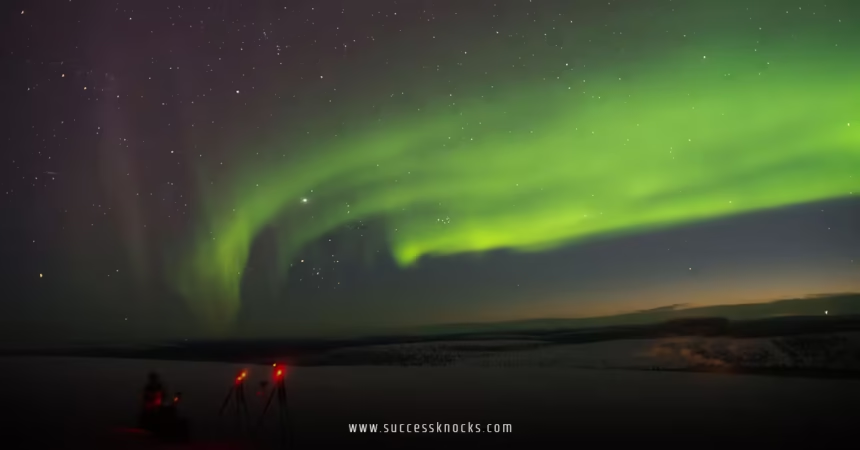
Northern Lights viewing tips can turn a hopeful night into an unforgettable spectacle of dancing greens, purples, and pinks across the sky. Whether you’re planning your first chase or you’re a seasoned sky-watcher, getting these basics right dramatically boosts your odds. And if you’re serious about catching a great display, always start by monitoring an aurora borealis NOAA watch—those official alerts from NOAA’s Space Weather Prediction Center signal when geomagnetic activity might push the lights farther south and make them brighter.
The aurora isn’t just random magic; it’s a predictable space weather event. With the right preparation, patience, and tools, you can position yourself perfectly. Let’s break down the essential northern lights viewing tips step by step.
Best Time of Year and Night for Northern Lights Viewing
Timing is everything in the aurora game. The prime season runs from late August through early April, when nights are long and dark enough for the lights to shine.
Why these months? Summer brings the midnight sun in high latitudes, washing out any chance of seeing faint auroras. Winter delivers extended darkness—sometimes 24 hours in the far north—plus often clearer, colder air that reduces cloud cover.
Within the season, equinox periods (around September and March) frequently deliver stronger activity due to Earth’s magnetic field alignment with solar wind. Mid-March 2026, for example, could offer prime conditions as solar maximum fades but still packs punch around the equinox.
On any given night, peak action hits between 10 PM and 2 AM local time—often called “magnetic midnight.” Displays can start earlier or linger later during big storms, but those core hours are your sweet spot.
Pro tip: Avoid full moon phases. Bright moonlight washes out colors and dims fainter auroras, much like city lights do. Plan around new moon or crescent phases for inky-black skies.
Choosing the Right Location: Where to Go for the Best Views
Location trumps almost everything else. Head toward the Arctic Circle or inside it for reliable sightings.
Top spots include:
- Norway (Tromsø, Lofoten Islands, Alta) — Classic fjords and mountains as backdrops.
- Iceland (North Iceland, Jökulsárlón lagoon) — Easy access and dramatic landscapes.
- Finland (Rovaniemi, Lapland) — Glass igloos for cozy viewing.
- Sweden (Abisko) — Famous for clear skies in a “blue hole” microclimate.
- Alaska (Fairbanks) — Up to 90% chance over a few nights under the auroral oval.
- Canada (Yellowknife, Churchill) — Remote darkness and frequent strong shows.
Even if you’re farther south, strong geomagnetic storms (think G3+) can bring auroras to mid-latitudes like northern U.S. states. But for consistency, get north.
Key rule: Escape light pollution. Cities drown out everything except the brightest displays. Drive to rural areas, hills, or parks with unobstructed northern views. In the Northern Hemisphere, look north—even low on the horizon counts.
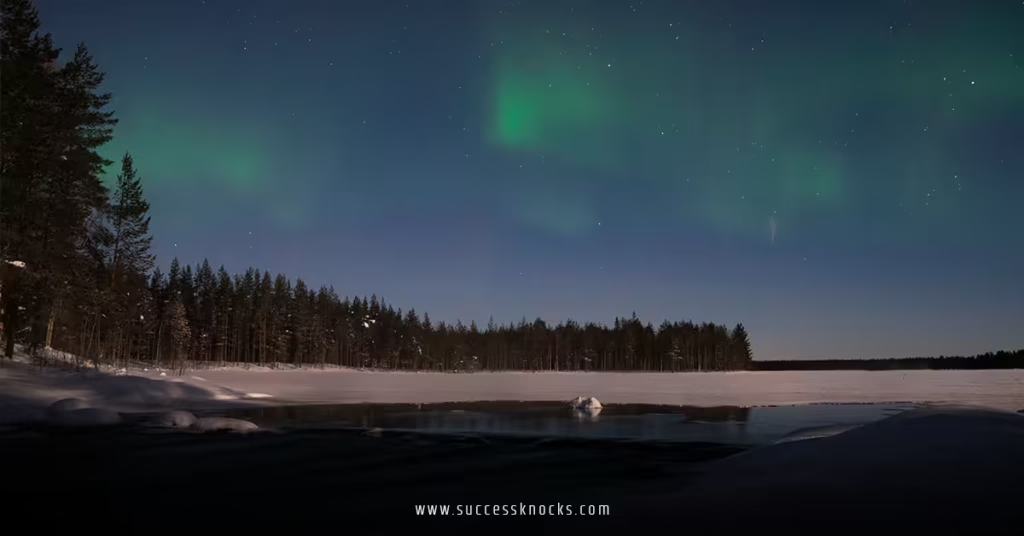
Essential Gear and What to Wear for Cold Nights
You can’t chase auroras in flip-flops. Cold bites hard—temperatures often drop to -20°C (-4°F) or lower.
Layer up smartly:
- Base layers (moisture-wicking)
- Insulating mid-layers (fleece)
- Waterproof/windproof outer shell
- Thick socks, insulated boots, gloves, hat, neck gaiter
- Hand/foot warmers for extra comfort
Bring a red flashlight (preserves night vision), hot drinks in a thermos, and snacks. A camp chair or blanket helps during long waits.
For photography (highly recommended), use a sturdy tripod, wide-angle lens (f/2.8 or faster), and manual settings: ISO 800–3200, 10–30 second exposures, focus to infinity.
Your phone’s night mode often captures surprising detail—give it a try even if you’re not a pro.
How to Use Forecasts and Monitor Activity Effectively
This is where many people go wrong—and where aurora borealis NOAA watch becomes your best friend.
NOAA’s Space Weather Prediction Center provides gold-standard tools:
- Check the aurora 30-minute forecast for short-term intensity.
- Use the aurora dashboard (experimental) for tonight/tomorrow predictions.
- Watch the Kp index (0–9): 4+ means good chances; 6+ brings widespread shows.
Apps like Aurora Alerts, My Aurora Forecast, or SpaceWeatherLive pull NOAA data and send push notifications.
Cross-reference with local weather—clear skies are non-negotiable. Clouds ruin even the strongest storm.
During an active aurora borealis NOAA watch, stay flexible. Activity can surge unexpectedly.
Patience, Safety, and Extra Northern Lights Viewing Tips
Aurora chasing tests patience. Displays wax and wane—sometimes faint for hours, then explode in brilliance. Stay out at least 3–4 hours.
Safety first: Tell someone your plans, especially in remote areas. Watch for ice, wildlife, and hypothermia.
Be present. Cameras capture beauty, but nothing beats watching with your own eyes—the subtle shifts, the crackling energy.
If clouds roll in, don’t despair. Many chasers need multiple nights. Three-night minimum stays improve odds hugely.
Final Thoughts on Mastering Northern Lights Viewing Tips
Mastering northern lights viewing tips comes down to preparation, location, darkness, and real-time monitoring—especially keeping an eye on aurora borealis NOAA watch updates for those game-changing storms. Combine clear skies, high geomagnetic activity, and a dark northern horizon, and you’re in prime position for one of nature’s greatest shows.
The aurora rewards those who plan smart and wait patiently. So pack your layers, charge your camera, bookmark NOAA’s site, and get ready. Your next clear, active night could deliver curtains of light you’ll remember forever. Happy hunting—may the skies light up for you!
Here are three high-authority external links for more information:
FAQ :
1. When is the best time to see the Northern Lights?
The best months are September to March, especially around the equinoxes (late September & March). Peak viewing hours are usually 10 PM–2 AM local time on clear, dark nights.
2. Do I need an aurora borealis NOAA watch to see the Northern Lights?
Not always, but yes for the best chances farther south. An aurora borealis NOAA watch means stronger geomagnetic activity, pushing vivid displays into mid-latitudes like northern US states or southern Canada.
3. Where is the easiest place for beginners to see the Northern Lights?
Fairbanks, Alaska; Tromsø, Norway; or Yellowknife, Canada are beginner-friendly with high success rates, frequent tours, and good infrastructure. Stay at least 3 nights to improve your odds.
4. What should I wear to watch the Northern Lights in winter?
Dress in warm layers: thermal base layer, fleece mid-layer, waterproof/windproof jacket, insulated boots, thick socks, gloves, hat, and neck gaiter. Hand/foot warmers and a thermos of hot drink are game-changers.
5. How do I know if tonight will have good Northern Lights activity?
Check NOAA’s aurora borealis NOAA watch status, the Kp index (aim for 4+), and the 30-minute aurora forecast on SWPC. Pair it with a clear-sky weather app—clouds are the biggest spoiler.