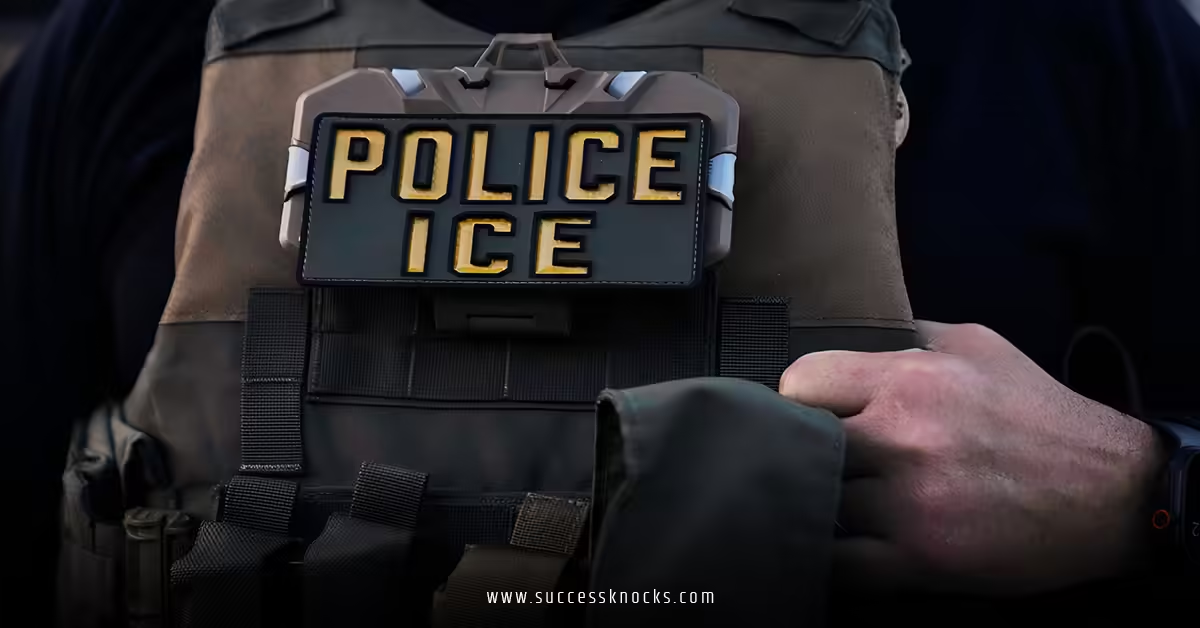
Off-duty ICE agent use of force has emerged as a flashpoint in national conversations about federal law enforcement, accountability, and the boundaries of authority—especially when incidents occur outside official immigration duties. These situations often spark intense debate: When does an off-duty agent’s decision to intervene cross from reasonable self-defense into unnecessary escalation? Recent high-profile cases, including the Keith Porter Jr ICE shooting Northridge justice controversy, have amplified calls for clearer policies, better training, and independent oversight.
In this article, we’ll break down what “off-duty ICE agent use of force” really means, explore the governing rules, examine real-world examples, and discuss why these incidents fuel distrust in communities nationwide.
Understanding Off-Duty Status for ICE Agents
ICE agents—part of the Department of Homeland Security—primarily enforce immigration laws, but they carry federal law enforcement authority. When off-duty, they aren’t on an assigned shift or pursuing immigration-related tasks. Yet, many carry service weapons and retain certain powers, like making arrests for federal crimes or acting in self-defense.
Think of it like this: An off-duty local cop might step in during a mugging because they’re still a sworn officer. Federal agents operate under similar logic, but with added layers. DHS policies allow off-duty agents to use force if they reasonably believe there’s an imminent threat to life or serious injury. However, critics argue this creates a “super cop” dynamic where agents act without the same local oversight or de-escalation expectations as on-duty police.
The key question: Should an off-duty ICE agent insert themselves into a non-immigration local matter, like a noise complaint or celebratory gunfire? Many say no—call local police instead.
DHS and ICE Use-of-Force Policies: What the Rules Actually Say
DHS maintains overarching use-of-force guidelines that apply to all components, including ICE. The core principle? Force must be “objectively reasonable” based on the totality of circumstances. Deadly force is authorized only when there’s a reasonable belief of an imminent threat of death or serious bodily injury to the officer or others.
De-escalation gets emphasis: Where feasible, agents should try communication or other techniques to reduce tension without force. There’s also a “duty to intervene” if witnessing excessive force by another officer—failure to do so can lead to discipline.
For off-duty scenarios, policies don’t explicitly ban intervention, but they stress that force should only occur when no safe alternative exists. No duty to retreat exists, meaning agents aren’t required to back away from danger. Shooting at moving vehicles is generally prohibited unless the vehicle itself poses a deadly threat.
These rules sound balanced on paper, but real-world application often divides opinions. Annual training covers de-escalation, legal updates, and discretion in deadly force—but transparency around training quality remains limited.
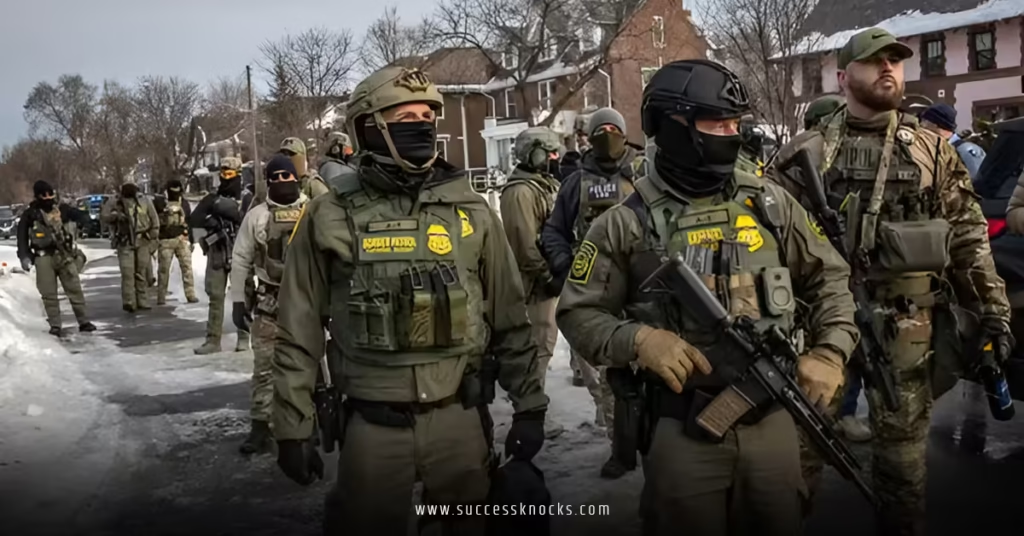
The Keith Porter Jr ICE Shooting Northridge Justice Case: A Prime Example of Off-Duty Controversy
One incident that has spotlighted off-duty ICE agent use of force is the Keith Porter Jr ICE shooting Northridge justice case from New Year’s Eve 2025 in Los Angeles’ Northridge neighborhood.
Keith Porter Jr., a 43-year-old father of two daughters, was fatally shot by an off-duty ICE agent at their shared apartment complex. According to DHS, the agent heard gunfire, investigated, encountered Porter with a long rifle, ordered him to drop it, and fired after Porter allegedly pointed the weapon and discharged rounds toward him.
Family, advocates, and community leaders tell a different story: Porter was firing celebratory shots into the air—a risky but not uncommon New Year’s tradition in some areas. They argue the gunfire wasn’t aimed at anyone, no one was hurt initially, and the agent should have called LAPD rather than confront the situation himself. No video evidence has emerged, leaving conflicting accounts unresolved.
The agent’s identity surfaced in court filings as Brian Palacios amid unrelated allegations (denied by his counsel). LAPD and ICE’s Office of Professional Responsibility investigate, but no charges have been filed yet. This case exemplifies broader concerns: Why did an off-duty federal agent escalate a local issue? Could waiting for trained local responders have prevented tragedy?
The Keith Porter Jr ICE shooting Northridge justice movement has seen vigils, protests, and testimonies at LA City Council and Police Commission meetings, linking it to demands for transparency and reform.
Other Notable Off-Duty and On-Duty ICE Use-of-Force Incidents
The Keith Porter Jr ICE shooting Northridge justice isn’t isolated. Reports indicate multiple ICE-involved shootings since early 2025, some off-duty, amid heightened enforcement.
- Off-duty cases often involve personal encounters where agents perceive threats and respond with service weapons.
- Broader patterns show shootings in vehicles, public spaces, or non-target individuals, raising questions about training and restraint.
- Accountability hurdles persist: Federal agents enjoy qualified immunity, limiting civil suits. Criminal probes typically stay federal, with state involvement complicated by immunity claims.
Statistics suggest a spike in incidents during intensified operations, though exact off-duty numbers remain underreported. Each case fuels scrutiny: Are policies sufficient, or do they enable overreach?
Challenges and Criticisms Surrounding Off-Duty ICE Agent Use of Force
Several issues keep surfacing:
- Jurisdictional Gray Areas — Off-duty agents lack local police training for community-specific de-escalation.
- Lack of Body Cams — Off-duty actions rarely include recordings, complicating truth-finding.
- Community Trust Erosion — In diverse areas, ICE involvement heightens fears, especially when unrelated to immigration.
- Accountability Gaps — Internal reviews dominate; independent probes are rare.
- Policy Ambiguities — No clear “stand down” mandate for non-federal matters encourages intervention.
Advocates push for reforms: Mandatory de-escalation in off-duty scenarios, restrictions on carrying in certain contexts, and external oversight for shootings.
Moving Forward: Calls for Reform and Greater Transparency
Off-duty ICE agent use of force won’t vanish soon, but pressure builds for change. Suggestions include clearer guidelines limiting off-duty interventions in local matters, enhanced training, and public reporting on incidents.
Cases like Keith Porter Jr ICE shooting Northridge justice remind us these aren’t abstract policy debates—they involve real lives, grieving families, and communities seeking fairness.
In conclusion, off-duty ICE agent use of force sits at the intersection of federal authority, personal safety, and public trust. While policies aim for reasonableness and de-escalation, high-stakes encounters reveal gaps that demand attention. Transparency, independent reviews, and targeted reforms could prevent future tragedies and rebuild confidence. Readers, consider supporting accountability efforts—because when force is used, especially off-duty, the stakes are too high for anything less than the full truth.
For more on related incidents:
- DHS Use-of-Force Policy Overview
- Los Angeles Times coverage of the Keith Porter Jr ICE shooting Northridge justice case
- ABC News on federal agent shootings
FAQs About Off-Duty ICE Agent Use of Force
What policies govern off-duty ICE agent use of force?
DHS guidelines require objectively reasonable force, with deadly force only for imminent threats. De-escalation is encouraged when safe, but no retreat duty exists.
Can off-duty ICE agents intervene in non-immigration incidents?
Yes, if they perceive a threat, but critics argue they should defer to local police in purely local matters, as seen in the Keith Porter Jr ICE shooting Northridge justice case.
Why is there controversy around off-duty ICE shootings like Keith Porter Jr ICE shooting Northridge justice?
Conflicting accounts, lack of video, and questions about escalation fuel debates on whether intervention was necessary or if waiting for LAPD would have changed the outcome.
Are ICE agents required to report off-duty use of force?
Yes, shootings trigger internal reviews by ICE’s Office of Professional Responsibility, often coordinated with local law enforcement.
What reforms are proposed for off-duty ICE agent use of force?
Ideas include stricter limits on interventions, better de-escalation training, body cam requirements (where feasible), and independent investigations to ensure accountability.