

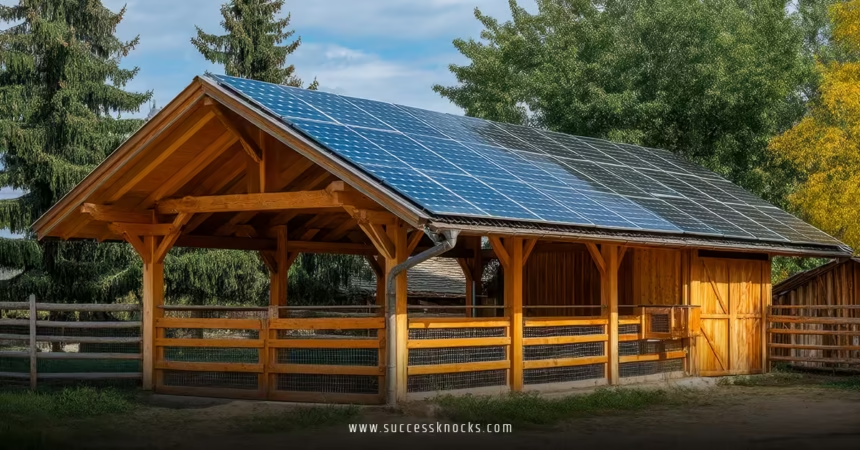
off-grid with solar power gives you true energy independence—no utility bills, no blackouts, just clean, self-generated electricity. But the key to success is proper off-grid solar system sizing. Undersize it, and you’ll run out of power on cloudy days. Oversize it unnecessarily, and you waste money.
This comprehensive off-grid solar system sizing guide walks you through every step: from auditing your energy loads to selecting panels, batteries, inverters, and charge controllers. Whether you’re powering a small cabin, RV, or full homestead, you’ll learn how to build a reliable system tailored to your location and needs.
Why Accurate Off-Grid Solar System Sizing Matters
Unlike grid-tied solar, off-grid systems must produce and store enough energy for 24/7 use, including nights, cloudy periods, and winter lows. Poor sizing leads to:
- Frequent generator use
- Premature battery failure
- Insufficient power for appliances
- Higher long-term costs
In 2026, with affordable LiFePO4 batteries and high-efficiency panels (20-24%+), a well-sized system delivers years of low-maintenance power. The goal: match production to your worst-month needs (usually winter) while building in buffers for growth and losses.
Step-by-Step Off-Grid Solar System Sizing Process
Step 1: Calculate Your Daily Energy Consumption (Load Audit)
List every device you plan to run. Record its wattage (running and surge/start-up for motors like pumps or fridges) and daily hours of use.
Use a Kill-A-Watt meter for real-world measurements. Separate AC and DC loads if applicable.
Example Daily Load for a Modest Off-Grid Cabin (energy-efficient setup):
- LED lights: 50W × 5 hours = 250 Wh
- Energy Star fridge: 150W × 8 hours (compressor duty cycle) ≈ 1,200 Wh
- Well pump: 800W × 0.5 hours = 400 Wh
- Laptop/phone charging: 100W × 4 hours = 400 Wh
- Small inverter for TV/fans: 200W × 3 hours = 600 Wh
- Other (fans, radio, etc.): 300 Wh
Total daily usage: ~3,150 Wh or 3.15 kWh/day.
Realistic ranges in 2026:
- Tiny cabin/RV: 2–5 kWh/day
- Small efficient home (<1,500 sq ft): 8–15 kWh/day
- Larger off-grid home: 20–30+ kWh/day (with efficiency upgrades first)
Action: Multiply your total watt-hours by 1.2–1.5 to account for inverter losses (10-20%) and system inefficiencies.
Step 2: Determine Peak Sun Hours for Your Location
Use the free NREL PVWatts calculator (pvwatts.nrel.gov). Enter your address or nearest location, select “Fixed (open rack)” array, and note the average daily kWh/kW (peak sun hours) for each month—especially the lowest month.
- Sunny Southwest (e.g., Arizona): 5–6.5 peak sun hours
- Northern states or cloudy areas: 2.5–4 hours in winter
- Average U.S.: Often size using the worst-month value (e.g., 3–4 hours)
Add 20–30% buffer for shading, dirt, snow, wiring losses, and panel degradation (0.5–1% per year).
Formula for solar array size (in kW):
Daily energy need (kWh) ÷ Peak sun hours × System efficiency factor (1.2–1.5) = Required array size
Example: 3.15 kWh/day ÷ 4 sun hours × 1.3 = ~1.02 kW array minimum. In practice, add oversizing: aim for 1.5–2.5 kW for this load.
For a typical modest home using 10 kWh/day in a 4-sun-hour winter month: ~3–5 kW array is common, often oversized to 6–8 kW for reliability.
Step 3: Size the Battery Bank (Your Autonomy Insurance)
Batteries store excess daytime power for nights and bad weather. LiFePO4 dominates in 2026 due to 3,000–6,000+ cycles, 80–95% depth of discharge (DoD), and safety.
Key factors:
- Days of autonomy: 2–3 days typical (more in cloudy regions). This is how long the system runs without sun.
- DoD: Use 80–90% for LiFePO4 (vs. 50% for lead-acid).
- Battery efficiency: ~90–95%.
- Temperature derating (colder temps reduce capacity).
Formula:
Battery capacity (kWh) = (Daily kWh × Days of autonomy) ÷ DoD ÷ Efficiency
Example (3.15 kWh/day, 3 days autonomy, 85% DoD, 92% efficiency):
(3.15 × 3) ÷ 0.85 ÷ 0.92 ≈ 12 kWh usable → Recommend 15–20 kWh total bank for buffer.
Many off-grid users target 20–30+ kWh for a comfortable small home to handle extended clouds.
Choose 48V systems for larger setups (lower current, thinner wiring).
Step 4: Size the Inverter
The inverter converts DC battery power to AC for your appliances.
- Continuous rating: At least 20–30% above your peak simultaneous load (sum of everything that might run at once).
- Surge rating: 2–3× continuous for motor start-up surges (pumps, compressors).
Example: Peak load 2,500W → Choose 3,000–4,000W pure sine wave inverter.
For whole-home use, 5–8 kW inverters are common. Consider hybrid inverters that handle solar input directly.
Step 5: Size the Charge Controller (MPPT Recommended)
MPPT controllers are more efficient (up to 98%) than PWM.
Formula: Array watts ÷ Battery voltage = Max current.
Add 25% safety margin for edge-of-cloud effects.
Example: 2,000W array on 48V battery → ~42A → Choose 60A MPPT controller.
Step 6: Add Buffers and Consider Hybrids
- Oversize solar array by 20–50% for winter and future loads.
- Include a small backup generator for extreme cases.
- In variable climates, explore hybrids (solar + wind or micro-hydro) for better year-round performance.
Refer back to Sustainable energy solutions for off-grid living for details on when to add sidekicks like wind or micro-hydro.
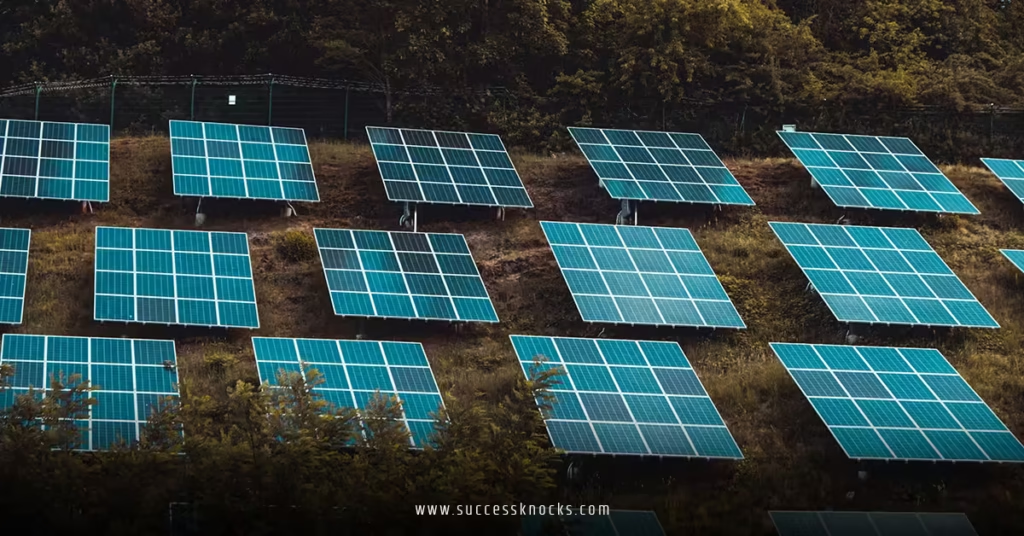
Example Off-Grid Solar System Sizes in 2026
| Setup Type | Daily Usage | Winter Sun Hours | Solar Array | Battery Bank | Inverter | Est. Component Cost Range (2026) |
|---|---|---|---|---|---|---|
| Small Cabin/RV | 3–5 kWh | 3–4 | 1.5–3 kW | 10–20 kWh | 2–3 kW | $8,000–$18,000 |
| Modest Efficient Home | 8–15 kWh | 3–4 | 4–8 kW | 20–40 kWh | 4–6 kW | $25,000–$50,000+ |
| Larger Homestead | 20–30 kWh | 3–5 | 8–15 kW | 40–60+ kWh | 6–10 kW | $50,000–$90,000+ |
Note: Full installed off-grid systems (including labor, wiring, mounts) often range $4–$7+ per watt due to heavy battery requirements—significantly more than grid-tied setups.
Common Off-Grid Solar Sizing Mistakes to Avoid
- Sizing based on average sun hours instead of the worst month.
- Forgetting surge loads (e.g., well pump starting).
- Using optimistic DoD or ignoring temperature effects on batteries.
- Cheap components that fail under real off-grid stress.
- No efficiency upgrades first (LEDs, insulation, efficient appliances can cut loads 30%+).
- Ignoring future needs—size with 20–50% headroom.
Tools and Resources for Precise Sizing
- NREL PVWatts: Best for location-specific sun data.
- Online calculators from Renogy, AltE Store, or Unbound Solar.
- Kill-A-Watt meter + spreadsheet for loads.
- Consult a NABCEP-certified installer for complex sites.
Key Takeaways for Your Off-Grid Solar System
- Start with efficiency — Reduce loads before sizing components.
- Size for the worst case — Winter production and multiple cloudy days.
- LiFePO4 batteries + MPPT controllers deliver the best performance and longevity in 2026.
- Modular design wins — Begin small and expand as needed.
- Accurate off-grid solar system sizing prevents frustration and saves money long-term.
Ready to take the next step? Grab a notepad, run your load audit, and plug your zip code into PVWatts. Then explore quality LiFePO4 options and component matching.
For broader context on building a complete resilient setup, check our guide to Sustainable energy solutions for off-grid living—it covers hybrids, maintenance, and real-world costs to complement this sizing guide.
Your off-grid journey starts with honest calculations. Size it right, and you’ll enjoy reliable, independent power for decades.
FAQs About Off-Grid Solar System Sizing
How much solar do I need for a small off-grid cabin?
A 1.5–4 kW array with 10–20 kWh of LiFePO4 storage often suffices for 3–8 kWh daily use, depending on location and efficiency.
What battery capacity is recommended for 3 days of autonomy?
Multiply daily kWh by 3, then divide by DoD (e.g., 0.85 for LiFePO4) and add efficiency buffer. Most small systems target 15–30 kWh total.
Should I size for average or worst-month production?
Always use the worst month (typically December/January) plus buffers to avoid relying on a generator.
Can I expand my off-grid solar system later?
Yes—modular designs with expandable battery banks and MPPT controllers make scaling straightforward.
How do costs look in 2026?
Component costs continue to drop, but full off-grid systems remain $45k–$65k+ on average for comfortable homes due to robust storage. Start small to test and grow.


