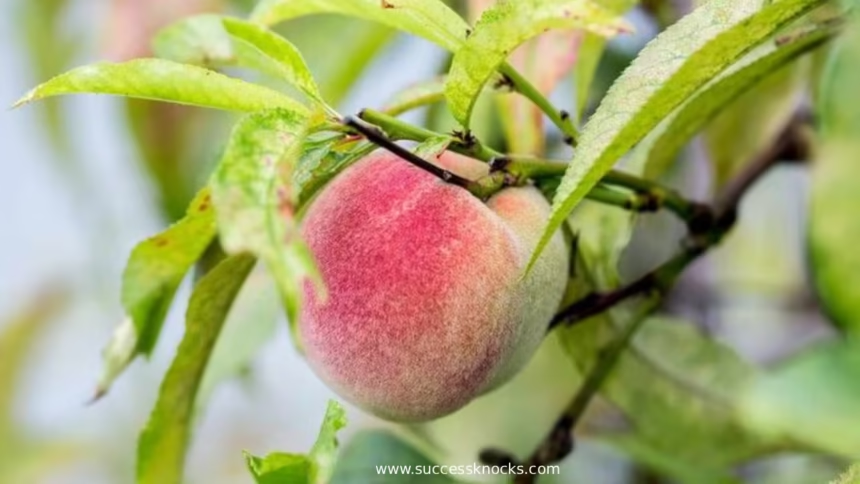
Peach Tree Pruning Guide is the single most important skill every fruit grower needs to master, transforming scraggly, unproductive trees into beautiful, bountiful producers that deliver sweet, juicy peaches year after year.
Essential Peach Tree Pruning Fundamentals
Here’s what proper pruning accomplishes:
- Increases fruit size and quality by directing energy to fewer, better peaches
- Improves air circulation reducing disease pressure significantly
- Maintains manageable tree height for easier harvesting
- Extends tree lifespan by preventing structural problems
- Maximizes sunlight penetration for better fruit ripening
When to Prune Peach Trees: Timing Is Everything
Let me be crystal clear about this: timing can make or break your entire harvest.
The Golden Window: Late Dormant Season
Best pruning time: January through early March (before bud break)
Why this window? Simple. The tree is dormant, disease organisms are less active, and you can see the tree’s structure clearly without leaves blocking your view.
Regional timing adjustments:
- Northern states (Zones 5-6): February to early March
- Southern states (Zones 7-9): January to mid-February
- Extreme southern regions: December to January
What Happens If You Prune at the Wrong Time?
Summer pruning consequences:
- Vigorous water sprout growth
- Increased susceptibility to bacterial canker
- Reduced cold hardiness going into winter
all pruning problems:
- Stimulates late-season growth that won’t harden off
- Increases winter injury risk
- Opens fresh wounds during high-disease periods
Here’s the thing: I’ve seen too many home growers lose entire trees because they pruned in August thinking they were helping. Don’t be that person.
Essential Tools for Professional-Quality Pruning
| Tool Type | Recommended Size | Primary Use | Quality Investment |
|---|---|---|---|
| Bypass Pruners | 8-10 inch | Branches up to 3/4 inch | $40-80 |
| Loppers | 24-32 inch | Branches 3/4 to 2 inches | $50-100 |
| Pruning Saw | 12-15 inch curved | Branches over 2 inches | $30-60 |
| Pole Saw | 8-12 foot reach | High branches | $60-150 |
Tool Maintenance That Actually Matters
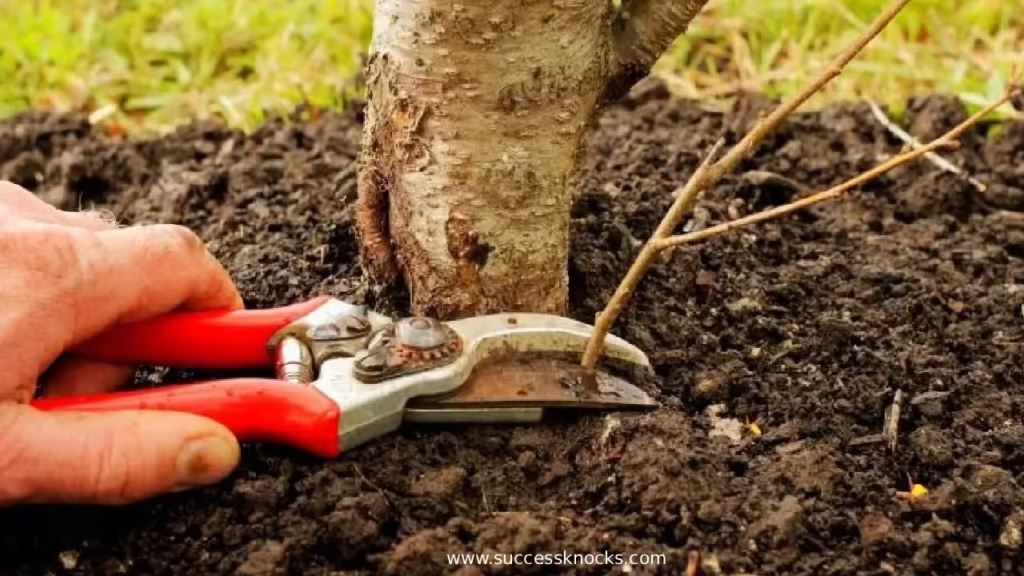
Peach Tree Pruning Guide:Clean tools prevent disease transmission—this isn’t optional. Use rubbing alcohol or 10% bleach solution between trees. Sharp tools make clean cuts that heal faster than ragged tears from dull blades.
Pro tip: Keep a small container of alcohol and a rag clipped to your tool belt. Quick swipes between cuts on diseased wood can save your entire orchard.
The Open Center System: Why It Works for Peaches
Forget what you know about apple trees. Peaches need a completely different approach.
Understanding Open Center Architecture
The open center (or vase shape) creates:
- Maximum light penetration to interior branches
- Excellent air circulation reducing fungal diseases
- Strong structural framework supporting heavy fruit loads
- Easier pest and disease management with better spray coverage
Think of it like this: you’re creating a bowl with 3-4 main scaffold branches rising from a short trunk. Everything else gets removed or shortened.
Establishing the Framework: Years 1-3
Year 1 (Planting):
- Cut the central leader to 24-30 inches above ground
- Remove all branches below 18 inches from ground
- Select 3-4 well-spaced branches for future scaffolds
- Head back selected branches to 12-15 inches
Year 2:
- Remove the central leader completely
- Select final scaffold branches (3-4 total, evenly spaced)
- Remove competing branches and water sprouts
- Head scaffolds back to encourage branching
Year 3:
- Develop secondary branching on scaffolds
- Remove inward-growing branches
- Begin light fruit thinning if tree sets heavily
- Establish final tree height (8-10 feet for easy harvest)
Annual Pruning: The Production Years
Once your peach tree reaches maturity (year 4+), annual pruning becomes about maintenance and optimization.
The Four Ds: Priority Removal List
Always start with these, in order:
- Dead wood – Remove completely, cut back to healthy tissue
- Diseased wood – Cut 6 inches below visible symptoms
- Damaged branches – Storm damage, animal damage, etc.
- Duplicate/crossing branches – Choose the better-positioned one
Advanced Pruning Strategies
Renewal pruning: Remove 20-25% of older wood annually. This keeps the tree producing vigorous, fruitful shoots.
Height control: Never let scaffolds grow beyond your comfortable reach. Head them back to lateral branches growing in the right direction.
Fruit wood management: Peaches fruit on one-year-old wood. You need a constant supply of new shoots while removing older, less productive branches.
Special Considerations for Different Varieties
Some varieties need specific approaches. For instance, when pruning trees that produce varieties like the Belle of Georgia peach, pay extra attention to maintaining good air circulation since white-fleshed varieties can be more susceptible to certain fungal issues than their yellow-fleshed counterparts.
Fruit Thinning: The Often-Overlooked Pruning Component
Here’s something most guides skip: proper fruit thinning is essentially pruning your crop load.
Why Thin Fruit?
Without thinning:
- Small, poor-quality fruit
- Branch breakage from overloading
- Biennial bearing (heavy crop one year, nothing the next)
- Tree stress and shortened lifespan
Thinning Timeline and Technique
Timing: 4-6 weeks after bloom, when fruits are marble-sized
Target spacing: 4-6 inches between remaining fruits
Method: Remove the smallest fruits first, leaving the largest, best-positioned ones
This might feel wasteful, but trust me—you’ll get larger, sweeter peaches and protect your tree’s long-term health.
Common Pruning Mistakes and How to Avoid Them
Mistake #1: The “Haircut” Approach
What it looks like: Cutting every branch back to the same length
Why it’s wrong: Creates dense, twiggy growth with poor fruit production
The fix: Prune selectively, removing entire branches rather than just shortening everything
Mistake #2: Fear of Removing Too Much
What it looks like: Tentative cuts that don’t open up the canopy
Why it’s wrong: Dense trees produce small, poor-quality fruit and harbor diseases
The fix: Be bold. Removing 25-30% of the wood annually is normal for mature peach trees
Mistake #3: Ignoring Water Sprouts
What it looks like: Vigorous vertical shoots growing from main branches
Why it’s wrong: These shade productive wood and rarely produce good fruit
The fix: Remove water sprouts completely during dormant season pruning
Mistake #4: Topping Trees
What it looks like: Cutting the top off the tree with horizontal cuts
Why it’s wrong: Creates weak growth, sunburn damage, and structural problems
The fix: Reduce height by cutting back to lateral branches, never make horizontal cuts on main limbs
Mistake #5: Summer Pruning Mistakes
What it looks like: Major pruning cuts during growing season
Why it’s wrong: Stimulates excessive growth and increases disease risk
The fix: Limit summer pruning to removing water sprouts and light thinning only
Pruning Young Trees vs. Mature Trees
Young Tree Focus (Years 1-4)
Your goal is structure, not fruit production. Resist the urge to let young trees carry heavy crops—it stunts growth and creates weak branch angles.
Key principles:
- Remove fruit the first two years completely
- Establish strong scaffolds with wide crotch angles (45-60 degrees)
- Encourage branching through heading cuts on scaffold limbs
- Maintain central leader removal to keep the center open
Mature Tree Management (5+ Years)
Now you’re balancing structure with production. The tree wants to produce fruit, and your job is managing that energy efficiently.
Annual routine:
- Remove 20-25% of older wood to stimulate new growth
- Maintain tree height at manageable levels
- Thin fruit to optimize size and quality
- Monitor for structural problems before they become serious
Seasonal Pruning Calendar
Late Winter (January-February): Major Pruning
This is your main event. Plan to spend 2-3 hours per mature tree.
Checklist:
- Remove dead, diseased, damaged wood
- Eliminate water sprouts and suckers
- Open up the center for light and air
- Remove 20-25% of older fruiting wood
- Control overall height and spread
Late Spring (May): Light Cleanup
Quick touch-ups and fruit thinning.
Tasks:
- Remove any missed water sprouts
- Thin fruit to proper spacing
- Pinch growing tips on vigorous shoots if needed
Summer (June-July): Minimal Intervention
Only emergency pruning during growing season.
Limited to:
- Storm damage repair
- Diseased branch removal
- Propping heavily loaded branches
Fall (September-October): Hands Off
Resist the temptation to prune. Trees are preparing for dormancy.
Focus on:
- Harvest and cleanup
- Disease prevention
- Planning next year’s pruning strategy
Disease Prevention Through Pruning
Proper pruning is your first line of defense against common peach diseases.
Improving Air Circulation
Target diseases: Brown rot, peach leaf curl, bacterial spot
Pruning strategy: Remove branches that cross through the center, eliminate dense clusters of small branches
Removing Disease Sources
Sanitation pruning:
- Cut diseased wood 6 inches below visible symptoms
- Disinfect tools between cuts on diseased material
- Remove mummified fruit and infected twigs
- Clean up pruning debris immediately
Creating Spray-Friendly Tree Structure
Open canopies allow better pesticide coverage when treatments become necessary. Dense, unpruned trees harbor pests and diseases in areas sprays can’t reach.
Advanced Techniques: Renovation Pruning
Got an old, neglected peach tree? Don’t give up on it yet.
Assessing Renovation Candidates
Good candidates:
- Structurally sound trunk and main scaffolds
- Some vigorous growth present
- No major disease problems
Poor candidates:
- Extensive trunk damage or decay
- Severe disease issues
- Trees over 20-25 years old
Three-Year Renovation Strategy
Year 1: Remove dead, diseased, damaged wood only. Don’t shock the tree.
Year 2: Begin opening the canopy, remove 25-30% of remaining wood.
Year 3: Complete the renovation, establish final structure.
This gradual approach prevents the tree from going into shock while slowly restoring productive capacity.
Pruning Tools Safety and Efficiency
Ladder Safety for High Branches
Never compromise on safety for a few high branches. Use proper orchard ladders, maintain three points of contact, and never lean beyond your base of support.
Better alternatives:
- Pole saws for high cuts
- Lower tree height through proper pruning
- Professional tree service for dangerous work
Efficient Pruning Workflow
Step-by-step approach:
- Walk around the tree first – identify major cuts before starting
- Remove large wood first – creates space to see remaining structure
- Work from inside out – open center, then detail work
- Step back frequently – assess progress and balance
- Clean up immediately – prevents disease spread
Regional Considerations and Climate Adaptation
Northern Growing Regions (Zones 5-6)
Special considerations:
- Later pruning dates (February-March)
- More conservative fruit thinning due to shorter season
- Extra attention to cold damage removal
Southern Growing Regions (Zones 8-9)
Adaptations needed:
- Earlier pruning windows (December-January)
- More aggressive summer pruning to manage vigorous growth
- Heat stress management through proper canopy structure
Coastal and Humid Areas
Focus areas:
- Aggressive canopy opening for air circulation
- Frequent sanitation pruning
- Disease-resistant rootstock selection
Key Takeaways
- Timing is critical – prune only during late dormant season for best results
- Open center system works best for peach trees, unlike apples or pears
- Remove 20-25% annually on mature trees to maintain vigor and production
- Sharp, clean tools prevent disease transmission and make better cuts
- Fruit thinning is essential for size, quality, and tree health
- Structure first, production second when training young trees
- Disease prevention through pruning is more effective than treatment
- Renovation takes 2-3 years for neglected trees—be patient
Conclusion
Mastering peach tree pruning transforms you from someone who owns a fruit tree into someone who manages a productive orchard asset. The techniques in this guide work whether you’re growing a single backyard tree or managing dozens.
Remember: every cut you make should have a purpose. Remove what doesn’t serve the tree’s health and productivity, maintain what does, and always keep the big picture in mind.
Start conservatively your first year, observe how your tree responds, then adjust your approach based on results. Good pruning is as much art as science—and like any skill, it improves with practice.
Your future self (and your peach harvest) will thank you for the time invested in learning these fundamentals.
Frequently Asked Questions
Q: How much of the tree can I safely remove in one pruning session?
A: On mature, healthy peach trees, removing 25-30% of the wood annually is normal and beneficial. Young trees should have lighter pruning to establish structure.
Q: What should I do if I accidentally prune during the wrong season?
A: Don’t panic. Avoid fertilizing to prevent excessive growth, monitor for disease issues, and plan to do proper dormant season pruning as scheduled.
Q: Can I prune a peach tree that’s currently flowering or fruiting?
A: Only for emergency removal of damaged or diseased wood. Save structural pruning for dormant season to avoid reducing your harvest and stressing the tree.
Q: How do I know if a branch is too old and should be removed?
A: Peach wood over 4-5 years old becomes less productive. Look for bark that’s darker and rougher than newer growth, and replace with younger, more vigorous branches.
Q: Should I seal pruning cuts with wound dressing?
A: No. Modern research shows that wound dressings can actually trap moisture and promote decay. Clean cuts heal better naturally when left exposed to air.