
The Perseid Meteor Shower Guide for 2026 comes down to one thing: watch after midnight and into the pre-dawn hours for the best chance to see the most meteors.[2][4][5] With the peak landing during a new moon, the sky stays darker than usual, which gives the Perseids a real edge this year.[4][7][11]
- Best viewing window: After midnight until dawn is the sweet spot for most observers in the USA.[2][4][16]
- Why 2026 stands out: The peak lines up with a new moon, so moonlight should not wash out the fainter meteors.[4][7][11]
- No gear needed: You do not need a telescope or binoculars. Your eyes are enough.[16][19]
- Where to look: Face a wide stretch of sky, ideally with an open view toward the northeast.[16][19]
- Best strategy: Find dark skies, stay out for at least 30 minutes, and give your eyes time to adjust.[19][18]
| Viewing time | What to expect | Best for |
|---|---|---|
| 9 p.m. to midnight | A few early meteors, including occasional long earthgrazers | Casual skywatchers |
| Midnight to 4 a.m. | Stronger meteor activity as the radiant rises higher | Best overall viewing window |
| 4 a.m. to dawn | Excellent odds if skies are clear and darkness remains strong | Serious observers |
Perseid Meteor Shower Guide: when the peak happens in 2026
The Perseids are active from mid-July through late August, but the peak is expected overnight on August 12–13, 2026, with the strongest observing window falling in the pre-dawn hours of August 13 across the USA.[4][5][7][11] Several major astronomy sources point to the same practical advice: if you want the most action, get out after midnight and keep watching until sunrise.[2][4][16]
That matters because the shower is not evenly distributed across the night. As Earth rotates, the part of the planet you’re standing on turns into the debris stream, and the radiant climbs higher above the horizon. That is why the sky tends to feel more “alive” in the hours before dawn.[16][19]
Here’s the thing: the exact peak time is useful, but it is not the whole story. Meteor showers reward window watching, not stopwatch watching.
Perseid Meteor Shower Guide: why the new moon helps
The 2026 Perseid peak lands during a new moon, which is a big win for observers because moonlight is one of the fastest ways to flatten meteor visibility.[4][7][11] A darker sky means fainter meteors stand out more clearly, and bright Perseid fireballs can look sharper and more dramatic.
In plain English, the sky gets out of the way. That’s what you want.
If you’re comparing years, this is the kind of setup experienced observers circle on the calendar. Dark skies, strong activity, and a reliable annual shower. Good combo.
Perseid Meteor Shower Guide: the best place to watch
You want darkness first, comfort second, and direction third. A backyard under streetlights can still work for the brightest meteors, but a rural or suburban dark-sky spot will always outperform a lit-up neighborhood.[18][19]
Look for:
- Open sky with a wide view overhead
- Low light pollution away from city glow
- Clear northeastern horizon if possible
- A place you can sit or lie down comfortably for an hour or more[16][18][19]
The best viewing spot is not the fanciest one. It is the darkest one you can reach without making the night miserable.
Perseid Meteor Shower Guide: what time is the peak tonight august 13 2026 dark skies new moon?
If your main search is what time is the Perseid meteor shower peak tonight august 13 2026 dark skies new moon, the practical answer is simple: start after midnight, then stay through the pre-dawn hours.[2][4][16] The theoretical maximum is reported around 14:53 UTC on August 13, but for U.S. viewers the more useful takeaway is that the late-night and early-morning hours of August 13 local time line up closely with the peak window.[2][7]
That is why so many guides land on the same advice. Not because they are copying each other, but because the sky mechanics are the same everywhere: higher radiant, darker night, better odds.[2][4][16]
If you only remember one thing from this Perseid Meteor Shower Guide, remember this: midnight to dawn beats evening every time.
Perseid Meteor Shower Guide: step-by-step plan for beginners
- Pick a dark location away from direct lights.[18][19]
- Get there early so you are settled before the best hours begin.
- Turn off bright screens and give your eyes time to adapt for about 30 minutes.[19]
- Face a wide area of sky instead of staring at one exact point.
- Start watching after midnight and keep going until dawn if you can.[2][4][16]
- Use a chair, blanket, or reclining setup so neck strain does not end the session early.[18]
- Stay patient for at least one hour. Meteor viewing often comes in bursts.
What usually happens? People go out for ten minutes, see nothing, and quit right before the sky starts paying out. Don’t do that.
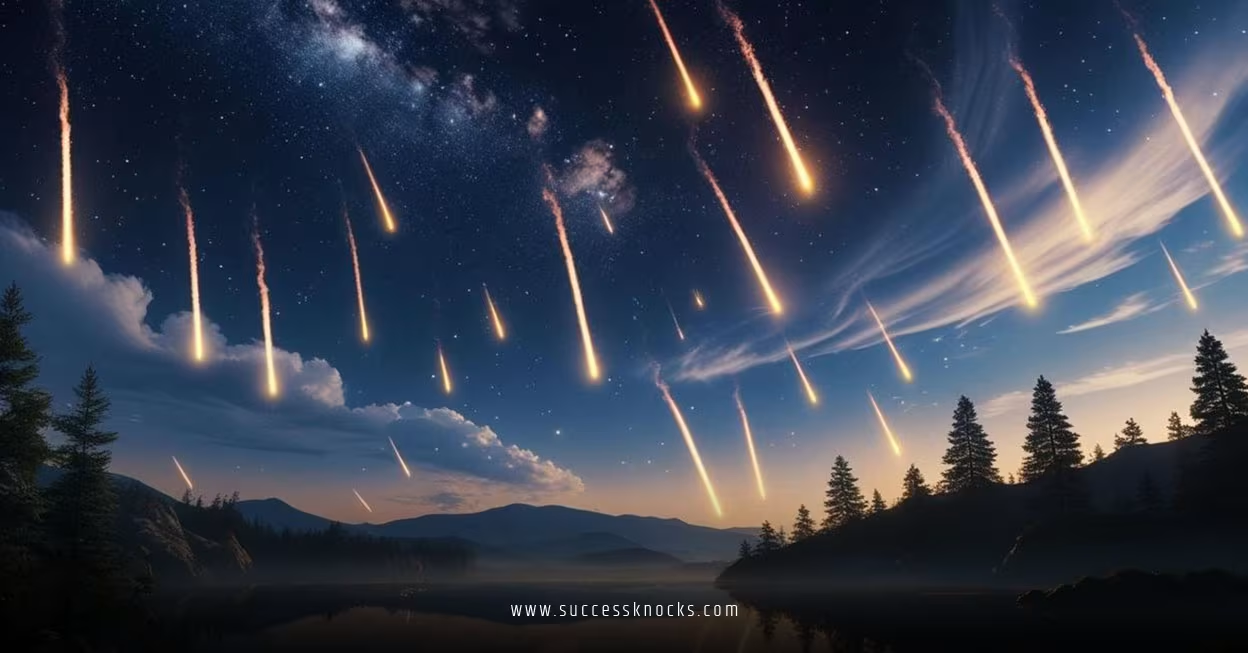
Perseid Meteor Shower Guide: where to look in the sky
The Perseids appear to radiate from Perseus, which rises in the northeastern sky, but you do not want to stare only at that point.[16][19] The longest and most eye-catching meteors often show up when you look a little away from the radiant, which gives you longer streaks across the sky.
A good rule: look northeast sometimes, but keep your gaze wide. That keeps you from missing meteors that flash across other parts of the sky.
Perseid Meteor Shower Guide: common mistakes and how to fix them
- Mistake: Watching from a bright backyard.
Fix: Move to a darker spot with less light pollution.[18][19] - Mistake: Leaving after 10 minutes.
Fix: Stay at least 30 to 60 minutes so you actually catch the burst pattern.[19] - Mistake: Using binoculars or a telescope.
Fix: Use your naked eye. Meteors are a wide-sky event.[16][19] - Mistake: Looking at your phone every minute.
Fix: Keep screens dim or off so night vision stays strong. - Mistake: Expecting constant meteors.
Fix: Expect pauses. Then sudden streaks. That is normal.
Perseid Meteor Shower Guide: what the experts say
The American Meteor Society and NASA both describe the Perseids as best viewed in the pre-dawn hours, with some meteors visible as early as around 10 p.m., but stronger activity later at night.[16][19] NASA also emphasizes that you do not need optical gear and that a dark, unobstructed location matters most.[16][19]
The Planetary Society also highlights the shower as a major annual skywatching event, which is a good reminder that the Perseids are not a niche hobbyist event. They are one of the easiest meteor showers for beginners to enjoy.[1]
Perseid Meteor Shower Guide: a simple plan if you want the best shot tonight
If I were heading out tonight, I would do three things.
First, I’d choose a spot with the darkest sky I could reach. Second, I’d arrive before midnight and let my eyes adapt fully. Third, I’d stay out until at least 2 a.m. to 4 a.m., because that is where the payoff usually gets real.[2][4][16]
That’s the whole play. No drama. No gear pile. Just timing, patience, and darker skies.
Key takeaways
- The Perseid Meteor Shower Guide for 2026 points to the overnight Aug. 12–13 peak.[4][5][11]
- The best viewing time is after midnight, with the strongest window usually before dawn.[2][4][16]
- The new moon makes 2026 especially good because moonlight will not wash out the sky.[4][7][11]
- A dark location matters more than equipment.[18][19]
- You do not need a telescope or binoculars.[16][19]
- Give your eyes about 30 minutes to adjust.
- Look broadly across the sky, not just at Perseus.
- Stay outside long enough to catch the bursts, not just the quiet patches.
The Perseids are one of the easiest big sky events to enjoy, and 2026 gives you a cleaner-than-usual shot because of the new moon. If you want the full effect, go late, go dark, and stay patient.
FAQs
What time is the best viewing window in this Perseid Meteor Shower Guide?
The best viewing window is after midnight through dawn, with the strongest odds usually in the pre-dawn hours.[2][4][16]
Does the new moon really improve the Perseid Meteor Shower Guide conditions in 2026?
Yes. A new moon reduces moonlight and makes fainter meteors easier to see.[4][7][11]
Can I still see the Perseids before midnight?
Yes, but the rates are usually lower. Some meteors can appear as early as 10 p.m., though the show typically improves later at night.[16][19]