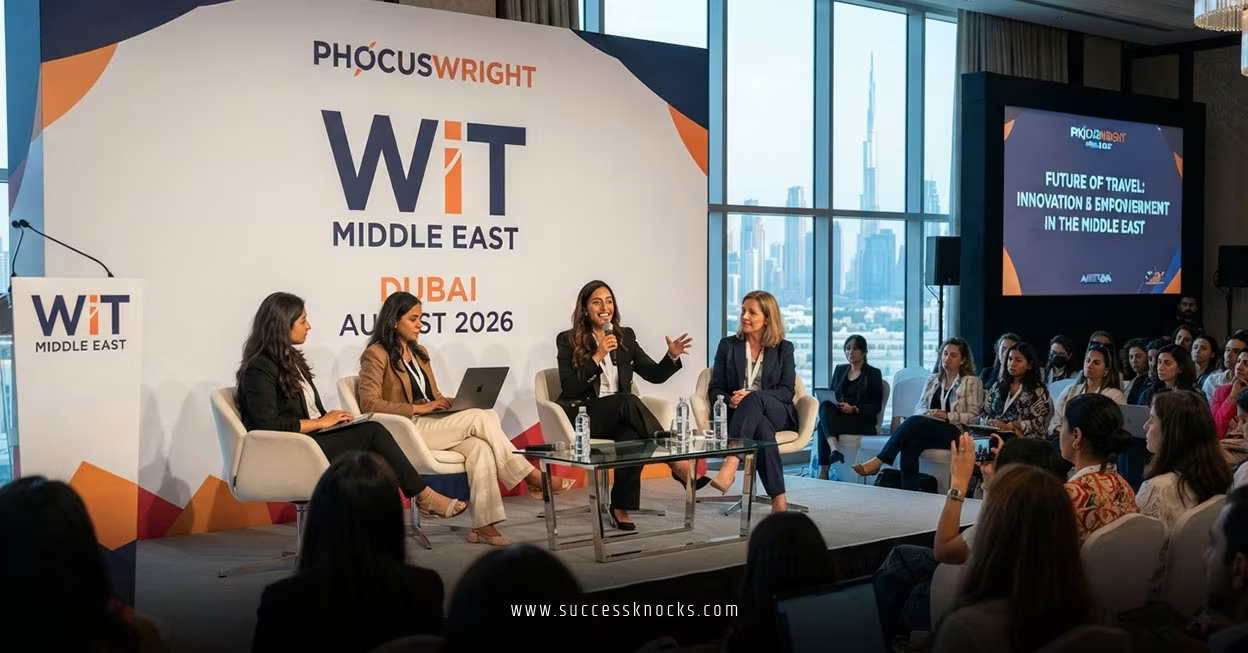
Phocuswright WiT Middle East Dubai August 2026 is the kind of travel-industry event that matters if you care about where the market is heading, not where it already is. It brings together the people shaping travel tech, distribution, marketing, investment, and regional growth — and that mix is exactly why it gets attention.
- It’s a travel and technology event focused on the Middle East, with Dubai as the anchor city.
- It matters because the region sits at the intersection of tourism growth, airline strategy, hotel demand, and digital booking behavior.
- The best reason to watch it is simple: you get a front-row seat to where travel demand, innovation, and commercial partnerships are moving next.
- If you’re a beginner, this event can feel big and noisy. The trick is to show up with a plan, not just curiosity.
- If you’re in the USA, it’s especially useful for understanding global travel trends that can affect suppliers, agencies, and brands serving international travelers.
What Phocuswright WiT Middle East Dubai August 2026 actually is
At a practical level, Phocuswright WiT Middle East Dubai August 2026 is a conference-style industry gathering built around travel innovation and market intelligence. The point is not just panels and badges. The point is deal flow, signal detection, and relationship building.
For context, Phocuswright positions itself as a travel industry research and events company, while WiT is known for travel technology and distribution conversations with a strong Asia-Pacific and global lens. That combination makes this event relevant to anyone tracking how travel is sold, bought, and monetized in the Middle East. If you want the official starting point, see the Phocuswright event ecosystem.
Here’s the thing: events like this are less about “attendance” and more about alignment. Are you there to learn, prospect, recruit, compare vendors, or spot market shifts before your competitors do?
Why it matters in 2026
Dubai remains one of the most visible hubs for global travel commerce, so a Middle East-focused travel summit there naturally draws attention from airlines, hospitality groups, OTAs, DMCs, investors, and tech vendors. In travel, location is not decoration. It’s strategy.
The kicker is that the Middle East travel story is now bigger than destination marketing. It includes digital payments, loyalty, airline capacity, luxury demand, AI-enabled servicing, and cross-border traveler behavior. For broader market context, the UN Tourism data portal is a useful reference point for macro travel trends.
If you’re trying to understand why this event matters, ask yourself: where else do you get concentrated access to decision-makers across travel distribution, product, and growth in one room?
Phocuswright WiT Middle East Dubai August 2026 at a glance
| What to look for | Why it matters | Beginner takeaway |
|---|---|---|
| Speaker lineup | Signals who is shaping the agenda | Prioritize sessions led by operators, not just polished presenters |
| Attendee mix | Tells you whether the room is buyers, sellers, or analysts | Network with people closest to revenue decisions |
| Topics covered | Reveals what the industry thinks is urgent now | Focus on distribution, AI, experience, and regional growth themes |
| Exhibitors and sponsors | Shows where money is being placed | Scan for companies expanding in the region |
| Post-event content | Extends the value beyond the conference dates | Use recaps, decks, and commentary to capture missed insights |
Who should pay attention
Phocuswright WiT Middle East Dubai August 2026 is most useful for people in travel and adjacent sectors who need live intelligence, not just desk research.
It’s a fit for:
- Travel startups looking for partnerships or market validation
- OTAs and booking platforms tracking regional demand shifts
- Hotels and resorts watching distribution and guest acquisition trends
- Airlines and aviation teams following commercial and digital innovation
- Investors scouting travel tech themes with real-world traction
- Consultants, analysts, and content teams who need credible industry context
If you’re a beginner, don’t overcomplicate it. You do not need to “know everything” before engaging. You need a clean purpose and a shortlist of people or themes to track.
What usually happens at an event like this
Most people come in hot and leave with a stack of notes they never use. That is the standard failure mode. The better play is to treat the event like a field study.
You’ll usually see:
- Keynotes on where the market is moving
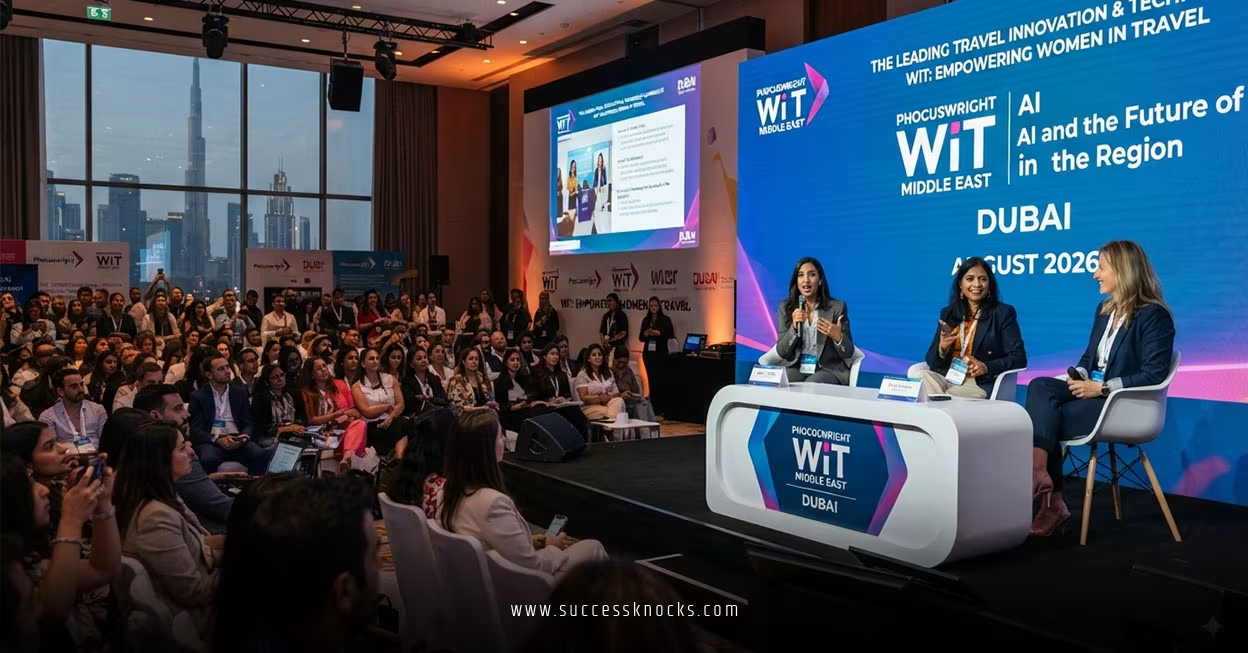
- Panels on distribution, payments, AI, loyalty, and traveler behavior
- Networking that happens faster than formal meetings
- Vendor pitches disguised as “innovation”
- Side conversations that reveal more than the stage sessions do
In my experience, the real value is rarely on the main stage. It’s in the hallway, the dinner, the follow-up email, and the one question someone answers too honestly.
Step-by-step action plan for beginners
If this is your first time tracking or attending Phocuswright WiT Middle East Dubai August 2026, keep it simple.
- Define your goal.
Decide whether you want leads, learning, competitors, partners, or trend intel. - Pick three themes.
Choose a narrow focus such as AI in travel, Middle East hospitality growth, or distribution strategy. - Build a target list.
Identify speakers, sponsors, or attendees you want to understand before the event starts. - Prepare two versions of your pitch.
One for networking. One for follow-up. Short wins. - Take notes by category.
Separate market signals, product ideas, and contact opportunities so your notes stay usable. - Follow up within 48 hours.
That’s where most event value is won or lost.
If I were attending as a beginner, I’d spend less time collecting brochures and more time asking, “What problem are you solving right now?” That question cuts through the noise fast.
Common mistakes and how to fix them
| Common mistake | Why it hurts | Fix |
|---|---|---|
| Going without a goal | You leave with random notes, not useful insight | Set one clear outcome before you go |
| Chasing every session | You burn time and miss the best conversations | Pick sessions tied to your objective |
| Ignoring follow-up | Contacts fade fast after the event | Send short, specific follow-ups within 48 hours |
| Treating it like a social event only | You miss commercial and strategic value | Balance networking with structured learning |
| Not researching speakers | You waste opportunities to ask sharper questions | Review bios, company context, and recent news first |
One more mistake: people obsess over the “big name” and ignore the people doing the actual work. Bad move. In travel, operators often tell you more truth than keynote polish ever will.
Phocuswright WiT Middle East Dubai August 2026 and search intent
If someone is searching this topic, they usually want one of four things: event basics, strategic value, attendee relevance, or prep guidance. That means the content has to answer fast and still go deep enough to be useful.
The strongest pages on topics like this usually combine clear structure, fresh context, and authoritative sourcing. Google’s own SEO Starter Guide emphasizes helpful, original, well-organized content, which is exactly the approach that works here.
What to watch before you decide to attend or cover it
Before you commit time or budget, check the basics:
- Confirm the official event page and dates
- Review the speaker list for real operators and decision-makers
- Check whether the agenda focuses on strategy, sales, or surface-level trends
- Look for sponsor categories that match your market
- See whether post-event recap content is available for catch-up value
A useful rule: if the speaker roster is heavy on vendor self-promotion and light on operators, the event may still be useful — but only if your goal is lead generation or category tracking.
External links worth keeping open
- Phocuswright event ecosystem for official event and research context
- UN Tourism data portal for broader tourism trend context
- Google Search Central SEO Starter Guide for content quality and structure best practices
Key takeaways
- Phocuswright WiT Middle East Dubai August 2026 is a travel-industry event focused on market intelligence, networking, and innovation.
- Dubai is a meaningful host city because it sits at the center of regional travel, hospitality, and commercial activity.
- The event matters most to people tracking distribution, travel tech, AI, partnerships, and growth.
- Beginners should attend with a clear goal, a short target list, and a follow-up plan.
- The best insights usually come from side conversations, not just the stage.
- If you cover or attend the event, focus on operator insights, attendee mix, and market signals.
- Good preparation beats broad curiosity every time.
- The real payoff is not the badge. It’s the contacts, patterns, and decisions you make afterward.
If you want to get value from Phocuswright WiT Middle East Dubai August 2026, go in with intent, not just interest. That’s how a crowded conference turns into a useful business advantage.
FAQs
What is Phocuswright WiT Middle East Dubai August 2026?
It is a travel-industry event centered on innovation, distribution, and market trends in the Middle East, with Dubai as the host location.
Who should attend Phocuswright WiT Middle East Dubai August 2026?
It is most useful for travel companies, startups, investors, analysts, and marketers who want direct access to regional travel intelligence and networking.
How do I get value from Phocuswright WiT Middle East Dubai August 2026 if I’m a beginner?
Pick one goal, study the speaker list, focus on a few high-value conversations, and follow up quickly after the event.