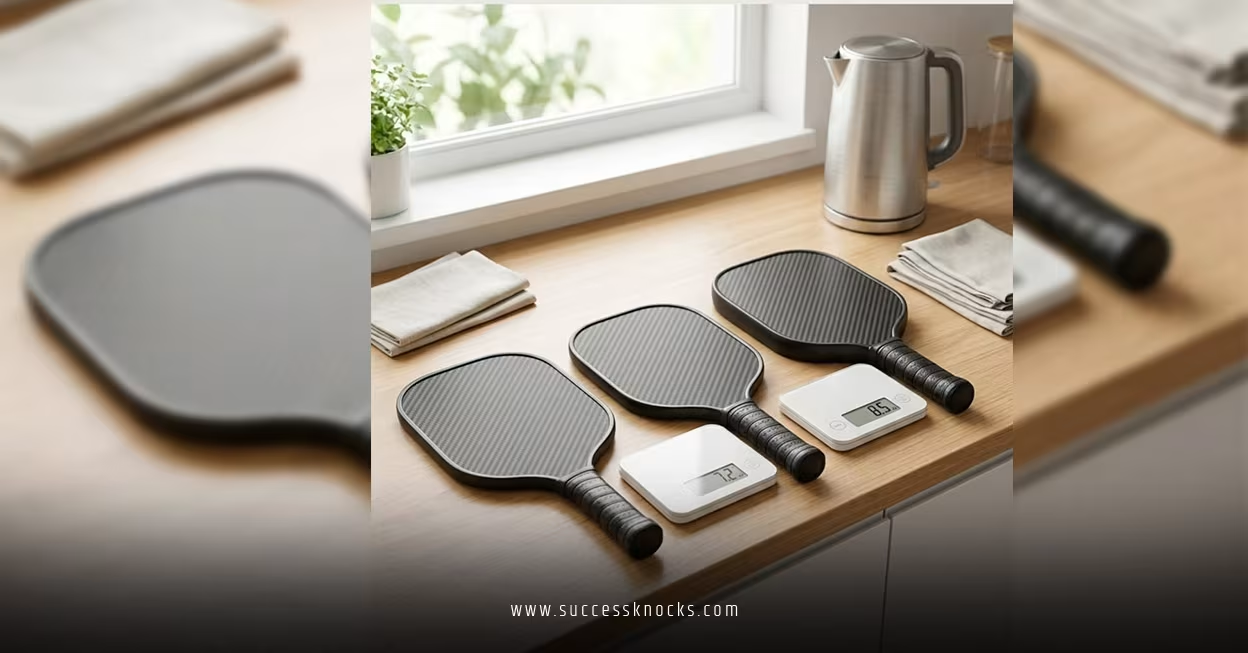
The right pickleball paddle weight guide keeps things simple: lighter paddles move faster, heavier paddles add stability and punch, and midweight paddles are the safest starting point for most players.[1][16] If you want the short version, most beginners and recreational players should start in the midweight range and adjust from there based on comfort, control, and arm fatigue.[1][2][16]
- Lightweight paddles are easier to swing and help at the net, but they can feel less stable on hard shots.[1][8]
- Midweight paddles usually give the best all-around balance of power and control.[1][15][16]
- Heavyweight paddles offer more plow-through and stability, but they can wear out your arm faster.[1][6][8]
- The best choice depends on your skill level, strength, and playing style, not just the number on the spec sheet.[1][6][11]
- If you are also shopping for a starter setup, this connects directly to the best beginner pickleball paddle 2026 decision.
Pickleball paddle weight guide: the quick answer
If you are new or undecided, start with a midweight paddle around 7.3 to 8.0 ounces.[1] That range is the most commonly recommended starting point because it balances maneuverability, control, and enough mass to handle pace without feeling twitchy.[1][16]
Some guides push the practical beginner range a little higher, around 7.5 to 8.0 ounces or 7.8 to 8.4 ounces, but the theme is the same: middle of the road is the smart first move.[2][4][5][11] You can fine-tune from there once you know whether your game needs more speed, more stability, or less strain.
What paddle weight actually changes
Weight changes how the paddle behaves in your hand and through contact.
- Lighter paddles accelerate faster, so they help with quick hands, reaction volleys, and less arm fatigue.[1][8]
- Heavier paddles absorb more incoming pace and can feel more stable on blocks and drives.[1][6][8]
- Midweight paddles sit in the middle, which is why they are the default recommendation for most players.[1][15][16]
Here’s the kicker: a paddle that sounds perfect on paper can still feel wrong in real play. Swing weight, balance point, grip size, and face shape all affect how heavy a paddle actually feels.[4][6]
Pickleball paddle weight guide by category
| Weight range | Category | Best for | Tradeoff |
|---|---|---|---|
| Under 7.3 oz | Lightweight | Fast hands, quick resets, reduced arm load | Less stability and built-in power |
| 7.3 to 8.0 oz | Midweight | Most beginners and all-around players | Not specialized for maximum speed or power |
| Over 8.0 oz | Heavyweight | Power, stability, blocking hard drives | More fatigue, slower hand speed |
That table lines up with multiple equipment guides, which consistently place the “safe” starting point in the midweight lane.[1][8][16]
How to choose the right weight for your game
If you are a beginner
Start in the middle. A midweight paddle gives you enough control to learn touch shots and enough mass to avoid a flimsy feel.[1][2][16]
If you have tennis or racquet-sport background, you may lean slightly heavier than a total beginner. If you have elbow or shoulder issues, lean lighter.[6][8][12]
If you play mostly doubles
Doubles rewards fast hands and quick reactions at the kitchen line. A lighter or midweight paddle usually makes more sense than a heavy one.[1][8][12]
If you play mostly singles
Singles asks for more baseline depth and pace. A slightly heavier paddle can help with stability and shot penetration.[6][12]
If you have arm pain or fatigue
Go lighter. Several guides specifically recommend lightweight options for players dealing with arm discomfort, or at least tell them to stay away from overly heavy paddles.[1][8][14]
If you want more power
A heavier paddle can help, but it is not a free upgrade. More weight can add pace, yet it can also slow your hands and make long sessions harder on your body.[1][6][8]
Pickleball paddle weight guide: how to test your current paddle
Use this simple check before buying anything else:
- Hold the paddle out in front of you for 30 to 60 seconds.
- Swing it through shadow forehands, backhands, and volleys.
- Hit a few dinks and blocks.
- Pay attention to your wrist, forearm, elbow, and shoulder.
- Notice whether the paddle feels stable or twitchy on off-center contact.
If your arm burns fast, the paddle is probably too heavy or too head-heavy for you.[6] If it feels too easy to push around on contact, you may need a little more mass.[1][8]
Step-by-step action plan for choosing paddle weight
- Start with midweight unless you already know you prefer light or heavy.[1][16]
- Match the paddle to your main format: doubles usually favors quicker handling; singles can tolerate more weight.[6][12]
- Check grip comfort because a poor grip can make any weight feel worse.[6][11]
- Test the paddle in real points, not just in a store.
- Judge the paddle by misses, fatigue, and confidence, not hype.
- If needed, make small adjustments with tape instead of jumping to a whole new paddle immediately.[4][14]
What usually happens is this: players buy too much paddle, then spend weeks fighting it. Start neutral. Then tune.
Common mistakes and how to fix them
- Choosing heavy because it sounds powerful
Fix: remember that more weight can mean more stability, but it also means slower hands and more fatigue.[1][8] - Choosing light because it feels easy at first
Fix: a feather-light feel can get unstable when the pace rises.[1][15] - Ignoring swing weight
Fix: static weight is only part of the story; balance and shape can make the paddle feel heavier or lighter than the spec sheet says.[4][6] - Buying for an advanced game before your basics are ready
Fix: beginners usually benefit more from control and forgiveness than from raw pop.[1][16] - Not testing after adjustments
Fix: play several sessions before deciding the paddle is wrong for you.[12][14]
How to tune paddle weight without starting over
If you like your paddle but want a different feel, add small amounts of weight instead of replacing the whole setup. Guides on paddle tuning recommend adding weight in small increments and checking the result before adding more.[4][14]
- Add weight toward the top if you want more power and plow-through.
- Add weight toward the sides if you want more stability.
- Add weight near the handle if you want a slightly more maneuverable feel.[4]
Do it slowly. One strip. Then test. Then decide.
What weight most beginners should buy
For most new players, the smartest answer in a pickleball paddle weight guide is still midweight.[1][2][16] That range is beginner-friendly because it gives you enough control to learn, enough stability to handle pace, and enough versatility to grow with your game.
If you are specifically shopping for the best beginner pickleball paddle 2026, that midweight sweet spot is where the best value usually lives.
Key takeaways
- Midweight paddles are the best starting point for most players.[1][16]
- Lightweight paddles help with speed and arm comfort.[1][8]
- Heavy paddles add stability and power, but cost you quickness.[1][6]
- Your ideal paddle weight depends on style, strength, and injury history.[6][8][12]
- Do not judge weight by ounces alone; balance and swing weight matter too.[4][6]
- Beginners should prioritize control and forgiveness over maximum power.[1][16]
- If you are unsure, start middle and adjust later.[1][2][16]
- The best paddle is the one that helps you play longer, miss less, and trust your swing.
Pick the paddle that feels clean in your hand and steady on contact. That is the real win.
FAQs
What is the best weight in a pickleball paddle weight guide for beginners?
Most beginners do best with a midweight paddle around 7.3 to 8.0 ounces because it balances control, power, and maneuverability.[1]
Is a lighter or heavier paddle better for the best beginner pickleball paddle 2026?
For most beginners, neither extreme is ideal. A midweight paddle is usually the best choice, while lighter paddles suit speed-focused players and heavier paddles suit power-focused players.[1][8][16]
Can I use a paddle weight guide to find the best beginner pickleball paddle 2026?
Yes. Paddle weight is one of the fastest ways to narrow your choices. If you want the best beginner pickleball paddle 2026, start with midweight and then refine by grip comfort, shape, and feel.[1][4][16]