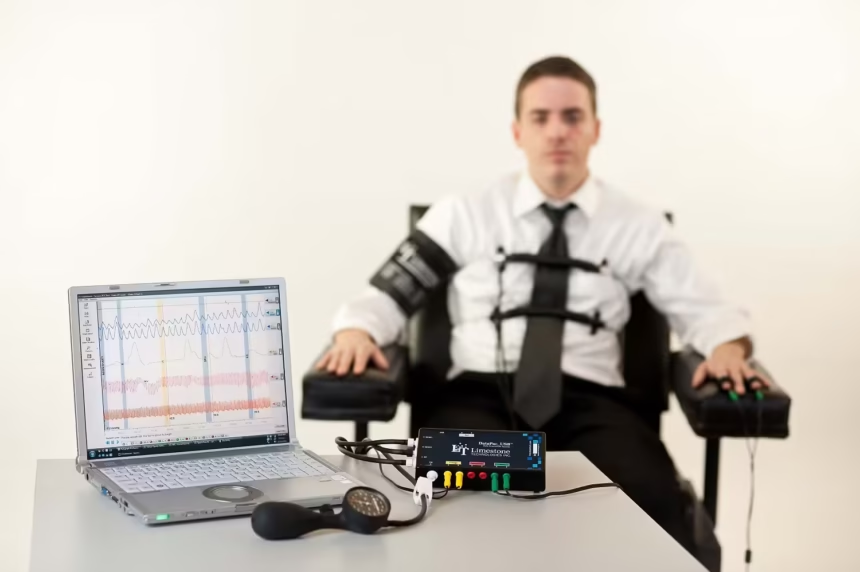
Polygraph examination is a specialist profession that combines forensic psychophysiology, investigative interviewing, structured test methodology, physiological data recording, numerical evaluation, ethics, and professional reporting. It is not enough to simply understand how a polygraph instrument works. A competent examiner must know how to conduct a full examination from the first client contact to the final written opinion.
For candidates in Europe who want to enter this profession through a structured route, Polygraph Training presents a dedicated pathway for polygraph examiner education. The platform promotes Beginner and Advanced Polygraph Examiner Training approved by the European Polygraph Academy and the British Polygraph Society, with online learning and practical training in Madrid. ([Polygraph Training Europe][1])
A European Training Pathway for Polygraph Examiners
The main value of PolygraphTraining.eu is that it does not present polygraph training as a single short course. Instead, it offers a staged development pathway. This is important because professional polygraph work requires progressive training, supervised practice, and a clear distinction between foundation-level knowledge and independent examiner competence.
The training structure is based on two levels:
Beginner Polygraph Examiner Course — designed as the foundation stage for candidates starting their professional education.
Advanced Polygraph Examiner Training — designed for candidates progressing toward professional practice, including online learning and a 5-day practical workshop in Madrid. ([Polygraph Training Europe][1])
This structure helps prevent a common misunderstanding in the industry: completing an introductory course does not automatically make someone ready to conduct professional examinations independently. The correct route is gradual — first theory, then applied methodology, then supervised practical competence.
Beginner Polygraph Examiner Course
The Beginner course is presented as the first step for candidates who want to understand the scientific, technical, and procedural foundations of polygraph examination. According to the information available on PolygraphTraining.eu, the beginner programme includes a substantial online learning component and is described as EPA and BPS approved. ([Polygraph Training Europe][1])
This stage is important because every professional examination depends on strong foundations. A candidate must understand what the instrument records, how physiological reactions are produced, how comparison-question formats work, how test questions are structured, and how an examiner should manage the pre-test interview.
A strong beginner curriculum should introduce areas such as:
- forensic psychophysiology;
- history and development of polygraph examination;
- components of the polygraph instrument;
- respiration, electrodermal, cardiovascular, and movement channels;
- psychological-set principles;
- comparison-question test formats;
- pre-test interview structure;
- question formulation;
- chart collection;
- basic scoring concepts;
- professional ethics;
- suitability assessment;
- limitations, contraindications, and examinee consent.
The purpose of this stage is not simply to teach terminology. It should help students understand the logic of the polygraph examination as a structured forensic procedure.
Advanced Polygraph Examiner Training
The Advanced course is the professional development stage. PolygraphTraining.eu describes the Advanced programme as a hybrid course that includes online e-learning and a 5-day Practical Workshop in Madrid. The website also states that the advanced route supports eligibility for EPA Practising Membership and a BPS membership pathway. ([Polygraph Training Europe][1])
This practical element is especially important. Polygraph examination cannot be mastered only through reading materials or online lessons. The examiner must learn how to control the examination environment, communicate with the examinee, attach sensors correctly, collect clean physiological data, identify artefacts, recognise possible countermeasures, score charts, and prepare a professional opinion.
During advanced training, students should move from theoretical understanding into examiner performance. This includes practical exercises, case scenarios, supervised examinations, question review, chart interpretation, and examiner decision-making.
Practical Workshop in Madrid
The Madrid workshop is one of the strongest parts of the training model. PolygraphTraining.eu presents it as a 5-day intensive practical workshop with supervised training. The site lists the practical component as 40 hours, with 50 topics across 5 supervised days. ([Polygraph Training Europe][1])
This matters because the real work of a polygraph examiner happens in the examination room. Candidates must learn how to apply procedure under realistic conditions. A professionally trained examiner must be able to:
- prepare the examination room;
- verify suitability and consent;
- conduct a structured pre-test interview;
- formulate relevant, comparison, and neutral questions;
- explain the process clearly to the examinee;
- attach polygraph sensors correctly;
- operate the instrument;
- identify poor data quality;
- recognise artefacts and movement;
- apply scoring rules;
- interpret physiological recordings;
- conduct the post-test phase;
- write a clear and defensible report.
A practical workshop also allows instructors to correct mistakes that students may not notice themselves. This includes poor question wording, weak pre-test structure, incorrect sensor placement, over-talking during the examination, misreading physiological responses, or applying scoring rules inconsistently.
Why Accreditation and Recognition Matter
In Europe, polygraph practice is not regulated in the same way in every country. This makes professional standards even more important. Candidates should choose training that is connected to recognised professional bodies, clear curricula, ethical rules, and minimum training hours.
The European Polygraph Association states that full membership requires completion of a recognised forensic psychophysiology training programme containing at least 400 hours of theoretical and practical training. It also requires evidence of ethical and moral suitability through an official certificate from the candidate’s country of origin. ([European Polygraph Association][2])
This shows why a serious training pathway should not be reduced to a weekend seminar. Professional examiner preparation needs depth, structure, assessment, and practical supervision.
Who Is This Training For?
Polygraph examiner training may be suitable for candidates who already work in investigation, security, law enforcement, military, intelligence, private investigation, HR investigation, legal support, psychology, criminology, fraud prevention, or compliance.
It may also be suitable for professionals who want to add credibility assessment services to an existing investigative or forensic practice.
However, the profession requires more than technical curiosity. A good candidate should have:
- strong communication skills;
- emotional control;
- ethical judgment;
- analytical thinking;
- attention to detail;
- ability to follow strict procedure;
- professional maturity;
- respect for confidentiality;
- willingness to continue learning after certification.
Polygraph examination often deals with sensitive matters, including accusations, relationship disputes, theft, workplace misconduct, sexual behaviour, safeguarding issues, and criminal allegations. The examiner must be able to handle these situations professionally.
Why the Hybrid Model Works
The hybrid model used by PolygraphTraining.eu is practical for European students. Theory can be studied online, while practical examiner skills are developed in person. This makes the training more accessible for candidates from different countries while still preserving the essential face-to-face practical component.
The online part allows students to study the theoretical material at their own pace. The in-person Madrid workshop then gives them the opportunity to apply that knowledge under instructor supervision.
This approach is especially useful for candidates who cannot travel for a long residential programme but still want structured professional training with a practical component.
A Professional Route, Not Just a Certificate
One of the most important points for future students is that polygraph training should be understood as professional formation, not simply certificate collection. A certificate is valuable only when it represents real knowledge, tested competence, ethical preparation, and practical ability.
The purpose of a proper examiner training pathway is to produce professionals who can conduct examinations safely, ethically, and methodologically. That includes knowing when not to test someone, how to identify unsuitable examinees, how to avoid leading questions, how to protect confidentiality, and how to explain findings without exaggeration.
A professional examiner must also understand that the polygraph is not a magic device. It is a scientific and procedural tool that requires expert administration, correct methodology, high-quality data collection, and responsible interpretation.
Why PolygraphTraining.eu Is Important for the European Market
Europe needs clearer, more accessible training pathways for future polygraph examiners. Many candidates are interested in the profession but do not know where to start, which course is suitable, what recognition is needed, or whether online-only training is enough.
PolygraphTraining.eu helps answer these questions by presenting a structured training route, course levels, certification pathway, practical workshop information, pricing, and country availability in one place. The website states that training is available across multiple European countries and promotes a programme approved by EPA and BPS. ([Polygraph Training Europe][1])
For candidates researching how to become a polygraph examiner in Europe, this type of platform can make the process clearer and more transparent.
Conclusion
Polygraph examination is a demanding profession. It requires scientific knowledge, technical skill, ethical discipline, interpersonal ability, and practical experience. Candidates who want to enter the field should avoid shortcuts and choose a structured pathway that includes both theoretical and practical training.
PolygraphTraining.eu offers a European route for candidates who want to begin with foundation-level study and progress toward advanced examiner training with practical instruction in Madrid. With EPA and BPS approval, online learning, practical workshop training, and a staged certification model, the platform provides a serious pathway for those who want to develop into professional polygraph examiners.
For anyone considering a future in forensic psychophysiology and credibility assessment, the correct first step is clear: start with structured education, progress through supervised practical training, and build professional competence before conducting examinations independently.