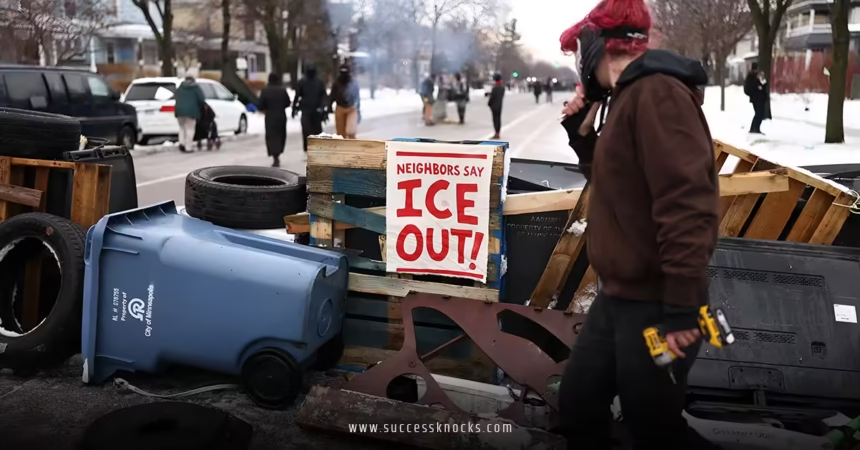
The Renee Good Minneapolis shooting on January 7, 2026, remains one of the most controversial and heartbreaking law enforcement incidents in recent memory. A 37-year-old mother, poet, and U.S. citizen, Renee Nicole Good, was fatally shot by ICE agent Jonathan Ross during a tense encounter on a snowy residential street in south Minneapolis. This event not only devastated her family but also ignited nationwide protests, political battles, and intense debates about immigration enforcement, use of force, and community safety.
What started as a moment of neighborly support quickly escalated into tragedy. Have you ever stopped to help someone and found yourself in the wrong place at the wrong time? That’s the heartbreaking reality many feel about this case.
Who Was Renee Good? The Life Behind the Headlines in the Renee Good Minneapolis Shooting
Renee Nicole Good (born Renee Nicole Macklin) was far more than a name in the news. A 37-year-old poet, writer, and mother of three, she had recently moved to Minneapolis seeking a fresh start and a compassionate community. Originally from Colorado Springs, she graduated with an English degree from Old Dominion University in 2020. Friends and family described her as “pure sunshine” — kind, loving, and deeply committed to caring for others.
She lived with her wife, Rebecca Good, and their young son. Renee was known for her poetry, her hobby guitar playing, and her quiet advocacy. On that fateful morning, she and her wife had just dropped their child at school when they noticed federal agents in the neighborhood. According to her family’s statements, they stopped “to support our neighbors” as legal observers — a common practice where community members monitor enforcement actions with whistles and phones to ensure transparency.
Imagine being a mom who just wants to protect her community, only to lose everything in seconds. Her death left three children grieving and a city mourning.
Timeline of the Renee Good Minneapolis Shooting: What the Videos and Witnesses Show
The incident unfolded on Portland Avenue near 34th Street, amid heightened ICE operations in Minneapolis. Here’s a breakdown based on multiple bystander videos, agent bodycam footage, and official accounts:
- Renee positioned her maroon Honda Pilot SUV diagonally across the street, seemingly to observe or slow federal vehicles.
- Other cars passed around her moments earlier, suggesting the road wasn’t fully blocked.
- ICE agents, including Jonathan Ross, approached. Orders were given for her to exit the vehicle.
- Good briefly reversed, then accelerated forward while turning the wheel to the right — away from the agents, per several eyewitnesses and video analyses.
- Agent Ross, positioned near the front of the SUV, fired three shots in quick succession (within about 399 milliseconds according to some frame-by-frame reviews), striking Good fatally.
- The vehicle continued forward, hit a curb, and stopped. Ross walked away from the scene, though federal officials later reported injuries.
Federal authorities described Good’s actions as an attempt to “run over” officers — labeling it potential “domestic terrorism.” Local leaders, including Mayor Jacob Frey, called this narrative “bullshit” after reviewing footage, insisting she was trying to leave safely.
Multiple angles exist — bystander phones, agent cell video released later — and they tell slightly different stories. It’s like watching the same puzzle from different pieces; the full picture is still emerging.
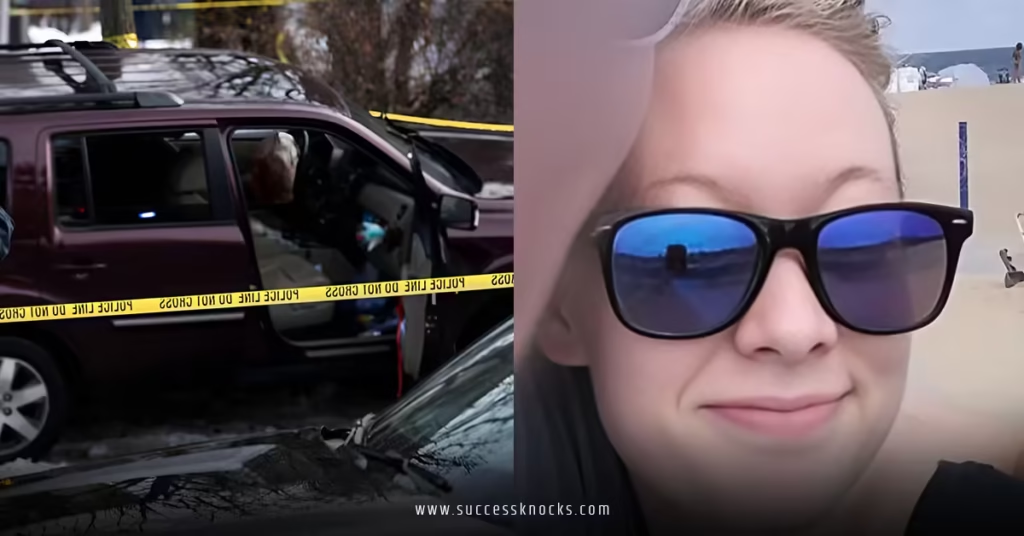
The Agent’s Injuries: Linking to ICE Agent Jonathan Ross Internal Bleeding After Renee Good Vehicle
Federal officials, including the Department of Homeland Security (DHS), reported that ICE agent Jonathan Ross suffered internal bleeding to the torso after being struck by Renee Good’s vehicle. This detail emerged about a week after the incident, with DHS confirming Ross was hospitalized briefly, treated, and released the same day.
Ross, a 10-year ICE veteran and Iraq War veteran with the Indiana National Guard, had faced a similar vehicle-related injury in June 2025 — dragged about 50-100 yards during an arrest, requiring dozens of stitches. Supporters point to this history to highlight the real dangers officers face daily.
Critics, including Mayor Frey, questioned the severity, noting video showed Ross walking away shortly after. Yet the ICE agent Jonathan Ross internal bleeding after Renee Good vehicle claim remains a key part of the self-defense argument from DHS, President Trump, and Secretary Kristi Noem.
Internal bleeding can be sneaky — like a hidden storm that builds quietly. Prompt medical attention saved Ross, but the debate rages on about whether the threat truly justified lethal force.
Aftermath and Protests: How the Renee Good Minneapolis Shooting Sparked Nationwide Outrage
The Renee Good Minneapolis shooting triggered immediate vigils, massive protests (thousands at Powderhorn Park), and calls for ICE to leave the city. Governor Tim Walz declared “Renee Good Day,” while lawmakers pushed for oversight of federal operations.
Protests turned tense, with clashes, tear gas, and additional incidents — including another ICE shooting days later. GoFundMes surged for both sides, with one for Ross reportedly raising hundreds of thousands (including a donation from billionaire Bill Ackman).
Nationally, figures like actors Mark Ruffalo wore “BE GOOD” pins at awards shows. Minnesota sued to limit ICE activities, and Good’s family hired the firm that represented George Floyd’s family for a civil investigation.
It’s a reminder of how one moment can expose deep divides — trust in law enforcement, immigration policy, and community protection.
Ongoing Investigations and Calls for Justice in the Renee Good Minneapolis Shooting
The FBI is leading the federal probe, but tensions arose when the Minnesota Bureau of Criminal Apprehension was reportedly sidelined. State officials, including Attorney General Keith Ellison, urged public submissions of evidence. Good’s family demands “transparency” and accountability, hoping her story sparks meaningful change.
Experts debate whether charges against Ross are feasible — federal officers have protections, and proving unreasonable force is tough. Yet many feel the videos raise serious questions.
Conclusion: Remembering Renee Good and Seeking Answers
The Renee Good Minneapolis shooting is a tragedy that touches on so many issues — a loving mother’s life cut short, an officer’s claim of self-defense, and a community’s cry for justice. While federal sources highlight ICE agent Jonathan Ross internal bleeding after Renee Good vehicle as evidence of danger, conflicting videos and eyewitnesses keep the conversation alive.
Renee’s family asks for empathy amid the outrage. Let’s honor her by pushing for transparent investigations and policies that protect everyone. What would you want if this happened in your neighborhood? Share thoughtfully — healing starts with understanding.
FAQ :
1. What exactly happened in the Renee Good Minneapolis shooting?
On January 7, 2026, Renee Good was fatally shot by ICE agent Jonathan Ross after stopping her SUV during federal operations. Federal officials claim self-defense after she allegedly struck Ross, leading to ICE agent Jonathan Ross internal bleeding after Renee Good vehicle impact.
2. Who was Renee Good in the Minneapolis shooting incident?
Renee Nicole Good was a 37-year-old poet, mother of three, and U.S. citizen who had recently moved to Minneapolis. She was acting as a neighborly observer when the Renee Good Minneapolis shooting occurred.
3. Did ICE agent Jonathan Ross suffer injuries in the Renee Good Minneapolis shooting?
Yes, DHS confirmed ICE agent Jonathan Ross internal bleeding after Renee Good vehicle struck him, resulting in torso internal bleeding. He was treated and released the same day.
4. Why has the Renee Good Minneapolis shooting sparked so many protests?
Conflicting accounts of the events, video evidence, and broader tensions over ICE operations in sanctuary-leaning cities fueled outrage and calls for accountability.
5. What investigations are ongoing after the Renee Good Minneapolis shooting?
The FBI leads a federal probe, while Good’s family pursues a civil investigation. State officials seek more access amid disputes over the Renee Good Minneapolis shooting narrative.