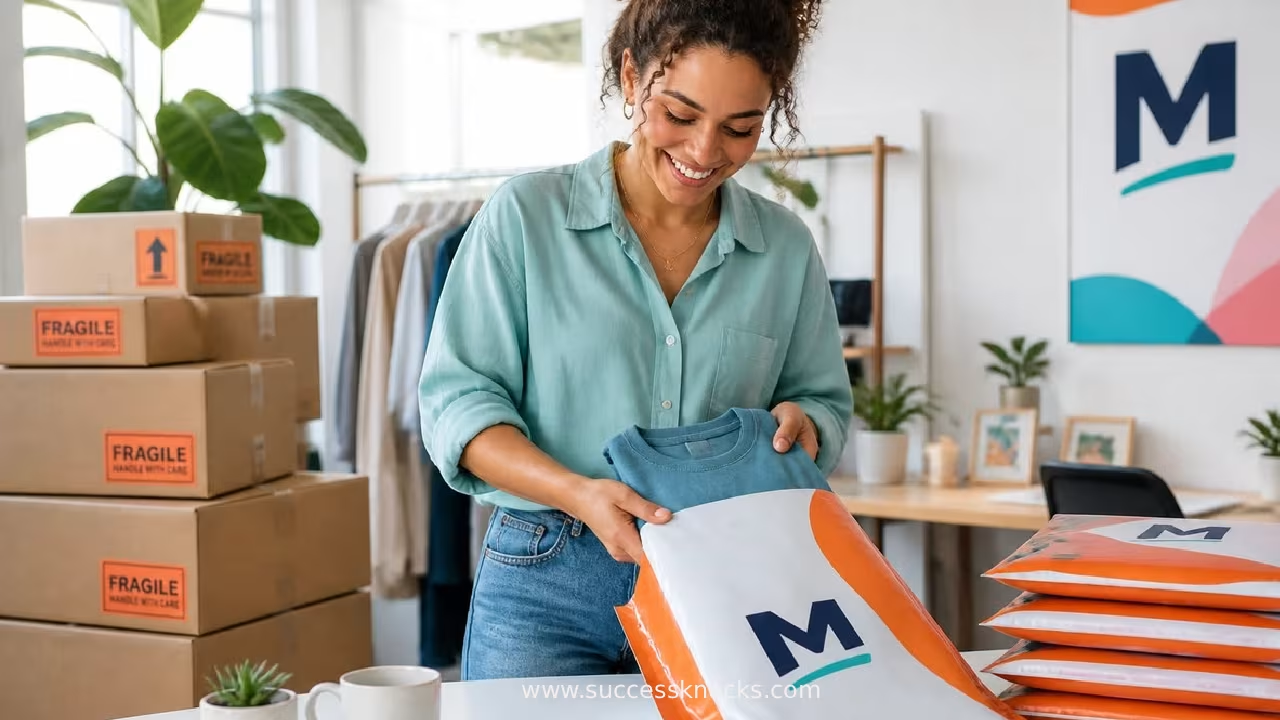
How to start a reusable packaging business for online retailers begins with recognizing that e-commerce brands are under real pressure in 2026. Single-use mailers and boxes keep generating waste, state-level packaging rules are tightening, and shoppers notice. You sell durable, returnable shippers or packaging-as-a-service so online sellers can cut material costs over time and meet emerging requirements.
Quick overview of what this looks like:
- You supply or manage reusable mailers, bags, or containers that customers return for cleaning and reuse.
- Core models range from selling the packaging outright to running a full return-and-sanitize loop.
- Success hinges on reverse logistics, return rates above 90 percent, and clear unit economics.
- U.S. state EPR laws already push brands toward reduction and reuse options.
- Startup path is realistic for operators who start lean and prove demand before scaling.
For the bigger picture on building a reusable packaging business for ecommerce, the full guide covers market sizing, competitive positioning, and long-term models.
Here’s the thing. Most people jump straight to designing a cool bag. That’s backwards. The real work sits in the return system and the relationships with online retailers who actually need the solution.
Why online retailers are looking for reusable options right now
E-commerce packaging volume keeps climbing. At the same time, California’s SB 54 and similar EPR laws in Oregon, Colorado, and other states put financial and reduction pressure on producers. Brands that ship thousands of orders a month feel the cost and compliance squeeze first. Reusable systems turn packaging from a pure expense into an asset that can cycle dozens or hundreds of times.
In my experience, the brands that move earliest are subscription boxes, apparel, beauty, and electronics refurbishers. They already have higher order frequency or take-back programs, so the return loop feels natural. One-time low-AOV sellers struggle more because the math only works with strong return rates.
Think of it like the old milk-bottle route, but for cardboard and poly mailers. The package comes back, gets cleaned, and goes out again. The operator who owns the loop owns the recurring revenue.
How to start a reusable packaging business for online retailers: the practical path
How to start a reusable packaging business for online retailers Start narrow. Pick one niche—say, fashion DTC brands shipping soft goods or refurbished tech that already handles returns. Then build the system around that use case.
Step-by-step action plan
- Validate demand before buying a single unit. Talk to 15–20 online retailers in your target niche. Ask how many packages they ship monthly, what they currently pay per unit, and whether they would pay a premium or a per-use fee for a durable alternative that customers return. Record the answers. If fewer than five show real interest and willingness to pilot, adjust the niche.
- Choose your business model. Three common routes:
- Sell durable packaging and let the retailer manage returns.
- Offer packaging-as-a-service: you own the assets, handle returns, cleaning, and redistribution; retailer pays per cycle.
- Hybrid: sell the initial stock and charge for cleaning/return logistics.
- Form the legal entity and check compliance. File an LLC in your state, get an EIN from the IRS, and secure general liability plus product liability insurance. Review state packaging EPR rules if you will introduce material into covered states. California’s CalRecycle guidance on SB 54 treats qualifying reusable and refillable packaging differently from single-use, so design with those criteria in mind. Check the latest producer definitions and any de minimis thresholds that apply to your volume.
- Source or design the packaging. Work with manufacturers experienced in multi-trip materials—durable polypropylene, recycled PET fabrics, or reinforced corrugated that survive 50–100+ cycles. Add QR or RFID for tracking if your model requires it. Keep sizes standardized (three to five formats max) so warehouse teams can pack as fast as single-use. Test for durability, cleanability, and dimensional weight impact with carriers.
- Build the reverse logistics backbone. This is where most new operators stumble. Decide how customers return the empty packaging—prepaid label to a hub, drop-off points, or carrier pick-up. Partner with a 3PL that already handles returns or set up your own small cleaning facility. Calculate true cost per return cycle, including shipping, inspection, sanitation, and replacement of damaged units. Aim for return rates that keep the per-use cost competitive with single-use after 20–30 cycles.
- Price for the retailer’s economics, not just your cost. Retailers care about total packaging cost as a percentage of order value and the labor impact in their warehouse. Offer a pilot rate for the first 500–1,000 cycles so they can test without large commitment. Track and share data on return rates and cost per use so they see the crossover point versus single-use.
- Launch with a paid pilot, then expand. Secure one or two pilot customers who pay. Use their feedback to tighten the process. Only then invest in larger inventory or marketing. Content that shows real cost savings and compliance benefits works better than pure sustainability claims.
| Cost Category | Lean Startup Range | Notes |
|---|---|---|
| Legal entity + insurance | $800 – $3,000 | LLC, EIN, basic liability |
| Initial packaging inventory | $5,000 – $25,000 | 500–2,000 units of durable stock |
| Tracking tech / QR setup | $1,000 – $5,000 | Basic system; RFID costs more |
| Reverse logistics setup | $3,000 – $15,000 | Labels, hub, cleaning process |
| Website + sales tools | $500 – $3,000 | Simple storefront or sales deck |
| Working capital (3–6 mo) | $10,000 – $30,000 | Covers early cycles and cash lag |
| Total lean launch | $20,000 – $80,000 | Assumes no custom manufacturing |
These ranges reflect typical early-stage numbers for a service-focused operator rather than a full manufacturing plant. Scale inventory only after pilots prove return rates.
How to start a reusable packaging business for online retailers without burning cash on the wrong things
How to start a reusable packaging business for online retailers Focus first on the return system. Fancy branding and perfect photography can wait. What usually happens is operators over-invest in inventory before they know whether customers will actually send the packages back. Test the loop with a small batch.
If reverse logistics feels heavy, study established systems. The mechanics of return and reuse systems determine whether your unit economics ever work.
Common mistakes and how to fix them
Mistake 1: Treating packaging as a one-time product sale.
Fix: Shift to a cycle or subscription model early. Own the assets so you capture the value of multiple uses.
Mistake 2: Ignoring dimensional weight and carrier rules.
Fix: Design packages that stay under common thresholds. Oversize fees kill the savings story fast.
Mistake 3: Assuming high return rates without incentives.
Fix: Build in small credits or easy prepaid returns from day one. Track rates weekly during pilots and adjust.
Mistake 4: Over-customizing before demand is proven.
Fix: Start with standard sizes and minimal branding. Add custom elements only after a retailer commits volume.
Mistake 5: Skipping state EPR research.
Fix: Map the states your pilot customers ship into. Confirm how reusable packaging is treated under current rules so you can help clients stay compliant.
Key Takeaways
- Validate real demand with potential retailer customers before ordering inventory.
- Prioritize reverse logistics and cleaning capability over product design aesthetics.
- Choose a packaging-as-a-service or hybrid model for recurring revenue.
- Keep packaging sizes standardized to protect warehouse speed and carrier costs.
- Price against the retailer’s total cost per order, not just material cost.
- Factor current state EPR rules into your compliance conversation with clients.
- Launch with paid pilots; scale inventory only after return rates prove out.
- Track every cycle so you can show clients the exact cost-per-use curve.
How to start a reusable packaging business for online retailers The operators who win treat the package as a circulating asset, not a disposable cost. Get the loop working cleanly for a handful of online retailers and the rest of the business follows. Start with one niche, one pilot customer, and ruthless attention to return rates. That is how you turn the growing pressure on e-commerce packaging into a real business.
FAQs
What capital do I need to begin how to start a reusable packaging business for online retailers?
Most lean service-focused launches run $20,000–$80,000. The biggest variables are initial inventory volume and how much reverse logistics infrastructure you build yourself versus outsourcing.
Do I need to manufacture the packaging myself?
No. Many successful operators source durable stock from existing manufacturers and focus on the service layer—tracking, returns, cleaning, and redistribution. Manufacturing adds capital intensity and time that most beginners do not need at the start.
How does how to start a reusable packaging business for online retailers change under 2026 state packaging rules?
Several states already operate EPR programs that place fees and reduction targets on producers of single-use packaging. Qualifying reusable systems often receive different treatment. Design and document your packaging so clients can demonstrate it meets reuse criteria where those exist.