The Robb Elementary shooting timeline remains one of the most heartbreaking and scrutinized sequences of events in modern American history. On May 24, 2022, an 18-year-old gunman carried out a devastating attack at Robb Elementary School in Uvalde, Texas, killing 19 children and two teachers while injuring many others. The prolonged police response—lasting over an hour—sparked intense debate, investigations, and even criminal charges years later.
This detailed Robb Elementary shooting timeline draws from official reports like those from the Texas Department of Public Safety (DPS), the U.S. Department of Justice Critical Incident Review, Texas House investigative findings, and court testimonies. Understanding the minute-by-minute breakdown helps explain why the tragedy unfolded as it did and why accountability discussions continue. For context on later legal developments, see the Adrian Gonzales Uvalde trial not guilty verdict 2026, which stemmed directly from officers’ actions (or inactions) during this very timeline.
What Led Up to the Robb Elementary Shooting?
The gunman, Salvador Ramos, exhibited troubling signs long before May 24, 2022. He legally purchased firearms shortly after turning 18 and made ominous statements online. The day began with horror at home.
- Shortly after 11:00 a.m.: Ramos shoots his 66-year-old grandmother in the head at their residence. She survives, flees across the street, and alerts neighbors who call police. Ramos flees in her truck.
- Around 11:21 a.m.: Ramos texts a friend, admitting he shot his grandmother and plans to “shoot up” an elementary school.
- 11:27–11:28 a.m.: Ramos crashes the truck into a ditch near Robb Elementary. He exits armed with an AR-15-style rifle (leaving another rifle behind), fires at two men near a funeral home (missing them), and approaches the school.
A teacher, heading out to her car, witnesses the crash, rushes back inside, and props the west-side door open with a rock—unaware it wouldn’t lock properly from inside. This door becomes the entry point.
- 11:29 a.m.: The first 911 call reports a man with a gun outside the school.
The Attack Begins: Initial Shots and Entry
The gunman wastes no time once inside.
- 11:31–11:32 a.m.: Ramos fires shots from the parking lot and around the building as police vehicles arrive nearby.
- 11:32 a.m.: He fires 27 rounds into classrooms from outside.
- 11:33 a.m.: Ramos enters through the propped-open west door and immediately begins shooting into adjoining fourth-grade classrooms 111 and 112. He fires more than 100 rounds in about 2.5 minutes, killing and wounding victims rapidly. Most fatalities occur in this early burst.
Surveillance video shows him moving between the connected rooms. Reports later highlight door lock issues: Room 112’s door was likely locked by teacher Irma Garcia (who died), but Room 111’s lock had known problems and wasn’t fully secured.
Law Enforcement Arrives—But the Delay Sets In
Within minutes, officers flood the scene—yet the response shifts disastrously.
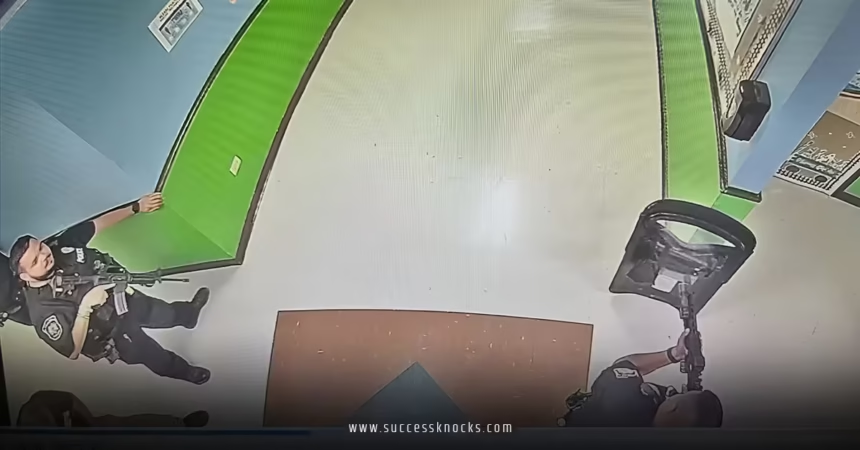
- 11:36 a.m.: First officers (including Uvalde CISD officers like Adrian Gonzales and Pete Arredondo) enter the school. They hear ongoing gunfire and move toward the classrooms.
- 11:37–11:40 a.m.: Several officers advance but retreat after taking shrapnel from gunfire. Two are grazed. The group pulls back to cover, adopting a “barricaded subject” mindset instead of immediate active shooter engagement.
This pivot becomes central to criticism. Active shooter training emphasizes immediate neutralization, but officers wait for keys, shields, and tactical teams.
- 11:40s onward: Officers evacuate other classrooms while calling for more resources. Chief Pete Arredondo (de facto on-scene commander) directs searches for keys (despite doors possibly being unlockable) and attempts negotiation.
- Throughout the next hour: 911 calls from inside classrooms 111/112 plead for help—children report being shot, classmates dying. Dispatch relays this, but officers treat the gunman as contained. Radio traffic mentions waiting for BORTAC (Border Patrol tactical unit), SWAT, and rifles.
Nearly 400 officers eventually arrive from multiple agencies, but no unified command post emerges immediately. Arredondo lacks his radio (left in his vehicle), relying on cell phone.
The Final Confrontation
After 77 agonizing minutes:
- 12:50 p.m.: A U.S. Border Patrol Tactical Unit (BORTAC) breaches Classroom 111, engages, and kills Ramos.
The shooter is dead. Rescuers rush in to aid survivors amid chaos.
Aftermath and Investigations Sparked by the Robb Elementary Shooting Timeline
The Robb Elementary shooting timeline revealed systemic failures: miscommunication, hesitation, poor command, faulty equipment (like doors), and a shift away from “stop the killing” to “wait for backup.”
- Texas House Report (July 2022): Called the response “systemic failures” beyond local police.
- DOJ Critical Incident Review (January 2024): Labeled it an “unimaginable failure” with “cascading” issues, especially lack of urgency.
- Criminal Charges: In 2024, former officers Pete Arredondo and Adrian Gonzales faced child endangerment counts tied to their early actions (or lack thereof). Gonzales’ acquittal in the Adrian Gonzales Uvalde trial not guilty verdict 2026 highlighted how juries weighed individual vs. systemic blame.
These findings drove reforms in active shooter protocols, school security, and police training nationwide.
Why the Robb Elementary Shooting Timeline Still Matters Today
Reliving this timeline isn’t easy—it’s gut-wrenching. Imagine parents outside begging to enter while children inside dialed 911, whispering for help. The delay wasn’t just minutes; it was lives.
Yet understanding it pushes us forward. Schools harden doors, train staff better, and law enforcement drills immediate action. Communities demand transparency.
The Robb Elementary shooting timeline isn’t ancient history—it’s a blueprint for prevention. By studying every second, we honor the 21 lost souls and commit to never repeating those failures.
Conclusion
The Robb Elementary shooting timeline from May 24, 2022, traces a rapid descent into tragedy followed by a painfully slow response that cost precious time. From the gunman’s early morning violence to the 77-minute wait before neutralization, every detail reveals lessons in preparation, leadership, and urgency. While legal outcomes like the Adrian Gonzales Uvalde trial not guilty verdict 2026 closed one chapter, the real work continues: building safer schools, stronger responses, and a society that protects its children. Let’s keep learning—so no timeline like this ever repeats.
For more on the law enforcement response, check these high-authority sources:
- U.S. Department of Justice Critical Incident Review
- Texas Tribune detailed timeline
- Wikipedia Uvalde school shooting entry (for overview and sources)
FAQs
What is the key delay in the Robb Elementary shooting timeline?
The most criticized part is the 77 minutes between officers entering the school (around 11:36 a.m.) and neutralizing the gunman (12:50 p.m.), despite early arrival and knowledge of victims inside.
How many officers responded during the Robb Elementary shooting timeline?
Nearly 400 law enforcement officers from various agencies arrived, but fragmented command and hesitation prevented swift action.
When did the gunman enter Robb Elementary in the timeline?
Salvador Ramos entered at approximately 11:33 a.m. through an unsecured west-side door and began shooting immediately.
What official reports detail the Robb Elementary shooting timeline?
Key sources include the Texas DPS updates, Texas House Investigative Committee report, DOJ Critical Incident Review (2024), and ALERRT assessments.
How does the Robb Elementary shooting timeline connect to later trials?
The timeline’s focus on early officer actions led to indictments against officers like Adrian Gonzales, culminating in outcomes such as the Adrian Gonzales Uvalde trial not guilty verdict 2026.