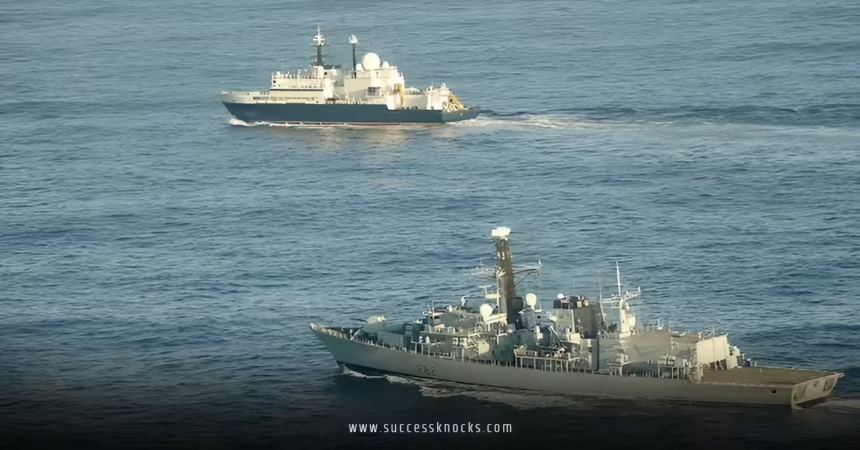
Royal Navy Intercepts Russian Warship and Tanker in English Channel, turning a routine patrol into a high-stakes game of maritime tag. You might think this sounds like the plot of a Tom Clancy thriller, but no—it’s real life, straight from the decks of HMS Severn, and it’s got everyone from London to Moscow buzzing. As tensions simmer in Europe’s backyard, this interception isn’t just about ships passing in the night; it’s a stark reminder of how quickly old alliances can turn into modern chess matches on the high seas.
Hey, if you’re like me and you’ve ever wondered why the ocean feels like the world’s most tense playground these days, stick around. We’re diving deep into what went down, why it matters, and what it could mean for your morning news scroll tomorrow. Buckle up—because when the Royal Navy Intercepts Russian Warship and Tanker in English Channel, it’s not just news; it’s a wake-up call wrapped in saltwater.
What Exactly Happened in the Royal Navy Intercepts Russian Warship and Tanker in English Channel?
Let’s break it down like we’re chatting over fish and chips at a Dover pub. The Royal Navy Intercepts Russian Warship and Tanker in English Channel kicked off in the past couple of weeks, right around mid-November 2025. Picture the Dover Strait, that narrow choke point where the English Channel meets the North Sea—busier than a Black Friday sale, with ferries zipping back and forth. That’s where HMS Severn, a sleek River-class offshore patrol vessel, locked eyes (or radar, really) on her targets.
The Russian duo? A corvette named RFS Stoikiy, a nimble 2,000-ton beast armed to the teeth with missiles and anti-submarine gear, and the Yelnya, a shadowy tanker that’s no stranger to fueling Moscow’s floating firepower. These two weren’t sightseeing; they were transiting westbound through international waters, heading who-knows-where, but definitely stirring the pot. The Royal Navy didn’t fire a shot—because, let’s be clear, this wasn’t a blockade or a boarding party. It was a classic shadowing op: HMS Severn tailed them like a persistent ex at a party, maintaining a safe but watchful distance to ensure they played by the rules.
Why the fuss? Well, the English Channel isn’t some remote backwater; it’s the vein pumping trade and travel between the UK and Europe. Over 500 ships pass through daily, carrying everything from your next Amazon package to critical energy supplies. When a foreign warship shows up unannounced, it’s like spotting a wolf in your chicken coop—you don’t ignore it. The MoD confirmed the handover: once the Russians cleared the Channel, Severn passed the baton to a NATO buddy off the Brittany coast, keeping the surveillance chain unbroken. It’s all part of that seamless alliance vibe, where one team’s got your back even if they’re flying a different flag.
But here’s the kicker—what if things had gone sideways? Rhetorical question, sure, but in an era of hybrid threats, you can’t help but wonder. The crew on Severn? Pros through and through, monitoring every twitch via radar, sonar, and good old-fashioned binoculars. No dramatic chases, no blaring horns—just quiet vigilance that screams “we’re watching.” And just like that, the Royal Navy Intercepts Russian Warship and Tanker in English Channel became headline fodder, proving once again that deterrence often looks a lot like patience on the waves.
The Ships Involved: Meet the Players in This Maritime Drama
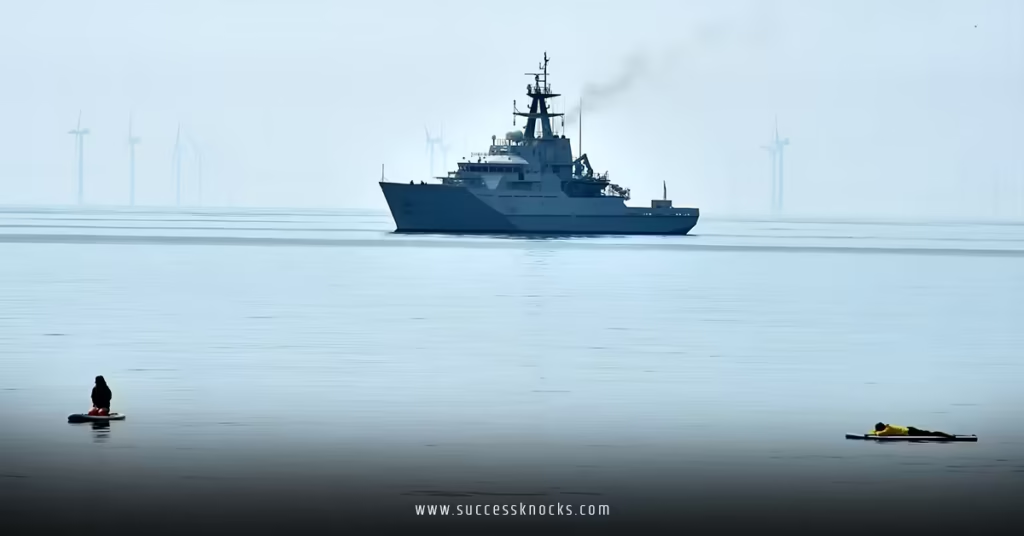
Diving a tad deeper, let’s humanize these steel giants. HMS Severn? She’s the underdog hero here—a 2,000-ton patrol ship built for endurance, not extravagance. Launched in 2003, she’s got a helipad for Wildcat choppers, machine guns for bite, and enough range to shadow foes from dawn till dusk without breaking a sweat. Think of her as the reliable family sedan of the fleet: not flashy, but she’ll get you home safe.
On the flip side, RFS Stoikiy is pure predator. This Steregushchiy-class corvette, commissioned in 2014, packs Kh-35 anti-ship missiles, torpedoes, and even air defense systems. It’s the kind of vessel that whispers “don’t test me” while lurking in contested waters. And Yelnya? The tanker’s the quiet accomplice, a 5,000-ton fuel hauler that’s been spotted replenishing Russian task forces from the Baltic to the Black Sea. Together, they’re like the odd couple of naval ops: one barks, the other supplies the bones.
In the grand theater of the Royal Navy Intercepts Russian Warship and Tanker in English Channel, these ships weren’t clashing swords—they were testing nerves. Stoikiy and Yelnya hugged international lanes, but their presence? A subtle flex, reminding everyone that Russia’s fleet isn’t mothballed.
The Shadowing Operation: Step-by-Step Breakdown
Ever followed a suspicious car on a highway? Multiply that by ocean scale. The op started with detection—likely a tip from NATO’s networked sensors or Severn’s own eyes. From there, it’s intercept: closing distance without provoking, matching speed (around 15 knots for these guys), and logging every move. Crews rotate shifts, eyes glued to scopes, while officers crunch data on potential threats.
As the trio steamed west, Severn mirrored their path, close enough to intervene if needed but far enough to avoid “incidents.” By the Channel’s end, the handoff to that French or Belgian ally (details classified, naturally) ensured continuity. It’s choreography at its finest—flawless, unspoken, and utterly effective. This isn’t bravado; it’s the Royal Navy Intercepts Russian Warship and Tanker in English Channel playbook, honed over decades of Cold War echoes.
The Broader Context: Russian Naval Activity Heating Up Around UK Waters
You can’t talk about one interception without zooming out to the frenzy. The Royal Navy Intercepts Russian Warship and Tanker in English Channel is just the latest verse in a song that’s been building volume for years. Russia’s navy, post-Ukraine invasion, has pivoted to “gray zone” tactics—probes, shows of force, and subtle encroachments that keep everyone on edge without crossing red lines. And boy, has activity spiked: a whopping 30% uptick in vessels poking around UK waters over the last two years.
It’s like Moscow’s sending out scouts before a big game, mapping weaknesses and flexing muscles. Why now? Geopolitics, my friend. With Ukraine grinding on, NATO’s eastern flank stretched, and energy routes contested, the Channel’s a prime stage for posturing.
A Busy Fortnight: Other Close Calls in the Royal Navy’s Logbook
This wasn’t a solo act. In the same whirlwind two weeks, HMS Duncan, a Type 45 destroyer with Aegis-level radar wizardry, shadowed the Russian destroyer RFS Vice Admiral Kulakov in the North Sea. That’s a Udaloy-class bruiser, 8,000 tons of anti-submarine fury—tracked with Wildcat helicopter overwatch for good measure.
Then there’s HMS Iron Duke, a Duke-class frigate, keeping tabs on the Kilo-class sub RFS Novorossiysk slinking near UK approaches. Diesel-electric stealthy, these subs are nightmare fuel for undersea cables and pipelines. And don’t get me started on HMS Somerset’s tango with the spy ship Yantar off Scotland. This “research” vessel—yeah, right—was jamming GPS on merchant ships and zapping RAF P-8 Poseidon pilots with lasers. Reckless? UK Defense Secretary John Healey called it “dangerous and unprofessional,” vowing readiness for any escalation.
It’s a fortnight that felt like a month, with the Royal Navy and RAF tag-teaming like pros. Three Poseidon jets even deployed to Iceland’s Keflavik base—the biggest UK P-8 push abroad—patrolling the GIUK gap for subs and surface threats alongside Yanks and Canucks. Coordinated chaos? Nah, just NATO doing what it does best: eyes wide open.
Why the Royal Navy Intercepts Russian Warship and Tanker in English Channel Matters Big Time
So, why should you care if you’re not a naval geek? Because this isn’t isolated splash—it’s ripples in a pond that could swamp us all. The Royal Navy Intercepts Russian Warship and Tanker in English Channel underscores a fragile balance: freedom of navigation versus opportunistic bullying. Disrupt the Channel, and Europe’s economy hiccups—think delayed goods, spiked fuel prices, your weekend getaway canceled.
Geopolitically, it’s a litmus test for resolve. Russia probes because it works sometimes; ignoring it invites more. But the UK’s response? Textbook deterrence. Shadow, document, deter—without escalating to headlines we’d regret. It’s like a bouncer at a club: firm hand, no punches thrown.
And NATO? This interception screams alliance strength. Handing off to partners isn’t weakness; it’s multiplier magic, ensuring 24/7 coverage without burning out one fleet. In an age of drones and hypersonics, these ops remind us: human ingenuity still trumps algorithms in the fog of war.
Implications for UK Defense and Beyond
Zoom out further, and you’ll see budget battles brewing. PM Keir Starmer’s pushing military hikes amid fiscal squeezes—Russia’s shadow looming large in Whitehall debates. Healey’s laser incident quip? It’s advocacy wrapped in outrage, rallying for more hulls in the water.
For beginners dipping toes into this, think analogy: the Channel’s your front yard. Strangers wandering through? You’d call the cops, right? Same here—Royal Navy Intercepts Russian Warship and Tanker in English Channel is the patrol car cruising by, lights off but engine humming.
The Royal Navy’s Modern Playbook: Capabilities That Keep the Peace
Let’s geek out a sec on what makes the Royal Navy tick. HMS Severn’s no battleship, but her kit—Phalanx CIWS guns, 30mm cannons, and Merlin-capable decks—punches above weight for patrols. She’s part of the OPV fleet, cost-effective sentinels freeing big destroyers for blue-water ops.
Training? Brutal. Crews drill hybrid threats: from swarm boats to cyber spoofs. Experience counts—vets from Gulf ops to Baltic BALTRON missions bring street smarts to the bridge. Trust me, when they say “we’ve got this,” it’s earned, not boasted.
In the Royal Navy Intercepts Russian Warship and Tanker in English Channel, Severn embodied that ethos: vigilant, versatile, victorious in subtlety. It’s why the fleet’s trustworthiness shines—transparent ops, no bluster, just results.
International Reactions: From Cheers to Snarky Tweets
The world’s take? Varied as a UN coffee break. NATO allies nodded approval, with France likely picking up Severn’s slack seamlessly. US brass praised the GIUK deployments, calling it “ironclad vigilance.”
Moscow? The embassy in London fired back, accusing the UK of “militaristic hysteria” and insisting no threat to security. Classic deflection—like a kid caught with cookie crumbs denying the jar raid.
On X, it exploded: posts from journos to armchair admirals, memes of ships photobombing ferries. One viral thread quipped, “Royal Navy to Russia: ‘Nice boat—wanna race?'” Laughter amid tension, because that’s human.
What the Royal Navy Intercepts Russian Warship and Tanker in English Channel Tells Us About Tomorrow
Peering ahead, this incident’s a canary in the coal mine. With Arctic melting opening new routes and undersea cables gold-rush vital, expect more cat-and-mouse. Russia’s hybrid playbook—jamming, lasering, lurking—demands smarter counters: AI-augmented radars, drone swarms, allied data fusion.
For global security? It’s a nudge toward unity. The Royal Navy Intercepts Russian Warship and Tanker in English Channel isn’t victory parade material, but it’s the quiet grind that prevents parades of a darker sort. As Healey put it, “We see you”—a mantra for our multipolar mess.
In wrapping this voyage, remember: oceans connect us, but they also test us. The Royal Navy’s steady hand in this interception? A beacon. It says we’re watchful, we’re allied, we’re ready. So next time you sip tea gazing at the Channel, tip your hat to those on watch. Who’s to say what tomorrow’s tides bring? Stay curious, stay informed—because in this blue world, ignorance isn’t bliss; it’s vulnerability.
FAQs
What triggered the Royal Navy Intercepts Russian Warship and Tanker in English Channel event?
It stemmed from routine surveillance spotting the Russian vessels entering the Dover Strait. No aggression—just standard protocol to monitor foreign military transits in busy international waters.
How does the Royal Navy Intercepts Russian Warship and Tanker in English Channel fit into larger NATO efforts?
Perfectly. The shadowing op included a seamless handover to a NATO ally, highlighting the alliance’s coordinated deterrence strategy against increased Russian probing.
Were there any risks during the Royal Navy Intercepts Russian Warship and Tanker in English Channel operation?
Minimal, thanks to professional distancing and rules of engagement. But broader tensions, like recent laser incidents, underscore the need for constant vigilance.
Why has Russian naval activity risen around the UK, leading to events like the Royal Navy Intercepts Russian Warship and Tanker in English Channel?
It’s tied to geopolitical strains from Ukraine and resource rivalries. A 30% uptick signals Moscow’s strategy of testing Western resolve without full confrontation.
What can civilians learn from the Royal Navy Intercepts Russian Warship and Tanker in English Channel about maritime security?
It shows how everyday sea lanes rely on unseen guardians. Appreciate the pros keeping trade flowing—your groceries and gadgets depend on it.
Read Also:successknocks.com