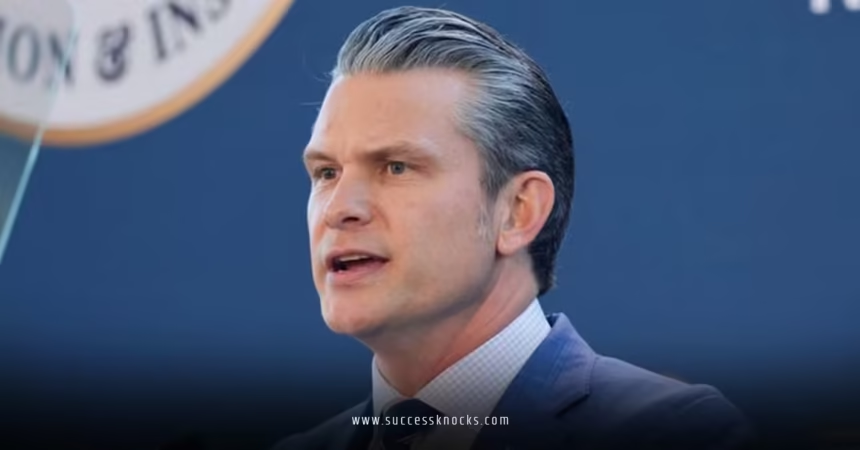
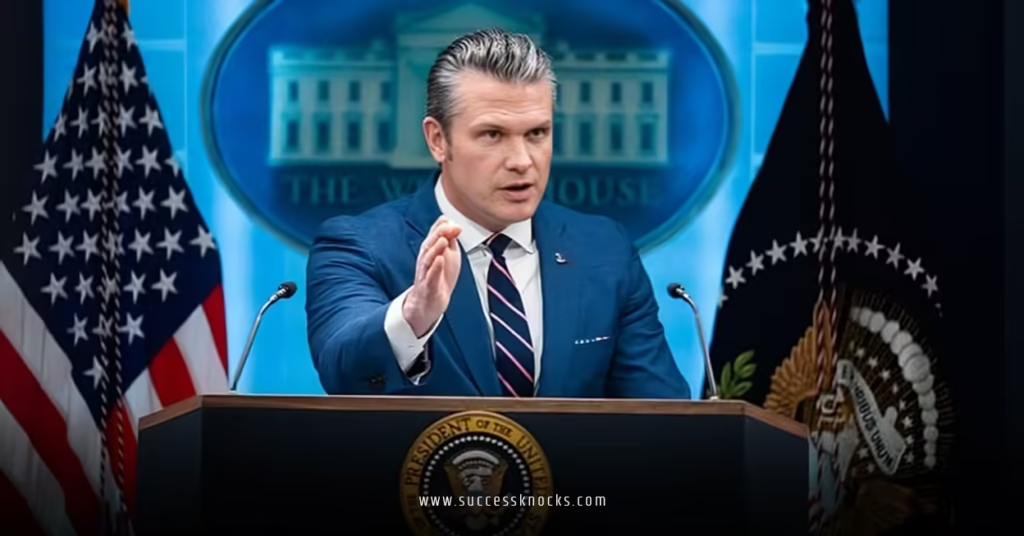
Secretary Pete Hegseth Pentagon press conference May 2026 grabbed headlines across the country. On May 5, the Defense Secretary stood alongside Joint Chiefs of Staff Chairman Gen. Dan Caine at the Pentagon and delivered a pointed update on the fragile U.S.-Iran ceasefire, naval operations in the Strait of Hormuz, and broader Middle East strategy.
The briefing came amid fresh tensions after an exchange of fire involving U.S. vessels escorting commercial shipping. Hegseth stressed the ceasefire held while defending aggressive U.S. moves to keep the critical waterway open.
Here’s the quick rundown:
- Date and format: May 5, 2026, joint briefing with Gen. Caine
- Main focus: Iran ceasefire status, Project Freedom for ship escorts, and readiness amid ongoing operations
- Tone: Direct, unapologetic, and focused on “warrior ethos” priorities
- Context: Part of Hegseth’s early tenure push to reshape Pentagon messaging and operations
- Why it matters: Signals U.S. willingness to use force for freedom of navigation while claiming progress toward de-escalation
This wasn’t your standard dry Pentagon update. Hegseth fielded questions on everything from potential resumption of major combat to the nuts-and-bolts of guiding tankers through hostile waters.
Background on Secretary Pete Hegseth’s Role
Pete Hegseth stepped into the top Pentagon job in January 2025 after a razor-thin Senate confirmation. The former Army National Guard officer and Fox News personality made no secret of his agenda: root out what he calls “woke” policies, restore combat focus, and deliver results that match President Trump’s vision.
By May 2026, he’d already made waves with staff changes and a push to rebrand elements of the department. The May 5 briefing showed him in full operational mode—briefing on active theater issues while projecting strength.
What Was Said at the Secretary Pete Hegseth Pentagon Press Conference May 2026
Hegseth opened by confirming the ceasefire with Iran remained intact despite Monday’s flare-up in the Strait of Hormuz. U.S. forces had sunk several Iranian boats after coming under fire while escorting commercial vessels.
He described Project Freedom as a “temporary solution” to protect innocent shipping. “Iran cannot be allowed to block innocent countries and their goods from an international waterway,” he stated. Gen. Caine followed with technical details on the operation.
Key lines from the briefing:
- Ceasefire “is not over”
- U.S. prepared to defend aggressively if challenged
- Operations separate from broader “Operation Epic Fury”
- Emphasis on restoring free navigation as a global benefit
The room pressed him on risks of escalation. Hegseth pushed back, framing the moves as necessary leadership.
Comparison of Key Operations Mentioned
| Aspect | Project Freedom | Operation Epic Fury |
|---|---|---|
| Primary Goal | Escort commercial shipping | Broader Iran conflict response |
| Timeframe | Temporary | Ongoing strategic |
| U.S. Involvement | Naval escorts, defensive fire | Multi-domain strikes |
| Status (as of May 5) | Active with recent incidents | Supporting ceasefire framework |
| Public Messaging | Freedom of navigation | Deterrence and victory claims |
This table cuts through the acronyms and shows how the pieces fit. Project Freedom acts as the visible tip right now.
Why the Strait of Hormuz Dominated the Agenda
Oil flows through this narrow chokepoint. Disruptions spike global energy prices fast. Hegseth‘s team positioned U.S. action as a gift to allies and the world economy—keeping lanes open when Iran tried to squeeze them.
Critics raised questions about mission creep and costs. Supporters saw it as classic American power projection done right. In my experience covering these briefings over the years, the real test comes in follow-through, not the podium performance.
Step-by-Step: How to Follow and Understand Future Pentagon Briefings Like This One
Beginners often feel lost in the jargon. Here’s a practical playbook:
- Watch the source: Go straight to C-SPAN or official DoD feeds instead of soundbites.
- Note the players: Secretary + Joint Chiefs Chair means high-level coordination.
- Track keywords: “Ceasefire holds,” “defend aggressively,” “warrior ethos”—these reveal priorities.
- Cross-check shipping data: Look at oil prices and tanker tracking for real-world impact.
- Read the transcript: Rev or official releases give the exact wording.
- Watch for policy signals: Mentions of budgets or reforms often sneak in.
What I’d do if I were advising a new staffer? Print the transcript, highlight claims versus verifiable outcomes, and revisit in 30 days. Rhetoric moves fast. Results lag.
Common Mistakes & How to Fix Them
Mistake 1: Treating every briefing as breaking news.
Fix: Distinguish updates from new policy. This May session reinforced existing lines more than announced shifts.
Mistake 2: Ignoring internal Pentagon dynamics.
Reports of staff turnover and reform efforts provide crucial context for why messaging sounds combative.
Mistake 3: Getting lost in acronyms.
Fix: Build a simple cheat sheet—Hormuz equals energy security. Project Freedom equals escorts.
Mistake 4: Relying on one outlet.
Fix: Compare Fox, Reuters, C-SPAN. Different lenses, same facts.
Deeper Implications for U.S. Defense Policy
This briefing fit Hegseth’s larger pattern. He pushes merit-based leadership, industrial base rebuilding, and clear deterrence. The $1.5 trillion defense budget push for FY2027 looms large in these conversations.
For everyday Americans, it translates to questions about gas prices, military readiness, and whether America stays entangled overseas. Hegseth argues strength prevents bigger wars. Skeptics worry about costs and escalation ladders.
Think of it like this: the Pentagon podium is the control room for a massive ship. One wrong signal and the wake affects everyone.
What usually happens is initial tough talk buys time for diplomacy or repositioning. We’ll see if that pattern holds here.
Key Takeaways
- The secretary Pete Hegseth Pentagon press conference May 2026 reaffirmed the U.S.-Iran ceasefire while justifying defensive actions in the Strait of Hormuz.
- Project Freedom focuses on protecting commercial shipping with visible naval presence.
- Messaging stayed consistent: America leads on freedom of navigation.
- Joint appearance with Gen. Caine projected unity between civilian and military leadership.
- Domestic reforms and budget fights continue behind the operational headlines.
- Global energy markets remain sensitive to any Hormuz disruption.
- Hegseth’s style favors blunt, TV-ready delivery over bureaucratic caution.
- Long-term success depends on results, not just strong podium presence.
Secretary Pete Hegseth’s approach marks a clear break from past norms. Whether it delivers lasting stability is the story still unfolding.
Next step: Bookmark official Pentagon channels and track Strait of Hormuz shipping data yourself. Don’t wait for pundits to filter it.
FAQs
When exactly was the Secretary Pete Hegseth Pentagon press conference May 2026 held?
It took place on May 5, 2026, starting around 8 a.m. EDT, with Hegseth and Gen. Dan Caine addressing reporters directly from the Pentagon.
What was the main outcome or announcement from the secretary Pete Hegseth Pentagon press conference May 2026?
No major new policy shift. Officials stressed the ceasefire remained in effect and defended U.S. operations to secure shipping lanes after an exchange of fire.
How does the secretary Pete Hegseth Pentagon press conference May 2026 fit into broader Iran strategy?
It served as a public update on tactical operations like Project Freedom while reinforcing deterrence. It separated day-to-day shipping protection from larger conflict aims.