


Starlink satellite constellation growth 2026. SpaceX isn’t just adding satellites—it’s rewriting the rules of global connectivity. Picture this: a constellation so dense that it blankets the planet like a digital shield, delivering broadband to places where traditional internet never dared to tread. And right in the thick of this expansion? Events like the SpaceX Starlink launch March 22 2026 live stream, which added another batch to this ever-growing fleet.
By mid-March 2026, Starlink has smashed through the incredible milestone of over 10,000 active satellites in orbit. We’re talking roughly 10,020 to 10,100 operational birds circling Earth, making up about two-thirds of all active satellites humanity has up there. That’s wild when you think about it—less than seven years after the first operational launches in 2019.
The Explosive Pace of Starlink Satellite Constellation Growth 2026
What makes Starlink satellite constellation growth 2026 so jaw-dropping? The sheer velocity. SpaceX kicked off the year already near 9,400 working satellites at the end of 2025. Fast-forward to March, and they’ve crossed 10,000 thanks to near-weekly Falcon 9 missions. Launches like the one on March 17 (adding 29 satellites) and others from both Cape Canaveral and Vandenberg have piled on hundreds more in the first quarter alone.
Total satellites launched to date? Over 11,500–11,600, with some replaced due to natural deorbiting or failures (though failures are rare—the fleet boasts near-perfect reliability). Active, working satellites hover around 10,000–10,100, with decayed ones numbering about 1,500. This rapid buildup isn’t random; it’s laser-focused on closing coverage gaps and boosting capacity.
Think of it like building a massive highway system in space. Each new satellite is another lane, reducing congestion for users and improving speeds/latency worldwide.
Key Milestones Driving Starlink Satellite Constellation Growth 2026
Several big moments have defined Starlink satellite constellation growth 2026 so far:
- The 10,000 milestone: Hit around March 17 after a Vandenberg launch deployed 25 satellites, pushing the count to 10,020 in orbit (with 10,010+ working). Independent trackers like Jonathan McDowell confirm it—Starlink now dominates orbital real estate.
- Direct-to-Cell expansion: Hundreds of satellites now support mobile connectivity, letting phones connect directly without special hardware in many cases.
- Orbit reconfiguration: A major move—SpaceX is lowering ~4,400 satellites from ~550 km to ~480 km throughout 2026. Why? Safer space traffic, lower collision risk, and better performance in denser, lower orbits. It’s like reorganizing lanes on that highway to prevent pile-ups.
These shifts show SpaceX isn’t just growing the constellation; it’s optimizing it for the long haul.
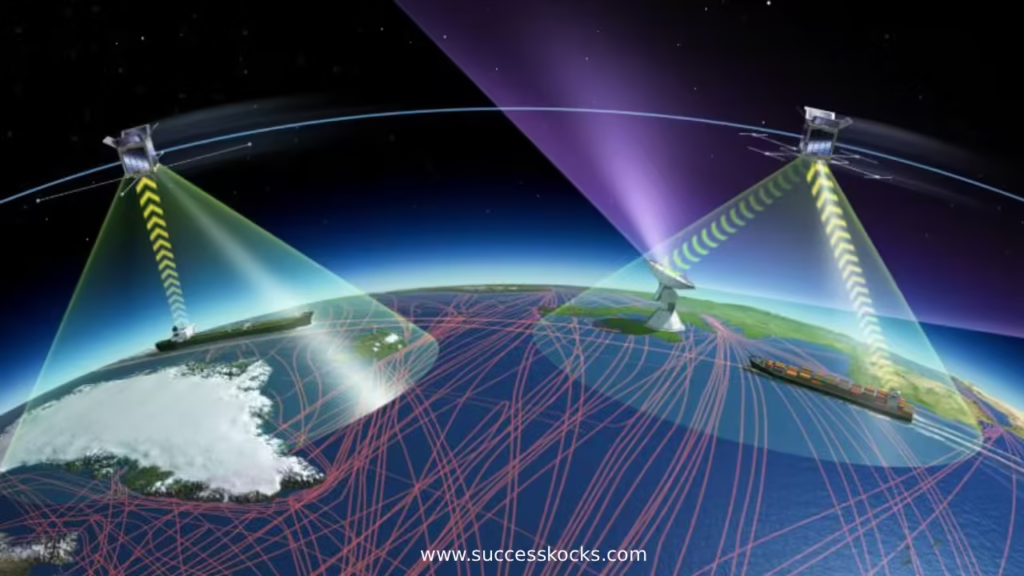
How Launches Fuel Starlink Satellite Constellation Growth 2026
Every Falcon 9 mission is a building block. Typical Starlink flights deploy 20–29 satellites (v2 Mini models dominate now), with boosters landing routinely for reuse. The SpaceX Starlink launch March 22 2026 live stream exemplifies this—another 29 satellites heading up, directly contributing to the constellation’s density.
SpaceX’s cadence? Often multiple per month, sometimes back-to-back. This relentless pace has added hundreds in early 2026 alone. Compare that to competitors—Starlink’s growth outstrips everyone else combined in LEO broadband.
Impacts of Starlink Satellite Constellation Growth 2026 on Users and the World
More satellites = game-changing benefits:
- Global coverage: Near-seamless service in oceans, mountains, rural India, disaster zones. In places like Maharashtra, where fiber rollout lags, Starlink bridges the digital divide.
- Speed and latency: Users report 100–300+ Mbps downloads with lower ping than old geo-sat systems.
- Mobile and maritime: Direct-to-Cell satellites let standard phones text/call via satellite. Cruise ships, planes, remote workers—all stay connected.
- Emergency response: During crises, Starlink restores comms when ground networks fail.
But growth brings challenges too—like astronomical concerns over light pollution or orbital debris. SpaceX mitigates with deorbit tech (satellites burn up reliably) and the 2026 altitude drop to reduce risks.
What’s Next for Starlink Satellite Constellation Growth 2026 and Beyond
2026 isn’t the end—it’s acceleration. SpaceX eyes third-gen satellites launching mid-2026 or later, potentially via Starship for massive payloads. Plans stretch toward 12,000 (Phase 1 approved) or even 34,400 total. Revenue projections? Around $9 billion this year, fueled by millions of subscribers.
The constellation keeps evolving: denser shells, better inter-satellite lasers for routing, expanded Direct-to-Cell. By year-end, expect even higher numbers and capabilities.
Conclusion: Starlink Satellite Constellation Growth 2026 Is Redefining Connectivity
In short, Starlink satellite constellation growth 2026 has turned sci-fi into everyday reality. Crossing 10,000 active satellites, reconfiguring orbits for safety, and powering launches like the SpaceX Starlink launch March 22 2026 live stream show SpaceX’s commitment to universal access. Whether you’re streaming in Pune or connecting in a remote village, this network is changing lives one satellite at a time.
FAQs about Starlink satellite constellation growth 2026:
How many Starlink satellites are active in 2026?
As of March 2026, Starlink has over 10,000 active satellites in orbit, making it the largest satellite constellation ever built.
Why is Starlink lowering some satellites in 2026?
SpaceX is moving ~4,400 satellites to lower orbits (~480 km) to reduce collision risks, improve performance, and enhance space safety.
How many satellites does SpaceX add per launch in 2026?
Typical Starlink missions deploy 20–29 satellites per Falcon 9 launch, with frequent flights adding hundreds every few months.
Does Starlink support mobile phones directly in 2026?
Yes — hundreds of Direct-to-Cell satellites now allow standard smartphones to send texts and make calls via satellite in supported areas.
What’s the long-term goal for Starlink’s constellation?
SpaceX aims for up to 12,000 satellites initially (Phase 1), with potential expansion toward 34,400 to achieve near-global, high-speed broadband coverage.


