The Cat in the Hat vs Mike Myers version comparison is the question every Dr. Seuss fan is typing into Google right now, and honestly? Fair enough. Warner Bros. is dropping a brand-new animated take on November 6, 2026, and it’s landing in a world still scarred by the 2003 live-action fever dream starring Mike Myers. Two movies, one mischievous cat, two wildly different creative philosophies.
Here’s the quick rundown before we dig into the weeds:
- The 2003 version starred Mike Myers in a live-action, prosthetic-heavy costume and leaned hard into adult humor.
- The 2026 version is a fully animated feature from Warner Bros. Pictures Animation, voiced by Bill Hader.
- Critical reception couldn’t be more different — the 2003 film holds a brutal 10% on Rotten Tomatoes; the 2026 film is generating far warmer buzz pre-release.
- Tone and audience shifted dramatically — 2026 aims squarely back at families and kids, not innuendo-laced slapstick.
- Production approach moved from practical effects and makeup to full CG animation via DNEG.
If you want the complete rundown on everything happening with the new film, I covered the full picture in my deep-dive on the 2026 Cat in the Hat movie. But let’s get into why these two adaptations feel like they came from different planets.
Why the 2003 Mike Myers Version Still Haunts Dr. Seuss Fans
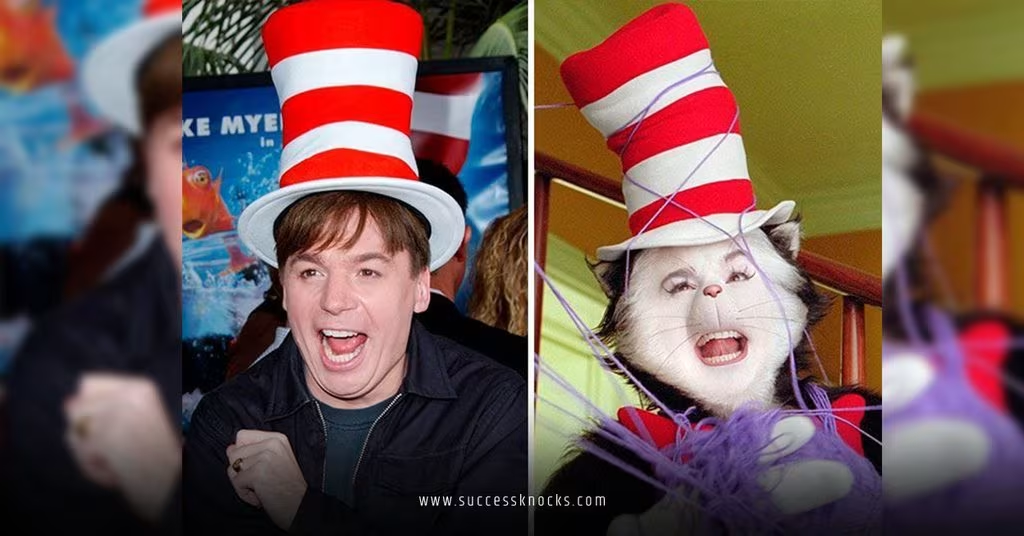
Look, I’ll say it plainly: the 2003 Dr. Seuss’ The Cat in the Hat is one of the most notorious misfires in family-film history. Mike Myers played the Cat in a full-body suit with prosthetic makeup, and the whole thing tried to be a wink-wink comedy for parents stuck in the theater with their kids.
It bombed critically. Rotten Tomatoes pegs it at a dismal 10% from critics, with the consensus reading “Filled with double entendres and potty humor, this Cat falls flat” [1]. Metacritic wasn’t kinder — a 19 out of 100 [2].
Financially, it wasn’t a disaster, but it wasn’t a win either. The film grossed roughly $134 million worldwide against a $109 million budget [2], making it the first Dr. Seuss adaptation to be labeled a box-office bomb. Ouch.
The kicker? Dr. Seuss’s widow, Audrey Geisel, reportedly banned any further live-action adaptations of her husband’s work after this one. That single decision shaped the next two decades of Seuss cinema — and arguably paved the way for the animation-first approach we’re seeing now.
What Made the Mike Myers Cat in the Hat Divisive
The costume design and David Newman’s score actually got praise, even from harsh critics [1]. But the tone? A total mismatch for a children’s book.
Innuendo jokes, a “dirty ho-ho” gag, and Myers ad-libbing his way through scenes turned a beloved bedtime story into something parents groaned through. It felt like a movie made for the marketing department, not the audience.
The Cat in the Hat vs Mike Myers Version Comparison: Side-by-Side Breakdown
Here’s where the differences get concrete. I put together a table so you can see it at a glance instead of hunting through paragraphs.
| Category | 2003 Mike Myers Version | 2026 Animated Version |
|---|---|---|
| Format | Live-action with prosthetics/costume | Fully CG-animated |
| Cat Voice/Actor | Mike Myers (in-suit performance) | Bill Hader (voice) |
| Studio | Universal Pictures / Imagine Entertainment | Warner Bros. Pictures Animation |
| Release Date | November 21, 2003 | November 6, 2026 |
| Tone | Adult-leaning innuendo, slapstick | Family-first, whimsical, mischievous |
| Rotten Tomatoes Score | 10% [1] | TBD (pre-release buzz positive) |
| Box Office | ~$134 million worldwide [2] | TBD — not yet released |
| Legacy Impact | Led to a ban on further live-action Seuss films | Marks Seuss’s full return to animation |
Notice the pattern? Nearly every creative choice in 2026 looks like a direct correction of what went sideways in 2003. That’s not a coincidence — that’s a studio learning from an expensive lesson.
Step-by-Step: How to Watch and Judge Both Versions Fairly
If you’re planning a genuine side-by-side viewing (and honestly, it’s a fun weekend project), here’s how I’d approach it.
- Watch the 2003 version first, ideally without kids in the room given the humor.
- Read the original Dr. Seuss book right after, so the tonal gap is fresh in your mind.
- Check the cast and creative team behind the 2026 film — I broke down the full lineup in the cast details for Bill Hader and Quinta Brunson.
- Watch the 2026 trailer to gauge tone before opening weekend.
- Compare your gut reaction, not just critic scores — this franchise splits people hard.
That process gives you an honest, apples-to-apples read instead of relying purely on nostalgia or hype.
Common Mistakes People Make When Comparing These Two Films
Mistake #1: Assuming “live-action vs. animated” means the 2026 version will automatically be better.
Fix: Judge tone and writing, not just format. Plenty of animated films flop too.
Mistake #2: Comparing box office numbers before the 2026 film even releases.
Fix: Wait for actual opening weekend data. Pre-release hype isn’t revenue.
Mistake #3: Forgetting the 2003 film had some genuine praise — the score, the sets, the makeup work.
Fix: Give credit where it’s earned. It wasn’t a total disaster on every front, just tonally broken.
Mistake #4: Ignoring how the source material factors in.
Fix: Re-read the original book. It grounds the comparison and shows how far the 2003 script drifted.
Key Takeaways
- The 2003 Mike Myers Cat in the Hat is a live-action film with heavy prosthetics and adult-skewing humor.
- It holds a 10% Rotten Tomatoes score and was widely considered a critical failure [1].
- Financially it grossed about $134 million against a $109 million budget — a disappointment, not a total wipeout [2].
- The 2026 version is fully animated, produced by Warner Bros. Pictures Animation with Bill Hader voicing the Cat.
- Dr. Seuss’s estate reportedly restricted future live-action adaptations after the 2003 backlash.
- The 2026 film releases November 6, 2026, after being pushed back from an earlier February date.
- Tone is the single biggest differentiator between the two — family-friendly whimsy versus innuendo-laced slapstick.
- Comparing them fairly means judging writing and tone, not just the animation-vs-live-action format.
So where does that leave us? The Cat in the Hat vs Mike Myers version comparison ultimately boils down to one lesson: tone matters more than star power or special effects. Myers brought comedic chops, sure, but the script buried them under jokes nobody asked for. The 2026 team seems determined not to repeat that mistake, leaning into animation’s flexibility to keep things playful without losing the source material’s charm.
My honest take? Give the 2026 film a fair shot on its own terms once it hits theaters — don’t just measure it against a twenty-year-old cautionary tale. That’s the smartest way to actually enjoy what’s coming.
FAQs
Is the Mike Myers Cat in the Hat considered part of the same franchise as the 2026 movie?
Not really in continuity — they’re separate adaptations of the same Dr. Seuss book, produced by different studios two decades apart, which is exactly why the Cat in the Hat vs Mike Myers version comparison keeps coming up.
Why did Dr. Seuss’s estate avoid live-action after the Mike Myers film?
Reports indicate Audrey Geisel was unhappy with the tone of the 2003 adaptation and pushed the estate toward animation for future projects, which explains why 2026’s version went fully CG.
Will the 2026 Cat in the Hat be less adult-oriented than the Mike Myers version?
Early marketing and cast choices suggest yes — the tone leans back toward family audiences, a clear departure from the innuendo-heavy approach that defined the 2003 film.