Time-of-Use Energy Tariffs are one of the simplest ways to pay less for electricity if your business can shift when it uses power. Instead of paying one flat rate all day, you pay different prices depending on the time of day, with cheaper periods usually matching lower grid demand and more expensive periods lining up with peak use[3][4][19].
If you have been looking at offers like Octopus Energy Eclipse Power Down 6-8pm free electricity August 2026, this is the same basic idea in action: use electricity when the price is lower, and your bill can come down[4][5][14].
What Time-of-Use Energy Tariffs actually mean
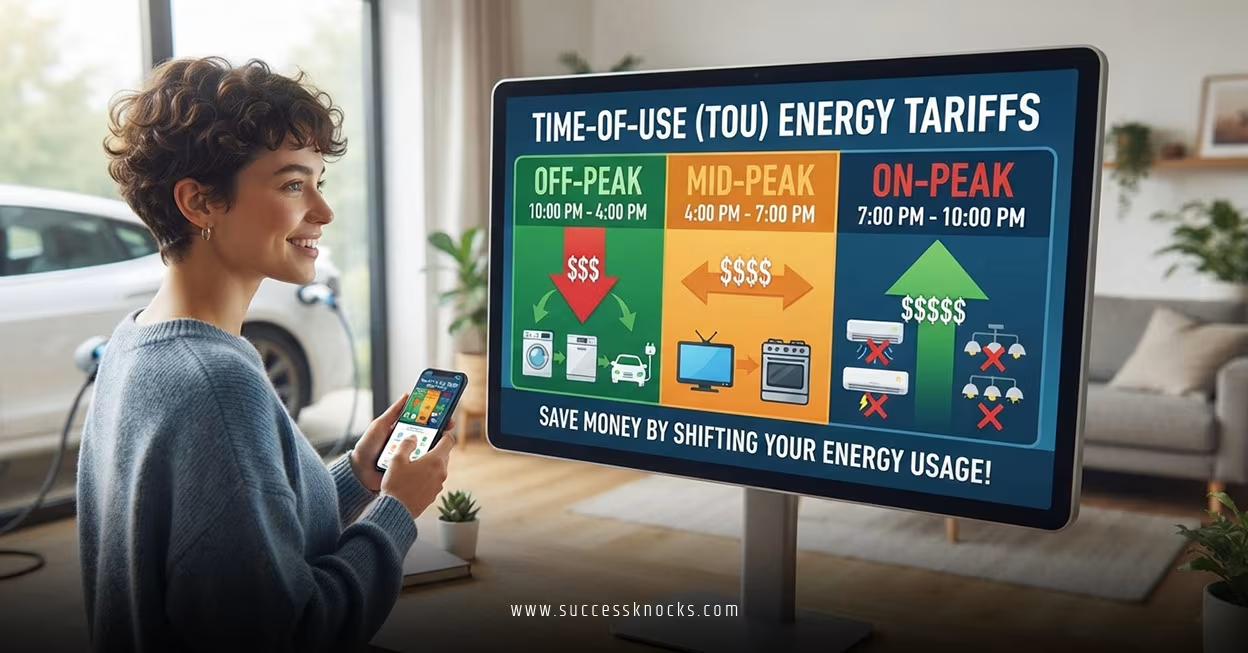
A Time-of-Use tariff is a pricing plan where electricity costs change by time band. The usual setup is off-peak, mid-peak or shoulder, and on-peak periods[3][9][19]. Off-peak is the cheapest, because demand is lower; on-peak is the priciest, because more people are using electricity at the same time[3][4][6].
For business owners, that matters because the biggest energy waste is often not how much power you use, but when you use it. If you can run flexible tasks during cheaper hours, you can lower costs without cutting back on operations[10][14].
Why businesses should care
Time-of-Use Energy Tariffs reward timing. If your business can shift charging, cleaning, heating, cooling, batching, or equipment use away from peak hours, you may see real savings[8][10][14].
That can be especially useful for:
- Cafés and restaurants that can pre-prepare or pre-cool before the busy window
- Offices that can schedule charging, backups, and admin work outside peak hours
- Retailers that can manage lighting, HVAC, and equipment more carefully
- Home-based businesses that share power with household use and can shift flexible loads[3][6][8]
The key is simple: the more flexible your electricity use, the more value you can get from a time-based plan[8][10][14].
Time-of-Use Energy Tariffs vs flat-rate pricing
Here is the main difference in plain English:
| Plan type | How pricing works | Best for |
|---|---|---|
| Flat-rate tariff | Same price all day | Businesses with fixed usage patterns |
| Time-of-Use tariff | Different prices by time | Businesses that can shift usage |
| Dynamic or half-hourly pricing | Prices can change more often | Businesses with strong energy management[4][5][14] |
A flat-rate plan is easier to understand, but it does not reward flexibility. A Time-of-Use plan can be better value if your team can adapt schedules and equipment use[3][14][19].
What to look for before you switch
Before moving to Time-of-Use Energy Tariffs, check whether your business can actually take advantage of the cheaper hours. If most of your electricity use happens during peak trading time, the savings may be limited[3][6][8].
You should also check:
- Whether you need a smart meter or half-hourly tracking[8][14]
- Which hours count as off-peak, shoulder, and on-peak[3][9]
- Whether weekends and holidays are cheaper
- Whether heating, EV charging, refrigeration, or battery storage can be scheduled differently[6][8][19]
In Ontario, for example, the official regulator explains that TOU pricing separates usage into off-peak, mid-peak, and on-peak periods, with different rates for each band[3]. In California, utility plans also show that price periods can be tied to the time of day and season[1][6]. That same structure appears in many other regions, even if the labels are slightly different[9][12][17].
How to get more value from the tariff
The easiest wins usually come from shifting tasks, not changing your whole business model. Start with the loads you can move without hurting customers or staff productivity[8][14].
Good examples include:
- Running dishwashers, washers, or chargers during cheaper hours
- Pre-cooling or pre-heating a workspace before peak time
- Scheduling computer backups and updates outside peak windows
- Using timers, thermostats, and automation to reduce manual effort[6][8][14]
If your business has solar panels or a battery, Time-of-Use tariffs can be even more useful because you can use stored or self-generated power when grid prices are highest[8][10][14].
Where a keyword like Octopus Energy Eclipse Power Down 6-8pm free electricity August 2026 fits in
A search phrase like Octopus Energy Eclipse Power Down 6-8pm free electricity August 2026 is basically a highly specific example of a time-based electricity offer. It points to the same business lesson: if power is free or cheaper during a certain window, you should move as much flexible usage into that window as possible[4][5][14].
That is why Time-of-Use Energy Tariffs are worth understanding even if you are not with Octopus Energy. The idea applies across markets: the more closely you match your usage to the cheaper periods, the more money you keep in the business[3][4][19].
The common mistake to avoid
The biggest mistake is assuming a cheaper tariff automatically means a cheaper bill. If your peak-time usage stays high, a Time-of-Use plan can cost more than expected[3][6][9].
Another mistake is ignoring staff habits. A tariff only helps if people actually follow the schedule. That means clear routines, simple reminders, and a little bit of tracking so you can see whether your changes are paying off[8][14].
If you want the best results, treat the tariff like a planning tool, not just a billing change. Use it to build better energy habits across your business[10][14][19].
We hope that you have found this article enlightening in some way, because Time-of-Use Energy Tariffs are not really about electricity bills alone. They are about using timing to your advantage, and that is a useful habit for any entrepreneur who wants lower overheads and better control.