Ursid meteor shower peak time draws sky enthusiasts from around the world each December, turning ordinary nights into unforgettable celestial displays. Imagine lying back under a crisp winter sky, watching silent streaks of light dance across the darkness— that’s the magic waiting for you during ursid meteor shower peak time. Often flying under the radar compared to bigger shows like the Geminids, this event packs its own subtle punch, espUrsid meteor shower peak time is that magical window when the night sky puts on a subtle yet enchanting display, perfect for anyone itching to catch shooting stars right before the holiday rush. Picture this: it’s late December, the air crisp with winter chill, and you’re bundled up under a blanket of stars, waiting for those fleeting streaks of light to dance across the heavens. If you’ve ever felt that pull toward the cosmos during the festive season, understanding the Ursid meteor shower peak time is your ticket to an unforgettable stargazing adventure. In this deep dive, we’ll unpack everything from the science behind it to pro tips for spotting meteors, all tailored for 2025’s show. Whether you’re a backyard astronomer or just curious about what’s twinkling up there, stick around—I’ve got the details to make you feel like a sky expert by the end.
What Exactly Fuels the Ursid Meteor Shower Peak Time?
Let’s kick things off by getting cozy with the basics. You can’t appreciate the Ursid meteor shower peak time without knowing its roots. This isn’t some random light show; it’s Earth plowing through ancient cosmic dust left by a comet. Specifically, the culprit is Comet 8P/Tuttle, a periodic visitor that swings by our solar system every 13.5 years, shedding debris like confetti from a celestial party.
The Comet Connection: 8P/Tuttle’s Dusty Legacy
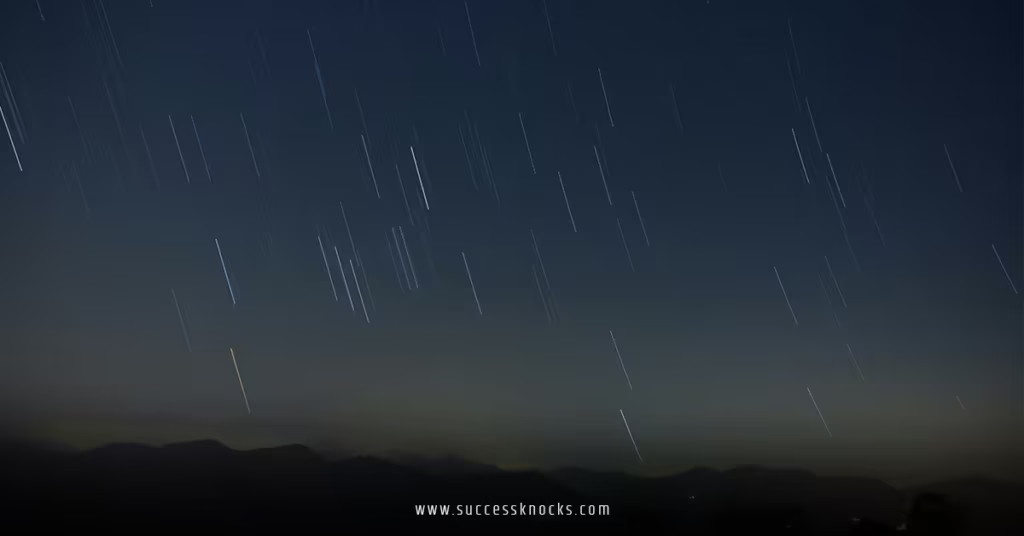
Imagine Comet 8P/Tuttle as a grumpy old traveler, orbiting the Sun in a stretched-out ellipse, dropping pebbles of ice and rock along its path. When our planet crosses that trail between December 17 and 26 each year, those particles—some no bigger than sand grains—slam into our atmosphere at 33 km/s. Boom! They incinerate in a flash, creating the meteors we ooh and aah over. The Ursid meteor shower peak time hones in on the densest part of this debris stream, typically ramping up activity from the constellation Ursa Minor, home to the trusty North Star, Polaris.
Why does this matter for the Ursid meteor shower peak time? Because unlike flashier showers, the Ursids keep things low-key—usually 5 to 10 meteors per hour. But don’t let that fool you; history whispers of wild outbursts, like in 1945 and 1986 when rates spiked to 120 per hour. Those rare surges remind us that the Ursid meteor shower peak time can surprise even seasoned observers. It’s like waiting for a shy friend to steal the show at a party—you never know when they’ll shine.
Radiant Point: Why Ursa Minor Steals the Spotlight
The radiant, that illusory origin point, sits near Polaris in Ursa Minor. For northern hemisphere folks, this is gold because it’s circumpolar—the radiant never dips below the horizon. All night long, meteors fan out from there, though the best views hit when it’s highest. Rhetorical question: ever tried spotting the Big Dipper’s little sibling? That’s your starting line for Ursid meteor shower peak time magic.
Pinpointing the Ursid Meteor Shower Peak Time in 2025: Your Chronological Cheat Sheet
Now, the moment you’ve been waiting for—what’s the Ursid meteor shower peak time in 2025? Drumroll, please: it crests on December 21 to 22, with prime action from 4:00 AM to 8:00 AM local time, peaking around 08:00 EST or 11:00 EST depending on your spot. This predawn slot isn’t arbitrary; it’s when the sky’s darkest and the radiant climbs to its zenith.
Breaking Down the Hours: Why Predawn Rules the Ursid Meteor Shower Peak Time
Think of the night sky as a theater stage. Early evening? The radiant is low, meteors skim the horizon—tough spotting. But as dawn nears, it rises like the curtain call, flooding your view with potential streaks. During Ursid meteor shower peak time, patience pays off because rates are modest, but those slowish 33 km/s meteors leave glowing trains you can actually track.
In 2025, lady luck smiles: the moon’s a mere 3% illuminated, near new phase. No blinding glare washing out faint meteors—just pure, velvety black canvas. Compare that to moonlit Geminids; the Ursid meteor shower peak time feels like VIP access.
Global Timing Variations for Ursid Meteor Shower Peak Time
| Time Zone | Peak Window | Local Notes |
|---|---|---|
| EST (Eastern US) | 08:00 – 11:00 AM | Pre-dawn ideal; radiant high. |
| GMT (UK/Europe) | 13:00 – 16:00 | Afternoon peak, but night viewing still viable. |
| IST (India) | 18:30 – 21:30 | Evening hours; northern viewers prime. |
This table simplifies it—adjust for your longitude. Northern latitudes win big since the radiant stays put.
Maximizing Your Ursid Meteor Shower Peak Time: Pro Viewing Strategies
Ready to turn theory into action? Catching the Ursid meteor shower peak time demands prep, but it’s simpler than baking holiday cookies. Head to a dark-sky haven, away from light pollution—think rural fields or national parks.
Prime Locations and Timing Hacks for Ursid Meteor Shower Peak Time
- Northern Hemisphere Priority: The Ursid meteor shower peak time favors latitudes above 30°N. Southerners? Your radiant hugs the horizon or hides—slim pickings.
- Post-Midnight Vigil: Step out after midnight, peak at 4-8 AM. Recline, scan 50° from the radiant—meteors streak everywhere.
- Gear Up Smart:
- Layers galore: December bites.
- Recliner or blanket: Neck cramps kill the vibe.
- Thermos of hot cocoa: Comfort fuels wonder.
Don’t stare at the radiant; widen your gaze like fishing with a net, not a pin. Historical outbursts teach us: even 5-10/hr can feel epic under dark skies.
Weather and Moon Magic During Ursid Meteor Shower Peak Time
Clear forecasts are your bestie—check apps religiously. 2025’s slim crescent moon? A dream, letting faint Ursids pop. Analogy time: it’s like watching fireworks without stage lights drowning them out.
What Sets the Ursid Meteor Shower Peak Time Apart from the Crowd?
Sure, Perseids dazzle with 100+/hr, Geminids roar in December too—but Ursids? They’re the understated gem. Peaking amid holiday chaos adds whimsy; imagine pausing gift-wrapping for cosmic wishes.
Holiday Timing: Ursid Meteor Shower Peak Time as Festive Bonus
December 21-22 slots perfectly pre-Christmas. Families bond over blankets, kids learn comets aren’t just Reindeer-led. The radiant near Polaris? Beginner-friendly—no constellation hunt needed.
Outburst Lore: Epic Moments in Ursid Meteor Shower Peak Time History
1945: 120/hr stunned watchers. 1986: Encore! Tied to 8P/Tuttle’s close pass, these remind us Ursid meteor shower peak time holds wild cards. Patience mirrors life’s surprises—slow build, sudden sparkle.
Gear and Prep for an Epic Ursid Meteor Shower Peak Time Experience
No telescope required; eyes suffice. But elevate with:
- Photography Primer: Manual camera, 15-30s exposures, wide-angle lens. Track Milky Way backdrop during Ursid meteor shower peak time.
- Apps and Aids: Stellarium for radiant locator; weather radar must.
- Safety First: Buddy system, warm layers, bug spray if mild.
Expect moderate speeds—trains linger like comet tails waving hello.
Educational Twists: Turning Ursid Meteor Shower Peak Time into Family Lore
Beyond beauty, Ursid meteor shower peak time teaches solar system dance. Debris trails reveal comet orbits; Earth’s tilt dictates seasons. Snap photos, journal counts—STEM fun!
- Kid activities: Wish lists on meteors.
- Adult angles: Ponder our place in cosmos.
Conclusion: Seize Your Ursid Meteor Shower Peak Time in 2025
The Ursid meteor shower peak time on December 21-22, 2025, from 4-8 AM, promises intimate cosmic poetry—5-10 meteors/hr from Ursa Minor, powered by 8P/Tuttle, under minimal moonlight. Northern viewers, grab blankets and chase darkness. This quiet shower sparks awe, blending science and wonder. Don’t miss it; step out, look up, and let the universe whisper holiday magic. Your stargazing story starts now!
Frequently Asked Questions About Ursid Meteor Shower Peak Time
Any tips for clear views during Ursid meteor shower peak time?
Dark site, predawn hours, no moon glare in 2025—recline and scan wide!
When exactly is the Ursid meteor shower peak time in 2025?
It peaks December 21-22, best 4:00-8:00 AM local time, around 08:00-11:00 EST for max radiant height.
How many meteors can I expect during Ursid meteor shower peak time?
Normally 5-10 per hour, but rare outbursts hit 120—patience unlocks potential.
Is the Ursid meteor shower peak time visible from the southern hemisphere?
Tough luck; radiant low or hidden—northern hemisphere owns this show.
What causes the Ursid meteor shower peak time?
Earth crossing Comet 8P/Tuttle’s dust trail, burning up near Ursa Minor.
ink it to SuccessKnocks for more sky guides and life hacks.