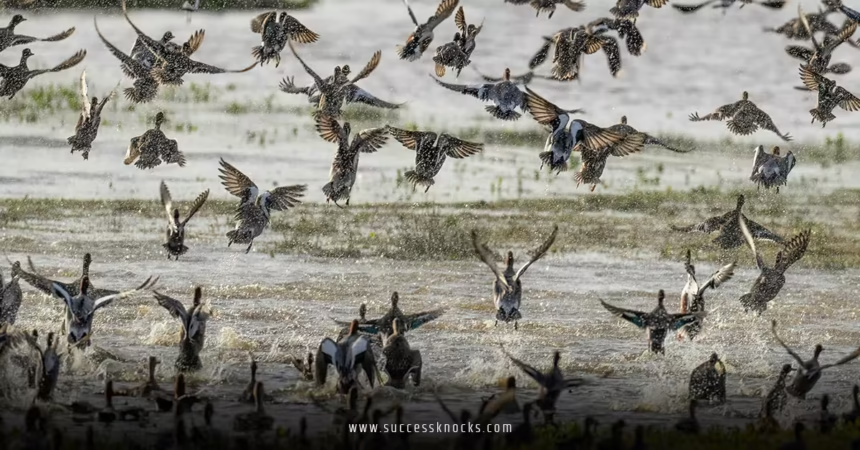
Waterfowl migration patterns represent one of nature’s most remarkable navigation systems, with millions of ducks, geese, and swans traveling thousands of miles twice yearly along established aerial highways. These ancient routes, refined over millennia, connect Arctic breeding grounds to southern wintering areas through a complex network of stopover sites that sustain North America’s waterfowl populations.
Here’s what drives these incredible journeys:
- Four major flyways: Pacific, Central, Mississippi, and Atlantic corridors funnel birds north and south
- Timing varies by species: Early migrants leave in August; late travelers wait until ice forces departure
- Weather triggers movement: Temperature drops and storm fronts initiate mass migrations
- Stopover sites are critical: Prairie potholes and coastal marshes provide essential refueling stations
- Return routes often differ: Many species use different paths for spring and fall migrations
North America’s Four Major Flyways
The Mississippi Flyway: The Superhighway
The Mississippi Flyway moves more waterfowl than any other route. This central corridor follows the Mississippi River valley from the Arctic to the Gulf of Mexico, funneling an estimated 40% of North America’s waterfowl and shorebirds.
Key features include:
- Prairie pothole region: The “duck factory” of North America produces 50% of the continent’s waterfowl
- Mississippi River bottoms: Extensive wetlands and agricultural fields provide critical habitat
- Gulf Coast marshes: Primary wintering grounds for millions of birds
- Urban challenges: Major cities like Minneapolis, St. Louis, and New Orleans create navigation obstacles
The flyway’s geography creates natural bottlenecks. Pool 19 on the Mississippi River near Keokuk, Iowa, concentrates over 700,000 canvasbacks during peak migration—nearly the entire continental population in a 25-mile stretch.
The Central Flyway: The Western Corridor
The Central Flyway serves the Great Plains, stretching from Alberta and Saskatchewan through Texas and into Mexico. This route handles massive waterfowl numbers but faces unique challenges from habitat conversion and climate change.
Critical staging areas:
- Rainwater Basin, Nebraska: 4,000 shallow wetlands support 9 million waterfowl annually
- Cheyenne Bottoms, Kansas: 41,000 acres of managed wetlands in the heart of the Great Plains
- Playa lakes: Ephemeral wetlands across the High Plains provide scattered stopover sites
- Texas Gulf Coast: Expansive marshes serve as primary wintering habitat
The geography here tells a story of adaptation. Birds following this route must navigate vast stretches of agricultural land with fewer natural wetlands than eastern flyways.
The Pacific and Atlantic Flyways: Coastal Corridors
The Pacific Flyway follows the western coastline from Alaska to Central America, serving distinct waterfowl populations adapted to different habitats than their interior cousins.
Unique characteristics:
- Sea duck specialists: Scoters, eiders, and goldeneyes use marine environments
- Freshwater wetlands: Central Valley of California supports massive wintering populations
- Montane routes: Some species cross the Rocky Mountains via high-elevation passes
The Atlantic Flyway hugs the eastern seaboard, supporting both freshwater and saltwater species. The Chesapeake Bay alone winters over 1 million waterfowl, while maritime Canada provides critical staging areas for sea ducks.
Species-Specific Migration Strategies
Early Migrants: The Pioneers
Blue-winged teal lead the southbound parade, often departing breeding areas by late August when temperatures remain warm. These small ducks can’t tolerate cold like their larger relatives, so they head for tropical wintering grounds in Central and South America.
Early migration advantages:
- Peak food availability: Wetlands remain ice-free with abundant natural foods
- Less competition: Fewer birds competing for resources at stopover sites
- Predictable weather: Stable late-summer conditions reduce flight risks
Northern pintails also move early, particularly females and young birds. Adult males often linger later to complete their molt in safety.
Mid-Season Migrants: The Main Event
October brings the spectacle most waterfowl enthusiasts associate with migration. Mallards, Canada geese, and diving ducks move in massive waves triggered by advancing cold fronts.
This timing reflects evolutionary strategy. These species can tolerate moderate cold, allowing them to maximize time on productive breeding areas while still reaching wintering grounds before freeze-up.
Weather becomes the primary driver. A strong northwest wind behind a cold front can trigger millions of birds to move simultaneously, creating the legendary “bluebird days” that hunters and birders dream about.
Late Migrants: The Survivors
Common goldeneyes, buffleheads, and other diving ducks wait until ice forces departure. These species evolved to exploit food resources unavailable to surface feeders, so they can afford to linger until the last possible moment.
Survival advantages:
- Extended feeding time: Maximum energy storage before long flights
- Reduced predation: Fewer raptors migrating by November
- Less competition: Most waterfowl have already departed prime habitats
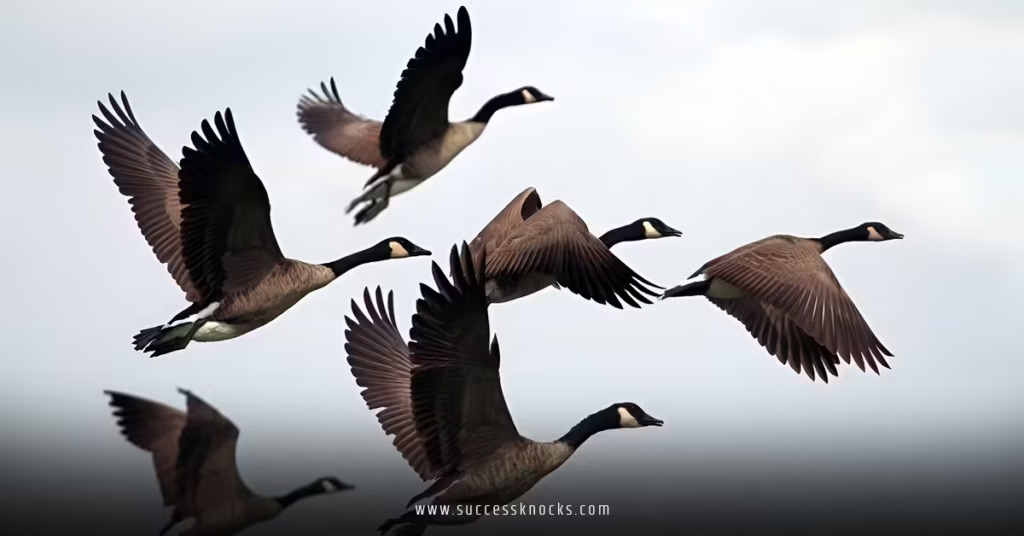
Canada geese show interesting variation. Northern populations migrate late, while southern residents may not migrate at all. This goose vs duck behavioral difference reflects their larger size and better cold tolerance compared to most duck species.
The Science Behind Navigation
Genetic Programming and Learning
Migration routes are partially hardwired. Young birds possess genetic templates that provide general directional information, but they require learning and experience to master specific routes and stopover sites.
First-year mortality reflects this learning curve. Juvenile waterfowl show significantly higher mortality rates during their initial migration compared to experienced adults who know productive feeding areas and safe roosting sites.
Family groups transfer knowledge. Species like Canada geese, trumpeter swans, and sandhill cranes migrate as family units, with adults teaching offspring the traditional routes. This cultural transmission explains why some routes persist for centuries.
Navigation Mechanisms
Waterfowl employ multiple navigation systems simultaneously:
- Magnetic compass: Specialized cells in the brain detect Earth’s magnetic field
- Celestial navigation: Sun and star positions provide directional reference
- Landmark recognition: Geographic features like coastlines and river valleys guide flights
- Atmospheric pressure: Barometric changes help predict weather and optimize timing
- Polarized light: Atmospheric light patterns invisible to humans provide directional cues
Recent research suggests smell plays a role too. Birds may recognize atmospheric odors that help identify specific geographic regions, though this mechanism remains poorly understood.
Climate Change Impacts on Migration Patterns
Shifting Timing and Routes
Migration timing has advanced significantly over the past 50 years. According to the U.S. Geological Survey, spring migration now begins 6-8 days earlier on average, while fall departure has delayed by 2-4 days.
These shifts create ecological mismatches. Birds may arrive at breeding areas before optimal food sources become available, or they may encounter unexpected weather patterns that stress populations.
Northern range expansions are documented for numerous species. Canada geese now breed regularly in areas that were historically too cold, while some duck species have established new populations hundreds of miles north of traditional ranges.
Habitat Changes Along Flyways
Precipitation patterns are shifting dramatically. The prairie pothole region experiences more frequent droughts alternating with extreme flooding events, creating unpredictable habitat conditions.
Coastal sea-level rise threatens critical staging areas. Salt marshes along the Atlantic and Gulf coasts face permanent inundation, while barrier islands that protect inland wetlands erode rapidly.
Agricultural intensification reduces stopover habitat. Modern farming practices eliminate the seasonal flooding and waste grain that historically supported migrating waterfowl.
Critical Stopover Sites and Bottlenecks
Prairie Pothole Region: The Duck Factory
The prairie pothole region spans parts of five U.S. states and three Canadian provinces, containing millions of small wetlands formed by glacial activity. This area produces 50-80% of North American ducks despite representing just 10% of the continent’s waterfowl habitat.
| Wetland Type | Primary Species | Peak Numbers | Timing |
|---|---|---|---|
| Seasonal pools | Blue-winged teal, mallard | 2-5 million | April-May, August-September |
| Semi-permanent | Canvasback, redhead | 1-3 million | March-April, September-October |
| Permanent water | Lesser scaup, ring-necked duck | 500,000-1 million | April-May, October-November |
| Alkali wetlands | Northern pintail, gadwall | 1-2 million | March-April, August-September |
Climate variability drives dramatic population swings. Drought years can reduce duck production by 70%, while wet cycles create record breeding numbers.
Coastal Staging Areas
Delaware Bay represents a critical link in the Atlantic Flyway, where horseshoe crab spawning coincides with spring shorebird migration. While not primarily a waterfowl site, it demonstrates how specific ecological events create irreplaceable stopover opportunities.
Chesapeake Bay supports the largest wintering waterfowl concentration on the Atlantic coast. Over 1 million ducks, geese, and swans use this estuary, with canvasbacks reaching densities of 200 birds per square mile in submerged aquatic vegetation beds.
San Francisco Bay’s salt ponds provide critical Pacific Flyway habitat, supporting 1 million shorebirds and 150,000 waterfowl annually. Recent restoration efforts have converted commercial salt ponds back to tidal marshes, improving habitat quality dramatically.
Agricultural Landscapes
Flooded rice fields in California’s Central Valley have become essential waterfowl habitat. These managed systems provide abundant food and roosting sites for 60% of Pacific Flyway waterfowl.
Corn and soybean fields throughout the Midwest supply high-energy waste grain that fuels long-distance flights. A single flooded cornfield can support thousands of dabbling ducks during peak migration.
The key is timing and water management. Farmers who flood harvested fields during migration periods provide invaluable habitat, while those who immediately till stubble eliminate feeding opportunities.
Migration Timing by Region and Species
Spring Migration Patterns
Early spring migrants (February-March):
- Pintails and wigeon: Move as soon as ice breaks up
- Canada geese: Return to traditional territories while snow remains
- Common goldeneye: Follow ice-out on northern lakes
Peak spring migration (March-April):
- Mallards and black ducks: Move with warming temperatures
- Diving ducks: Follow ice-out on deeper waters
- Lesser scaup: Form massive rafts on Great Lakes
Late spring migrants (April-May):
- Blue-winged teal: Wait for warm weather and insect emergence
- Shovelers and gadwall: Time arrival with aquatic invertebrate peaks
- Wood ducks: Return to wooded swamps after leaf-out
Fall Migration Timing
Fall migration stretches from July through December, with peak movements occurring during October cold fronts. The sequence reflects cold tolerance and food requirements rather than geographic distance to wintering areas.
Molt migration complicates patterns. Many adult male ducks move to specific molting areas in mid-summer, remaining flightless for 3-4 weeks before rejoining fall migration. This creates multiple movement peaks for the same populations.
Technology and Migration Research
Satellite Telemetry Revelations
GPS tracking has revolutionized migration research. Lightweight transmitters now reveal precise routes, stopover duration, and habitat selection with unprecedented detail.
Recent discoveries include:
- Individual route fidelity: Birds use nearly identical paths year after year
- Stopover site importance: Some locations are used by 80% of tracked birds
- Weather response: Birds adjust routes in real-time based on wind patterns
- Energy management: Flight speeds and altitudes optimize energy expenditure
Surprising findings challenge assumptions. Some species fly much higher than expected—up to 20,000 feet—to access favorable wind currents. Others make non-stop flights over previously thought impossible distances.
Citizen Science Contributions
eBird data provides migration timing information across the continent with remarkable detail. Over 100 million bird observations annually create real-time migration maps that track seasonal movements.
Banding studies continue providing crucial information. The North American Bird Banding Program has banded over 77 million birds since 1960, with waterfowl representing a significant portion of recoveries.
Christmas Bird Count data spanning 120+ years reveals long-term changes in wintering distributions and population trends.
Conservation Challenges and Solutions
Habitat Loss and Fragmentation
Wetland loss continues despite conservation efforts. Since European settlement, North America has lost over 50% of its original wetlands, with some regions showing 90%+ losses.
Agricultural conversion represents the primary threat in many regions. Economic incentives often favor draining wetlands for crop production, particularly during commodity price spikes.
Urban development fragments remaining habitat. Suburban expansion eliminates wetlands and creates barriers that disrupt traditional movement patterns.
Climate Change Adaptation
Shifting precipitation patterns require adaptive management. Traditional water level management may become ineffective as seasonal timing and intensity change.
Northern habitat expansion offers opportunities but requires international cooperation to protect newly suitable areas in Canada and Alaska.
Assisted migration may become necessary for some populations as suitable habitat shifts beyond natural dispersal capabilities.
Success Stories
The North American Waterfowl Management Plan represents international cooperation at its finest. The U.S., Canada, and Mexico coordinate habitat conservation, research, and population monitoring across political boundaries.
Duck Stamp funding has protected over 6 million acres of waterfowl habitat since 1934. Hunter contributions through license sales and excise taxes generate over $1 billion annually for conservation.
Private landowner partnerships through programs like the Conservation Reserve Program have restored millions of acres of grassland and wetland habitat.
Key Migration Triggers and Weather Patterns
Cold Front Dynamics
Classic migration weather features strong northwest winds behind advancing cold fronts. These systems provide favorable tailwinds for southbound birds while dropping temperatures that trigger departure.
Barometric pressure changes precede visible weather by 12-24 hours, allowing birds to initiate flights before conditions become unfavorable.
Wind patterns determine routes and timing. Birds may delay departure for days waiting for favorable winds, then move en masse when conditions align.
Seasonal Light Changes
Photoperiod triggers physiological changes that prepare birds for migration. Decreasing daylight stimulates hormone production that initiates fat storage and navigational preparation.
These internal clocks evolved over millions of years and remain remarkably consistent despite climate change. However, temperature changes may create mismatches between physiological readiness and actual departure timing.
Step-by-Step Migration Observation Guide
Step 1: Choose optimal locations
- Visit major wetlands during peak migration periods
- Check local birding hotspots and recent sightings reports
- Focus on areas with diverse habitat types and water levels
Step 2: Time your visits strategically
- Early morning (sunrise to 10 AM) offers peak activity
- Monitor weather patterns—cold fronts trigger mass movements
- Plan multiple visits throughout migration seasons
Step 3: Observe flight patterns and behavior
- Note flight directions and altitudes
- Record species composition and flock sizes
- Document feeding and roosting behaviors
Step 4: Track seasonal changes
- Monitor species succession throughout migration periods
- Note timing differences between early and late migrants
- Compare observations to historical patterns and citizen science data
Step 5: Contribute to science
- Submit observations to eBird
- Participate in migration counts and surveys
- Report unusual sightings to local ornithological organizations
Common Migration Misconceptions
Myth: Birds Migrate Due to Food Scarcity
Temperature, not food, drives most waterfowl migration. Ducks and geese begin preparing for migration while food remains abundant. The trigger comes from decreasing daylight and falling temperatures that signal approaching winter.
Food availability influences timing and routes but doesn’t initiate the migratory impulse. Well-fed birds actually migrate more successfully than undernourished individuals.
Myth: All Birds Follow the Same Routes
Individual variation is enormous. Even within the same population, birds may use different routes, stopover sites, and timing. Genetic diversity in navigation systems provides evolutionary advantages when environmental conditions change.
Age and experience create route differences. Older birds often use more direct routes with established stopover sites, while younger birds may take circuitous paths as they learn optimal strategies.
Myth: Migration Routes Never Change
Routes evolve constantly in response to habitat changes, climate shifts, and population dynamics. What appears stable over human timescales may show significant variation over decades or centuries.
Human activities create both obstacles and opportunities. New reservoirs may attract birds to previously unused areas, while urban development can force route adjustments.
Regional Variations in Timing
| Region | Spring Peak | Fall Peak | Dominant Species |
|---|---|---|---|
| Prairie Pothole | April 15-May 10 | September 15-October 15 | Mallard, pintail, blue-winged teal |
| Great Lakes | March 20-April 20 | October 1-November 1 | Canvasback, redhead, scaup |
| Gulf Coast | February 15-March 15 | November 1-December 15 | Multiple species staging |
| Atlantic Coast | March 1-April 15 | October 15-November 30 | Black duck, brant, sea ducks |
| Pacific Coast | February 1-March 30 | September 15-November 15 | Pintail, wigeon, various divers |
Key Takeaways
- Four major flyways channel waterfowl migration across North America, each supporting distinct species assemblages and timing patterns
- Weather triggers mass movements, with cold fronts and barometric changes initiating synchronized departures
- Stopover sites are critical bottlenecks where millions of birds concentrate during migration, making habitat protection essential
- Species timing varies dramatically based on cold tolerance, food requirements, and breeding strategies
- Climate change is shifting traditional patterns, requiring adaptive management and conservation strategies
- Technology has revolutionized understanding through satellite tracking, citizen science, and long-term monitoring
- International cooperation drives conservation success, with cross-border partnerships protecting migratory species
- Individual birds show remarkable route fidelity, using nearly identical paths year after year once learned
Understanding waterfowl migration patterns reveals the intricate connections between distant ecosystems and the remarkable navigational abilities of these travelers. Each spring and fall, millions of birds undertake journeys that span continents, following ancient routes refined over evolutionary time.
The conservation challenges are immense, but so are the opportunities. By protecting critical habitats along these aerial highways, we ensure that future generations will witness the spectacle of mass waterfowl migration that has inspired humans for millennia.
Start by visiting your local wetlands during peak migration. The basics you observe there connect to continental-scale patterns that govern North American waterfowl populations.
Conclusion
Waterfowl migration patterns represent one of nature’s most sophisticated navigation systems, connecting Arctic breeding grounds to tropical wintering areas through aerial highways refined over millions of years. Understanding these patterns provides crucial insights for conservation efforts and reveals the remarkable adaptations that allow these birds to traverse vast distances twice annually.
The four major flyways—Pacific, Central, Mississippi, and Atlantic—each support unique assemblages of species with distinct timing and habitat requirements. Climate change and habitat loss pose significant challenges, but international cooperation through programs like the North American Waterfowl Management Plan demonstrates how science-based conservation can protect these incredible migrations.
Observe migration in your local area this season. Every wetland observation contributes to our understanding of these continental-scale phenomena that connect ecosystems across the hemisphere.
Frequently Asked Questions
Q: How do waterfowl migration patterns differ from other bird groups?
A: Waterfowl show more predictable timing and routes compared to songbirds, largely following established flyways. Their larger size allows longer non-stop flights, while their dependence on specific wetland habitats creates distinct bottlenecks and staging areas.
Q: Can weather radar detect migrating waterfowl?
A: Yes, Doppler radar routinely detects massive waterfowl movements, especially during cold front passages. The distinctive signatures help researchers track migration timing and intensity across broad geographic areas.
Q: How far can waterfowl fly without stopping during migration?
A: Distance varies by species and conditions. Blue-winged teal can fly 2,000+ miles non-stop to Central America, while larger species like Canada geese typically make 100-500 mile segments with regular stops for feeding and rest.
Q: Do waterfowl migration patterns change during their lifetime?
A: Individual birds show remarkable route fidelity once established, but young birds may try different routes before settling on preferred pathways. Habitat changes can force route adjustments at any age.
Q: How do artificial lights affect waterfowl migration patterns?
A: Urban lighting can disorient migrating birds, particularly during overcast conditions. However, waterfowl appear less susceptible than songbirds, likely due to their larger size and stronger navigation abilities. Coastal areas with bright lights may still create collision hazards.