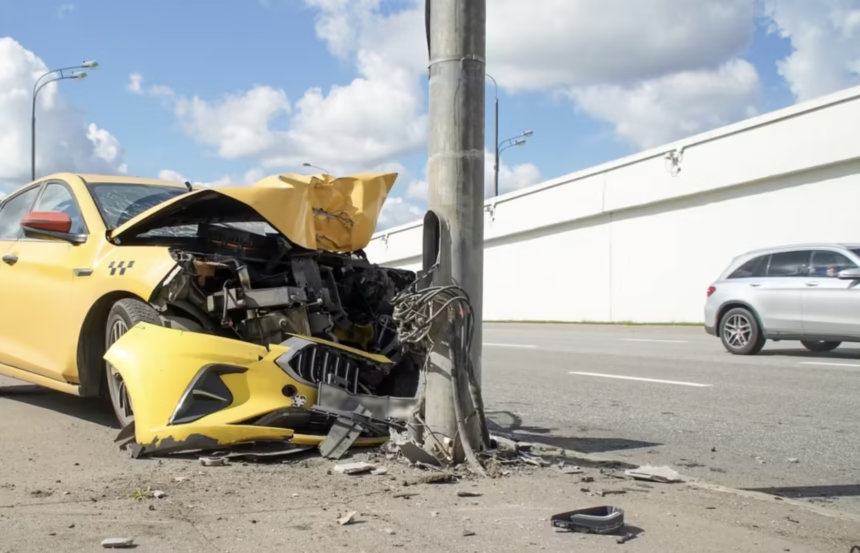
A rideshare trip may last only a few minutes, but the questions that follow a collision can be far more complicated. Unlike a traditional car accident, a rideshare collision often involves multiple people, different insurance policies, and a transportation platform operating behind the scenes. What appears simple at first can quickly become difficult to sort out.
That complexity is one reason many people start looking into legal help after a rideshare accident, shortly after learning more about the circumstances involved. Before responsibility can be discussed, it is important to understand why rideshare accidents often raise more questions than ordinary vehicle collisions and why determining liability is rarely straightforward.
More Parties May Be Involved Than People Realize
One of the biggest reasons rideshare accidents are different is the number of parties that may be connected to the incident. A standard vehicle accident often involves two drivers and their insurance providers. A rideshare collision can involve several additional layers.
There may be a rideshare driver, another driver, passengers, a rideshare company, and multiple insurance carriers. Each party may have a different role in the events leading to the accident. Because of this, determining responsibility is not always a simple process.
The situation becomes even more complicated because each party may have its own version of what happened. Investigators often review available evidence, witness accounts, and accident reports to gain a clearer understanding of the circumstances. Looking at only one part of the picture rarely provides enough information to fully understand how a collision occurred.
The Driver’s Status Can Affect the Situation
A rideshare driver’s status at the time of an accident is often an important factor. The circumstances may differ depending on whether the driver was actively transporting a passenger, waiting for a ride request, or not using the rideshare application at all.
Because rideshare services operate through mobile platforms, different insurance arrangements may apply based on what the driver was doing at the time of the collision. Determining that status may require reviewing electronic records, trip information, and platform activity.
This is one reason rideshare accidents often involve a closer examination of digital evidence than traditional collisions. Information stored through the rideshare application may help establish important facts about the driver’s activity before and during the incident.
Evidence Plays a Significant Role
Determining liability often depends on the quality and availability of evidence. Because rideshare accidents can involve several parties, gathering accurate information becomes especially important.
Common sources of information may include:
- Police accident reports
- Witness statements
- Traffic camera footage
- Vehicle damage photographs
- Rideshare app records
- GPS and trip data
Each source contributes something different. A witness may describe traffic conditions, while app records may help establish the driver’s activity at the time of the accident. Together, these details help create a more complete picture.
Questions about evidence sometimes become especially important when discussions move beyond the accident itself and involve issues such as filing a lawsuit. In those situations, accurate information often becomes one of the most important tools for understanding the circumstances surrounding the collision.
Several Factors May Contribute to a Collision
Many people assume that one person is always responsible for a rideshare accident. In reality, traffic collisions can involve multiple contributing factors that occur at the same time.
Road conditions, weather, vehicle maintenance issues, traffic patterns, and the actions of several drivers may all play a role. A rideshare driver may be navigating through unfamiliar streets while another driver makes an unsafe maneuver. At the same time, poor visibility or roadway conditions could also contribute to the event.
Because accidents are rarely examined in isolation, investigators often look at the broader context surrounding a collision. This process helps create a more balanced understanding of what occurred rather than focusing on a single factor.
Why Clear Answers Are Not Always Immediate
People naturally want quick answers after an accident. Unfortunately, rideshare collisions do not always provide them. Information must often be reviewed carefully before reliable conclusions can be reached.
Accident reports, digital records, witness observations, and insurance information may all need to be examined together. Even facts that seem straightforward at first can require additional investigation once more details become available.
This does not mean responsibility cannot be determined. It simply means that rideshare accidents frequently involve more moving parts than traditional vehicle collisions. The process of understanding those moving parts is often what makes liability questions more challenging.
Conclusion
A rideshare collision can seem like an ordinary traffic accident, but the involvement of rideshare platforms, multiple insurance policies, digital records, and several potentially responsible parties often makes the situation far more complex. Determining liability requires a careful review of evidence, driver activity, and the circumstances surrounding the collision.
Clear answers are rarely based on assumptions alone. They are built through a thorough examination of facts and available information. For individuals seeking legal help after a rideshare accident, understanding why liability can be difficult to determine is often an important step toward understanding the collision itself.