Mental Rest Is Still Productive
Your brain doesn’t switch off easily; even during quiet moments, it is still running. Entertainment gives your mind something to focus on and something to engage with. That focus is really important; it pulls your attention away from looping thoughts, stress, and mental clutter. Watching a reality show or playing a simple game gives your brain a break from decision-making. You’re still engaged, not overwhelmed. This kind of mental rest improves concentration later on. People often find they think less clearly after spending time with light, enjoyable entertainment. It’s not wasted time; it’s actually covered.
Social Entertainment Supports Emotional Health
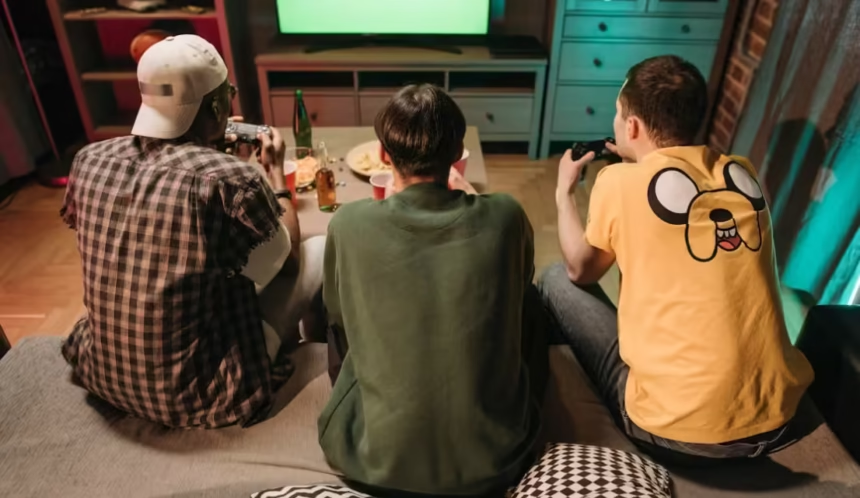
Humans are social by default; even if you enjoy spending time alone, connection is still really important. Entertainment makes connections easier. Watching a movie with somebody, playing a game together, or even discussing a show gives you a low-pressure way to interact with each other. You don’t need to jump into detailed conversations. Shared laughter and friendly competition also help to reduce stress hormones and improve your mood. You feel more relaxed because you’re not performing; you’re just present. That’s one reason why group games and shared activities have lasted so long. Something as simple as a board game night or a few rounds of checkers can create an interaction without emotional stakes. You show up, you play, and you connect.
Physical Benefits Can Be Subtle But Real
Not all health benefits need to be intense; some entertainment supports physical health and quiet activities, like movement games and casual sports activities that get you out of your chair, reduce stiffness, and improve circulation. Even entertainment that keeps you seated can promote relaxation; it improves oxygen flow, and your body responds just as much as a response to having music. Music is a great example of this pressure; it helps your nervous system shift out of stress mode and plug into relaxation mode. These efforts are dramatic even.
Entertainment Helps Regulate Stress
Stress builds up when there is no release. Entertainment gives you a release valve. When you absorb something enjoyable, your body changes after the fight or flight mode, and your muscles loosen. This doesn’t mean that you are avoiding problems; though, this means you’re giving your system a chance to be safe. You can actually deal with a little while; short breaks are really important here. A few minutes off task can help prevent feelings of burnout. You don’t need to have long sessions for benefits to appear. The key is intention: choose entertainment that’s going to feel enriching rather than making you feel more tense.
Creative Entertainment Improves Mood
Creative activities counter entertainment. Drawing, writing, playing a musical instrument, or building something for fun engages a different part of your brain. You stop consuming and start creating, even if the result isn’t polished. Creative play can improve your mood because it gives you full control; you make choices without there being any judgment in place, and you experience without there being any consequences. This kind of entertainment is something that builds confidence quietly. You can prove to yourself that you can start something and finish it, even if it’s just for yourself. Because creativity has no strict goal, it reduces pressure. The freedom it provides supports mental health more than people realize.
Familiar Entertainment Brings Comfort
There’s a reason the people who watch the same shows, or we play the same games, are familiar and feel safe with that song when you already know what is going to happen; your brain relaxes. There is no attention given to the experience without having to worry occasionally. This is especially helpful during stressful periods. Committee routines provide some ability when other areas fail. Predictable, simple games with known rules, familiar music playlists, and movies don’t get much attention; they offer that sense of comfort. Of course, emotional balance helps to prevent people.
Entertainment Can Improve Focus Over Time
It may sound counterintuitive, but certain entertainment can actually strengthen your focus. Concentration for social strategy games even celebrates activities to make patients, and also observation. You learn to wait, you learn to notice patterns, and you learn to think before you actually act. These types of skills are transferable. People who regulate entertainment often find it easier to concentrate on work or personal tasks. The benefit doesn’t come from having intensity; it comes from consistency.
Balance Matters More Than the Type
No single form of entertainment is perfect; what matters is having a balance. Too much passive consumption can leave you feeling drained and to it and enjoyment, collective stress, and fatigue. There is a sweet spot that kind of sits somewhere in the middle, mixing different types of entertainment also helps social, active, relaxing, familiar, and new when entertainment supports your energy bar for replacing it because it is part of a healthy routine that you can stick to.
Entertainment as Part of a Healthy Life
Health isn’t only about what you eat or how you exercise or how you look after your mental health, but also about how you unwind and relax. Entertainment gives your mind room to breathe, and it helps your body relax, and all the certificates and emotional ballads. You don’t need to justify yourself when you choose that whatever current isn’t an indulgence; it’s something that should be seen as maintenance. Like any good habit, it works better in your life, and you have a good balance. What’s your favorite form of entertainment? We would love to hear about it in the comments below.