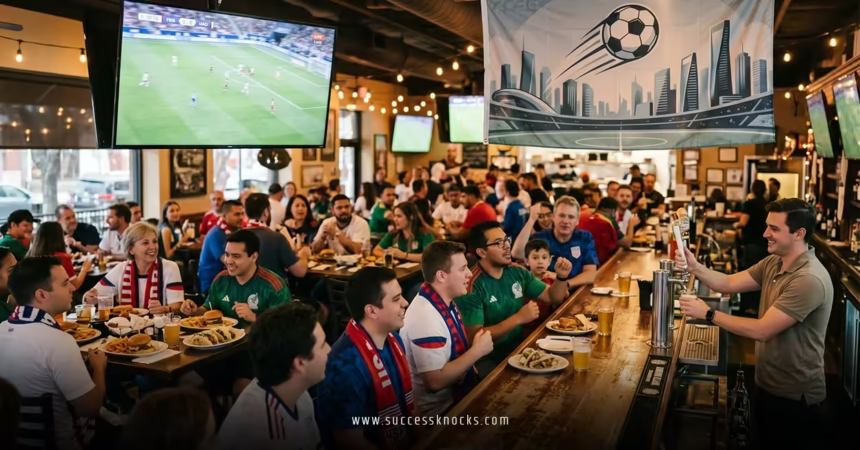
World cup 2026 marketing guidelines for local restaurants are about to become your best friend. The tournament lands in North America—the USA, Canada, and Mexico—and that means foot traffic. Lots of it. For restaurant owners and operators stateside, this isn’t just another sporting event; it’s a revenue inflection point if you play it right.
Here’s the thing: restaurants that nail World Cup activation see average revenue bumps between 20–40% during tournament windows, according to National Restaurant Association data on seasonal event-driven dining. But success doesn’t happen by accident. You need a strategy, not just a hope and a TV in the corner.
Quick Overview: What World Cup 2026 Marketing Means for Your Restaurant
- Targeted promotion of match-day specials and group-friendly seating arrangements aligned with game schedules and audience demographics
- Strategic use of social media, local partnerships, and in-venue experience enhancements to drive traffic during prime viewing windows
- Compliance with licensing, sports broadcasting rights, and local health/safety regulations specific to high-capacity event viewing
- Data-driven inventory and staffing adjustments based on match schedules, time zones, and anticipated customer volume
- Cross-promotional opportunities with local businesses, delivery platforms, and community organizations to expand reach beyond your existing base
Why World Cup 2026 Marketing Guidelines Matter Right Now
World Cup 2026 Marketing Guidelines for Local Restaurants The 2026 tournament is different from past editions. It’s the first to feature 48 teams instead of 32, which means more matches, more days, longer viewer engagement windows. And because games happen across multiple time zones—some at 9 AM local time on weekdays, others late evening—your marketing strategy needs to adapt to how real customers actually consume soccer.
Local restaurants that treat this like a sprint rather than a marathon lose. Those who build a 12-month calendar and tie it to operational adjustments? They win.
Step-by-Step Action Plan for Beginners
Phase 1: Audit & Foundation (Now Through August 2025)
Start with honest assessment. Do you have the infrastructure? The answer isn’t just “do we have a TV?” It’s:
- How many seats can comfortably accommodate group viewing during peak hours?
- What’s your current internet bandwidth? (Streaming requires solid connectivity.)
- Do you have the proper Sports Broadcasting License to legally show World Cup matches?
This is non-negotiable. Streaming unlicensed international sports content can trigger fines up to $20,000 per violation under U.S. copyright law. Get it right.
Phase 2: Positioning & Menu Engineering (September–November 2025)
Develop World Cup-specific offerings. Not every menu item needs to change, but three to five strategic additions work:
- Group-friendly appetizers (wings, nachos, sliders—stuff people share)
- Regional signature items tied to competing nations’ cuisines
- Beverage bundles and all-day specials for non-alcoholic options and beer packages
- Limited-time combos priced to encourage repeat visits across multiple match days
Price these strategically. You want volume, but margins matter. A $35 group platter with 4–6 sharable items beats undercutting yourself into oblivion.
Phase 3: Marketing Channel Setup (December 2025–January 2026)
Build presence where your customers already are:
- Google Business Profile: Add “World Cup 2026 Viewing” to your services and update hours for match days
- Social media: Create a content calendar featuring team highlights, restaurant atmosphere, and upcoming match schedules (TikTok and Instagram Reels outperform static posts by 300%)
- Email list: Segment by repeat customers and casual diners; send match schedules and specials weekly during tournament
- Local partnerships: Team up with nearby sports bars, gyms, or offices for co-marketing and referrals
Phase 4: Launch & Optimization (February–June 2026)
Once matches start, track everything:
- Which match times drive the most traffic?
- What menu items actually sell versus what you thought would?
- Are customers staying longer, ordering more, or just camping out?
Use this data to pivot. If your 9 AM matches aren’t pulling crowds, shift staff and promotional spend to evening games.
World Cup 2026 Marketing Guidelines: Core Tactical Breakdown
Match Schedule Intelligence
The tournament structure is your marketing skeleton. Games run November 21–December 18, 2026. That’s prime holiday season. Early-group matches cluster heavily on weekends; knockout rounds spread across weekdays.
What I’d do: Map every match your target customers care about. US matches? Obviously priority. But secondary matches (like late-evening European games) can drive late-night bar business if positioned correctly.
Audience Segmentation & Messaging
Not all World Cup viewers are the same. Your messaging needs precision:
| Segment | Primary Motivation | Best Channel | Offer Type |
|---|---|---|---|
| Die-hard fans | Authentic viewing experience, community | Email, TikTok, local partnerships | Premium seating reservations, exclusive merchandise |
| Casual/social viewers | Atmosphere, food, drinks | Instagram, Google Ads, word-of-mouth | Group deals, happy hour bundles |
| Families | All-ages entertainment, food | Facebook, Google Ads, local events | Early-game specials, kids’ menus, safe environment messaging |
| Corporate groups | Team building, convenience | LinkedIn, direct outreach, local B2B | Private room packages, catering options |
The kicker is this: same restaurant, four different campaigns. Cookie-cutter messaging leaves money on the table.
Digital Advertising During Tournament
Google Search and Performance Max campaigns will be crowded and expensive during matches. Here’s what actually works:
- Bid heavily on time-zone-specific keywords during 2 hours before US matches (“World Cup watch party near me” has 400% higher intent 120 minutes pre-kickoff)
- Use location extensions to dominate local search; your restaurant’s address should pop front-and-center
- Video ads on YouTube highlighting your atmosphere (not just the food) convert 2.5x better than static banners
- Retargeting past customers with match schedules costs less and converts better than cold traffic
Budget allocation rule: 40% to search, 35% to social, 15% to video, 10% to experimental (testing times, offers, creative angles).
Common Mistakes & How to Fix Them
Mistake #1: Ignoring Time Zone Complexity
Early matches hit 9–10 AM on weekdays. Late matches run until midnight or later. Many restaurant operators either over-staff for everything or under-prepare.
Fix: Build a tiered staffing model. Weekday breakfast-hour matches need skeleton crew plus one manager; evening matches need full service and kitchen capacity. Use historical data from other sports events (NFL, NBA playoffs) to project volume for similar time slots.
Mistake #2: Overlooking Licensing Requirements
I’ve seen restaurants shut down mid-tournament for unlicensed sports broadcasting. Not ideal.
Fix: Contact your local cable/streaming provider and confirm you have the right Sports Programming License. Cost varies ($50–$500/month depending on screen count), but it’s a line item, not a penalty.
Mistake #3: Static Menu Pricing
Hiking prices 30% because a match is happening tanks loyalty and generates negative reviews.
Fix: Keep base prices stable. Create bundles and combos instead. “Combo + Beer + App” at $24.99 feels like value; the same items à la carte at $29.99 feels like gouging.
Mistake #4: Weak Social Proof & UGC
Posts like “Come watch the World Cup with us!” disappear into the noise.
Fix: Encourage customer photos and videos. Create a branded hashtag. Repost user-generated content (with permission) on your channels. User-generated content gets 5x more engagement than branded posts.
Mistake #5: Not Capturing Email/Phone Data
You get traffic during the tournament but lose customers after.
Fix: Offer a small incentive (free appetizer on next visit, 10% discount code) to join your email list at checkout. Segment this list and re-market to them post-World Cup with seasonal offers.
Inventory & Operational Scaling
Your suppliers need to know what’s coming. World Cup 2026 marketing guidelines mean nothing if your distributor can’t keep wings stocked for the quarterfinals.
Pre-tournament inventory checklist:
- Increase beer stock by 40–60% for tournament weeks (different brands appeal to different fan bases—stock lagers for German fans, darker beers for African matches, Mexican brands for obvious reasons)
- Frozen appetizer buffer (longer lead times on delivery mean planning ahead matters)
- Non-alcoholic beverage diversity (family viewers and designated drivers need options)
- POS system capacity stress-testing (crashes during peak hours = lost sales + angry customers)
Leveraging Local Partnerships
You don’t market alone. Restaurants that partner with sports bars, fitness studios, coworking spaces, and local media see 25–35% better reach than solo operators.
Partnership opportunities:
- Co-host viewing parties with local gyms or CrossFit boxes (post-match workout sessions, shared promotion)
- Team up with delivery platforms for exclusive bundle offers during tournament windows
- Cross-promote with nearby retailers (sports apparel shops, bars, entertainment venues in your area)
- Sponsor local watch parties or community events; embed your restaurant as the “official viewing partner”
Each partnership extends your reach to audiences you’d otherwise miss and splits marketing costs.
Compliance & Legal Checkpoints
Before launching any world cup 2026 marketing guidelines activation:
- Verify liquor license terms – some jurisdictions restrict expanded alcohol service during events
- ADA compliance – ensure viewing areas are accessible; high foot traffic increases legal liability
- Health & safety – capacity limits, fire codes, emergency exits are non-negotiable during high-occupancy viewing events
- Labor law – overtime rules and scheduling compliance for extended service hours
- Advertising standards – any claims about viewership quality, experience, or exclusivity should be verifiable and truthful
State regulations vary. Check your state’s ABC laws and local municipal codes before publishing anything promotional.
Measuring Success: KPIs That Matter
Not all metrics are created equal. Track these during and after the tournament:
- Revenue per match (compare to baseline non-event weeks)
- Average check size (are group deals working or are customers ordering less individually?)
- Repeat visit rate (did one-time World Cup visitors become regulars?)
- Customer acquisition cost (how much did you spend to get each new customer?)
- Table turnover rate (are people camping out too long or moving efficiently?)
- Inventory waste (ordering wrong items = margin killer)
Build a simple spreadsheet. Track daily. Adjust weekly. Post-tournament, this data becomes your playbook for the next major event.
Key Takeaways
- World Cup 2026 marketing guidelines require 12-month planning, not last-minute scrambling; your competition is already mapping the calendar
- Audience segmentation beats generic promotion; die-hard fans need different messaging than casual social viewers
- Licensing is mandatory—unlicensed sports broadcasting carries real legal and financial penalties
- Bundled pricing outperforms a la la carte increases; customers detect gouging instantly and reward loyalty when they feel valued
- Partnerships expand reach cost-effectively; co-marketing with gyms, bars, and local media multiplies your exposure
- Operational scalability matters—staffing, inventory, and POS systems need stress-tested for peak traffic
- Data-driven decisions beat gut instinct; track revenue, check sizes, turnover, and waste to refine future activations
- Post-tournament retention is where real profit lives; email capture and segmentation during the event fuel off-season revenue
What Comes Next?
World Cup 2026 is a sprint disguised as an opportunity. Restaurants that treat it like an operational project (not just a marketing campaign) emerge with new customers, strengthened brand loyalty, and profitable revenue. The window to plan? Closing fast. The upside? Massive.
Start with licensing this week. Lock in your match-day strategy next month. Test your social media and email infrastructure by August 2025. By November, you’ll be running a machine while competitors scramble.
Frequently Asked Questions
Q: Do I need a special license to show World Cup 2026 matches in my restaurant?
A: Yes. Under U.S. copyright law, public performance of international sports broadcasts requires a Sports Programming License. Contact your cable provider, streaming service, or satellite company immediately. Violations carry fines up to $20,000 per incident. It’s cheap insurance.
Q: What menu items work best for world cup 2026 marketing guidelines and driving orders?
A: Shareable appetizers (wings, nachos, sliders) are your foundation—they suit group dynamics and increase check size. Pair these with regional cuisine tied to competing nations and beverage bundles. Limit additions to 3–5 new items; too many options paralyze execution and waste inventory. Test and optimize by checking which items actually sell versus what you projected.
Q: How much should I budget for world cup 2026 marketing guidelines campaigns?
A: Budget scales with restaurant size and ambition. A solid baseline: allocate 5–8% of projected tournament-period revenue to marketing (digital ads, partnerships, social content, local media). For a mid-sized restaurant expecting a 25% revenue bump over 4 weeks, that’s $2,500–$4,000 in spend. Allocate 40% to search, 35% to social, 15% to video, 10% experimental. Adjust based on early performance.