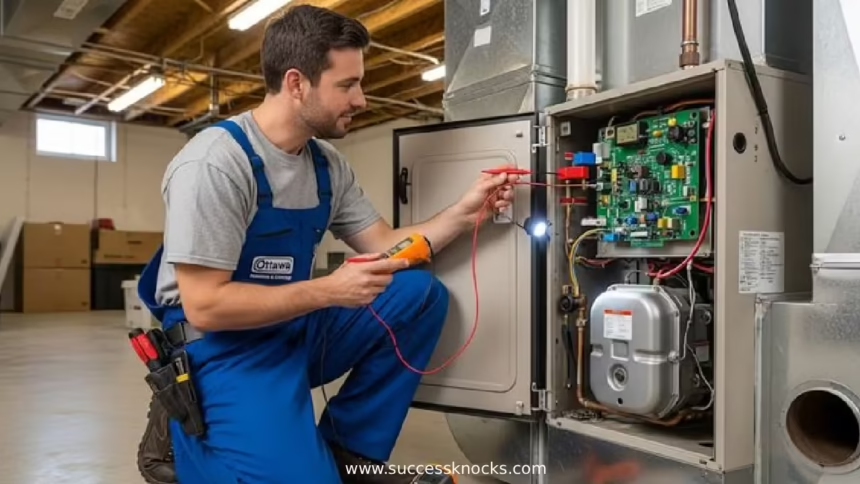
24 hour heating repair is the service you call when your furnace, boiler, or heat pump quits outside normal business hours and you still need someone to show up fast. When it’s below freezing, this isn’t a “nice to have.” It’s a deadline.
Here’s the quick snapshot:
- 24 hour heating repair means on-call techs who respond nights, weekends, and holidays for no-heat or emergency issues.
- It matters because loss of heat can lead to frozen pipes, property damage, and health risks in cold weather.
- Most companies triage calls, prioritizing total no-heat, gas leaks, and safety hazards over comfort issues.
- Expect higher after-hours rates, but also faster response, temporary fixes, and clear options to keep you safe.
- In my experience, the best outcome is a safe, temporary restore of heat at night, then a full repair or replacement in normal hours.
What 24 hour heating repair actually covers
24 hour heating repair is emergency HVAC service that runs outside 9–5.
Think of it as a “break glass in case of no heat” option.
In practice, a 24/7 heating company typically handles:
- Gas and electric furnace failures
- Boiler no-heat situations
- Heat pump not heating or short-cycling
- Thermostat or control failures causing no heat
- Burning smells, smoke, or suspected electrical issues
- Gas odors or carbon monoxide alerts (often in coordination with utility/fire department)
In my experience, legit 24 hour heating repair is focused on safety and basic function, not perfect comfort or cosmetic tweaks. You want:
- Your system safe.
- Your pipes protected.
- Your heat restored enough to get through the night.
When is 24 hour heating repair really an emergency?
Here’s the thing: not every heating problem deserves a 3 a.m. truck roll. Some absolutely do.
Clear emergencies
- No heat and outdoor temps near or below freezing, especially with kids, elderly, or medical conditions in the home
- Suspected gas leak (rotten-egg smell) — shut things down, leave the house, call your gas utility and/or 911
- Carbon monoxide alarm sounding — evacuate and call emergency services
- Burning, melting, or electrical smells from the furnace or air handler
- Water pouring from a boiler or piping onto electrical components
According to the U.S. Centers for Disease Control and Prevention, prolonged exposure to cold can cause hypothermia and worsen existing heart conditions, especially for older adults and infants. The risk ramps up fast in unheated spaces.
Non-emergency (but still important)
- Uneven heating in a few rooms
- Weird noises, but system still heating
- Short cycles with some heat output
- A minor thermostat glitch when you have backup heat sources
If you can safely limp through the night with space heaters (used correctly and not on extension cords), extra blankets, and closed doors, I’d schedule standard service. The bill will be friendlier.
How 24 hour heating repair usually works
From a practical standpoint, most 24/7 heating setups look like this:
- On-call rotation
There’s a tech or small crew taking emergency calls after hours. Response time varies by area and weather. - Phone triage
The dispatcher asks you targeted questions:- Do you smell gas?
- Is the thermostat on and set to heat?
- Is anything running or totally dead?
- Any kids, elderly, or high-risk folks at home?
- Safe DIY checks before rolling a truck
Often, they’ll walk you through basic checks: breakers, filter, thermostat settings, power switches. If something simple fixes it, you’ve just dodged an emergency fee. - Emergency visit if needed
If it truly looks unsafe or you’re in a no-heat situation with risk, they come out. Sometimes the goal is a temporary patch (bypass a failed part, manually reset, or jury-rig to run safely) until a full fix in the daytime. - Pricing disclosure
Good companies tell you the after-hours service fee and ballpark before they roll. If they gloss over it, that’s a red flag.
24 hour heating repair costs and what affects them
There’s no one-size-fits-all number for the USA, but patterns are pretty consistent.
Typical cost factors
- Time of day (overnight vs weekend daytime)
- Nature of the problem (simple reset vs major component)
- System type (furnace vs boiler vs heat pump)
- Part availability (in-truck vs special order)
- Travel distance and weather conditions
Here’s a simplified comparison to give you directional expectations. These aren’t quotes — just the kind of range you’ll often see from reputable pros.
| Service Type | When | What You Get | Typical Cost Pattern (USA) | Best Use Case |
|---|---|---|---|---|
| Standard Heating Repair | Weekday business hours | Diagnostic + full repair if parts available | Base diagnostic fee + parts & labor | Non-urgent issues when you still have some heat |
| After-Hours 24 Hour Heating Repair | Evenings, nights, weekends | Emergency visit to restore safe, basic heat | Higher service fee + parts & labor; often 1.5x–2x labor for off-hours | True no-heat, safety risks, sub-freezing temps |
| Temporary “Get-You-Through-The-Night” Fix | Any off-hours emergency call | Short-term solution; full repair scheduled later | Emergency fee + minimal parts or adjustments | When parts must be ordered or major work is needed |
If you want a deeper dive into energy and heating cost dynamics in general, the U.S. Energy Information Administration offers solid, data-driven insights on household energy use nationwide.
Step-by-step game plan for beginners: What I’d do if my heat died tonight
You don’t need to be a technician to handle the first 20 minutes intelligently. Here’s the action plan I’d follow at home.
Step 1: Decide if this is a safety emergency
Ask yourself:
- Do you smell gas (rotten-egg odor)?
- Is a carbon monoxide detector alarming?
- Is there smoke or burning plastic smell from the unit?
- Is water leaking onto electrical components?
If yes to any of those:
- Shut off the system if you can safely.
- Get everyone out of the house.
- Call your gas utility or 911 from outside.
Then, after emergency services clear it, call a 24 hour heating repair company to assess and fix the system properly.
Step 2: Check the basics (that techs check first anyway)
Before you pay emergency rates, run through these:
- Thermostat
- Set to “Heat,” not “Cool” or “Off.”
- Temperature set above current room temp.
- Fresh batteries if it uses them.
- Power
- Check the furnace/air handler switch — it often looks like a regular light switch on or near the unit.
- Check breakers or fuses for the furnace, boiler, or heat pump circuit. Reset once if tripped.
- Gas or fuel
- For gas furnaces/boilers: make sure the gas valve to the appliance is open (inline with the pipe).
- For oil: verify there’s actually oil in the tank.
- For propane: tank not empty; regulator not iced up.
- Filter
- If it’s caked in dust, replace it. A wildly clogged filter can cause some furnaces to shut down.
If any of that fixes it, great. Monitor the system and still schedule standard service if the problem returns.
Step 3: Stabilize comfort temporarily
If you still have no heat but no immediate safety risk:
- Close doors to unused rooms.
- Use space heaters safely:
- Keep 3 feet from anything flammable.
- Plug directly into wall outlets, not power strips.
- Never leave them running while you sleep or leave the house.
- Layer clothing and blankets.
- If pipes are at risk (very cold temps), let faucets drip slightly to keep water moving.
The U.S. Consumer Product Safety Commission has simple, practical safety guidelines on using space heaters and portable heating products. Worth following, especially overnight.
Step 4: Decide whether to call 24 hour heating repair right now
Ask two key questions:
- How cold will it get inside in the next 6–12 hours?
- Can everyone in the home stay safely warm with what you have on hand?
If the answer to #2 is “no,” make the call.
When you do, be ready with:
- Your system type (gas furnace, boiler, heat pump, etc.)
- Age of the system (even approximate helps)
- What you’ve already checked
- Any noises, smells, or error codes/messages you’ve noticed
- Who’s in the home (kids, elderly, pets)
That lets the pro prioritize correctly and show up prepared.
How to choose a solid 24 hour heating repair company (fast)
When you’re freezing, research goes out the window. Still, a little structure helps you avoid the worst actors.
What I look for in a pinch
- Clear mention of 24/7 or 24 hour heating repair on their site
- Real local address, not just a P.O. box and a cell number
- Recent reviews mentioning “no heat,” “middle of the night,” or “emergency”
- Upfront mention of after-hours fees (even as a range)
- Licensed and insured in your state
If you’re unsure about codes or licensing requirements in your state, your state’s licensing board or consumer protection agency is usually a reliable reference.
When you call, pay attention to how they:
- Explain pricing (transparent vs slippery)
- Ask about safety and household members
- Set realistic expectations on timing
If it sounds like they’re reading from a vague sales script, I’d keep dialing.
Common 24 hour heating repair mistakes & how to fix them
This is where a lot of homeowners trip themselves up. Totally fixable, though.
Mistake 1: Treating every comfort issue as an emergency
No slight discomfort at 68°F isn’t the same as no heat at 40°F indoors.
Emergency calls cost more for a reason.
Fix: Reserve 24 hour heating repair for legit no-heat or safety threats. For lukewarm radiators or mild uneven heating, schedule normal hours.
Mistake 2: Resetting breakers and switches repeatedly
I’ve seen people flip a breaker five times in a row hoping for a different outcome. That’s not troubleshooting. That’s gambling with your wiring.
Fix: If a breaker trips more than once after a reset, stop. That’s a sign of a deeper issue. Call a pro and tell them exactly what happened.
Mistake 3: Blocking furnace or boiler access
Stacking boxes, storage bins, or laundry around the unit might not seem like a big deal—until the tech can’t work or the system overheats.
Fix: Keep a 2–3 foot clear radius around your heating equipment. And before a 24 hour heating repair visit, quickly move anything in the way.
Mistake 4: Ignoring odd smells or CO alarms
If a carbon monoxide detector is going off and the “fix” is taking the batteries out, that’s how people end up in the news for the wrong reasons.
Fix: Treat alarms and strong odors seriously. Evacuate, call emergency services, and let them clear the scene before any repair.
For context: the U.S. Environmental Protection Agency highlights carbon monoxide as a leading indoor air danger at high levels, especially from malfunctioning combustion appliances. Respect that.
Mistake 5: Not asking about options on-site
Some techs will default to the simplest fix unless you ask, “What are my options?”
Fix: When the tech arrives, ask three questions:
- Is this a temporary patch or a long-term fix?
- What would you do if this were your house?
- Is this repair cost-effective given the age of my system?
You’ll get much clearer guidance by asking directly.
Preventing future 2 a.m. disasters
The cheapest “emergency call” is the one you never have to make.
From what I’ve seen over the years, most avoidable after-hours calls come down to skipped maintenance and slow-rolled symptoms.
Smart moves that actually help
- Annual professional tune-up before heating season
- Filter changes every 1–3 months (more often with pets or dust)
- Keeping vents and returns unblocked
- Bleeding radiators on hydronic systems if recommended
- Addressing odd noises or frequent resets before winter hits
If your system is older than 15–20 years and you’re having recurring emergency visits, it’s worth running the math. At some point, the cost of keeping it limping exceeds the cost of a well-chosen replacement.
When to repair vs replace after an emergency
Here’s the kicker: sometimes a 24 hour heating repair call is the moment you realize the system is on its last legs.
A few patterns:
- System age 15–20+ years and a major component fails (heat exchanger, compressor, boiler section)
- Frequent repairs over the last 2–3 winters, especially on big-ticket parts
- Energy bills climbing with no other explanation and poor comfort
In those cases, I often tell homeowners:
- Use 24 hour heating repair to get safe, temporary heat.
- Schedule a quote for replacement in the next few days.
- Compare efficiency ratings, warranties, and financing rather than rushing into the first offer.
A good tech will be honest if they think you’re throwing good money after bad.
Key takeaways
- 24 hour heating repair is for true no-heat and safety emergencies, not mild comfort complaints.
- Do basic safe checks first (thermostat, power, filter, fuel) before calling, but don’t override obvious safety red flags.
- Expect higher after-hours fees, and prioritize companies that are transparent about pricing and response times.
- Use the emergency visit to get safe, stable heat, then decide on long-term repair or replacement in daylight hours.
- Space heaters and DIY band-aids can help short term, but must be used safely to avoid fires and CO risks.
- Clear communication with the dispatcher and tech leads to faster, better outcomes.
- Preventive maintenance and early attention to weird noises or patterns dramatically reduce 2 a.m. emergency calls.
- When systems are old and failing regularly, a thoughtful replacement often beats repeated 24 hour heating repair visits.
FAQs about 24 hour heating repair
Is 24 hour heating repair worth the extra cost?
If you have no heat in freezing conditions, kids, elderly family, or health issues in the home, yes, 24 hour heating repair is usually worth it. You’re not just buying warmth, you’re buying safety and avoiding frozen pipes and potential water damage. For minor comfort issues when it’s not that cold, it’s smarter to wait for standard-hours rates.
How fast can 24 hour heating repair typically respond?
Response time varies by area, weather, and how many emergencies are in the queue. In many U.S. metro areas, a true 24 hour heating repair company might arrive within 1–4 hours for high-priority no-heat calls. Rural areas or major storms can stretch that timeline, so always ask for an honest estimate when you call.
What should I ask the technician during a 24 hour heating repair visit?
Ask what failed, whether the fix is temporary or permanent, and what they’d do in your shoes. Also ask if your system’s age and condition make future emergency calls likely. Framing your questions that way turns a stressful 24 hour heating repair visit into a strategic moment to plan your next steps.