

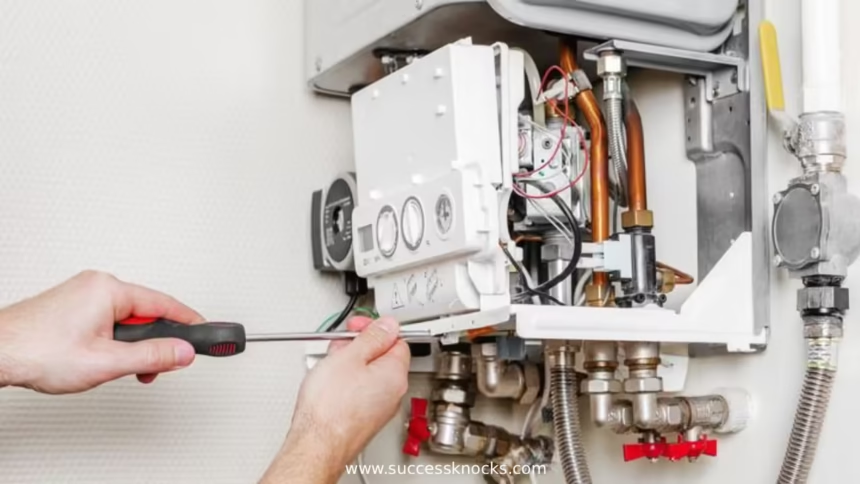
Furnace repair services are what stand between you and a freezing house when your system starts acting up, making strange noises, or quits outright. Whether you’re dealing with inconsistent heat, sky-high energy bills, or a furnace that simply won’t start, getting the right help at the right time is the whole game.
If you’ve ever thought, “Do I really need to call someone for this?” — this guide is for you.
What are furnace repair services, really?
Furnace repair services cover the diagnosis, adjustment, and replacement of parts on gas, electric, and oil furnaces to restore safe, efficient heating.
In plain language:
A pro shows up, figures out why your furnace is misbehaving, fixes it, and makes sure it’s not going to put your family at risk.
Common problems furnace repair services handle:
- Furnace not turning on at all
- Blower running but no warm air
- Short cycling (kicks on and off constantly)
- Loud banging, squealing, or rattling
- Burning or electrical smells
- Pilot light or ignition issues
- Weak airflow or some rooms always cold
Good techs don’t just swap parts — they look at the whole system: venting, gas supply, electrical, airflow, and controls.
Signs you need furnace repair services (sooner, not later)
Here’s where most people wait too long. Catching issues early usually saves money.
1. Your furnace is making “what was that?” noises
A gentle hum is normal. Anything else is a message.
- Banging or booming at startup
- Squealing or screeching
- Grinding or metal-on-metal sounds
- Constant rattling or vibrating
These can point to ignition delays, loose components, failing motors, or blower issues. Left alone, they usually go from “annoying” to “expensive.”
2. The heat is uneven or weak
If you notice:
- Some rooms are saunas and others are ice boxes
- Vents are barely pushing air
- The furnace runs forever but you never feel truly warm
It’s time to get a pro in. That could be ductwork, blower, filter restrictions, or furnace sizing… and guessing your way through it isn’t the move.
3. Energy bills creeping up with no obvious reason
If your thermostat settings and habits haven’t changed but your gas or electric bill climbed, your furnace might be working harder than it should because something inside is dirty, misadjusted, or failing.
4. The furnace smells “off”
Some smells at startup can be normal, especially dust burning off at the beginning of the season. But pay attention to:
- Persistent burning or melting plastic smell
- Strong metallic or electrical odor
- Rotten-egg smell (can indicate gas — this is serious)
Any of those? Shut it down and call a pro. Safety first.
Furnace repair services vs. replacement: where’s the line?
Everyone wants the honest answer here: “Fix it or replace it?”
In my experience, here’s the basic framework:
- Under 10 years old
Most issues are worth repairing, especially if the furnace has been maintained. - 10–15 years old
Case-by-case. Frequent repairs or major components (like a heat exchanger or control board) might push you toward replacement. - 15–20+ years old
If you’re calling furnace repair services more than once every couple of seasons, it’s time to price out a new system.
Other clues that replacement might be smarter:
- Repeated no-heat calls every winter
- Parts are hard to source
- Energy bills are consistently high
- The system struggles to keep up even when “working”
That doesn’t mean every older unit gets scrapped on the spot. Often, the smart move is a repair now to get through the season while you plan a controlled replacement instead of a panic-buy later.
What actually happens during professional furnace repair services?
So what does a tech really do during a furnace repair visit?
Here’s the typical flow:
- Initial assessment & questions
They’ll ask about symptoms: noises, smells, how long it’s been happening, recent maintenance, and any previous repairs. Your answers help them zero in faster. - System safety check
Before anything else, a good tech checks:- Gas connections and shutoff
- Venting and flue pipe condition
- Carbon monoxide potential
- Electrical connections
- Diagnostic testing
This can include:- Checking thermostat operation
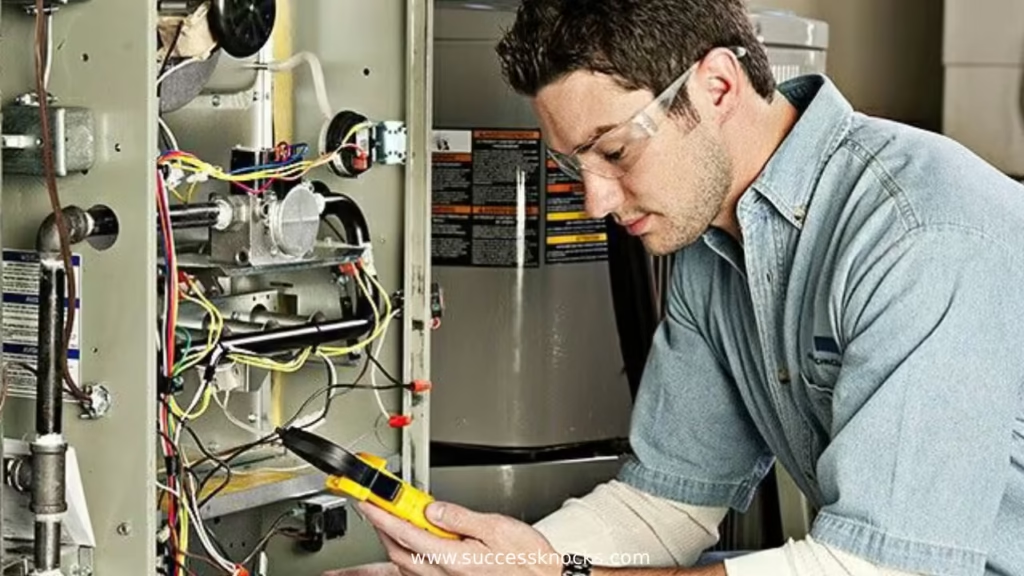
- Measuring voltage, current, and continuity on critical components
- Checking ignition sequence, flame sensor, and pressure switches
- Looking at error codes on control boards or blinking lights on the furnace
- Explain the problem & options
This is where you want clarity. You should hear:- What failed and why
- What your options are (repair vs. short-term patch vs. deeper work)
- Approximate cost and timeline
- Perform the repair
Depending on what’s wrong, they may:- Replace a failed igniter, blower motor, capacitor, sensor, or control board
- Clean burners and flame sensors
- Address wiring or connection issues
- Adjust gas pressure or combustion settings (if licensed and equipped)
- Test and verify
They’ll cycle the system through a complete heat run, confirm proper operation, and check that all safeties are working as intended.
The outcome you want: a furnace that runs safely, heats steadily, and doesn’t trip on and off every few minutes.
DIY vs. calling furnace repair services: where to draw the line
There’s “smart homeowner” territory and there’s “don’t touch that” territory.
Smart DIY checks
Before calling, it’s reasonable (and often helpful) to check:
- Thermostat is set to “Heat” and above room temperature
- Furnace switch (often looks like a light switch near the unit) is ON
- Breakers/fuses for the furnace are not tripped (reset once if needed)
- Filter is not clogged — replace if dirty
- Vents and returns are not blocked by furniture or rugs
If any of those fix the issue, still keep an eye on things. Recurring problems deserve a pro look.
When to stop and call a pro
Do not attempt:
- Opening gas lines or adjusting gas valves
- Bypassing safety switches or sensors
- Rewiring parts of the furnace
- Taking apart the burner assembly without training
Gas, electricity, and high heat are a bad mix for guesswork. That’s where trained furnace repair services earn their money.
Regular furnace repair services vs. emergencies
Most furnace issues can be handled during normal business hours. Some can’t.
If your system fails completely on a bitterly cold night and your home is dropping in temperature fast, you might need 24 hour heating repair to keep your family safe and avoid damage like frozen pipes. Having a dependable service provider ready can make a significant difference during a winter heating crisis. For those residing in coastal areas, the combination of humidity and seasonal temperature shifts can lead to specific mechanical stresses on heating systems. Salt air and moisture sometimes contribute to the premature corrosion of sensitive ignition components or electrical connections, which may cause your unit to fail when you need it most. Staying ahead of these environmental factors with professional furnace repair in Port Orange helps ensure that your system remains resilient against localized wear. By scheduling a technician to evaluate your furnace before the peak of winter, you can maintain reliable heating performance and avoid the frustration of sudden outages during the coldest nights of the year. Local homeowners can minimize downtime by keeping the contact info of a qualified technician on hand before severe weather hits. For residents looking for responsive assistance during sudden performance drops, arranging a professional furnace repair in Hiram can quickly restore stable indoor comfort. Addressing minor operational issues early helps maintain steady airflow and supports the overall energy efficiency of the heating unit throughout the coldest months of the year.
Once the emergency is handled, it’s smart to follow up with standard furnace repair services to dig deeper if the original visit was just a temporary stabilizer.
How to choose the right furnace repair service provider
Not all companies are created equal. When you’re picking someone to work on your furnace, you’re trusting them with your comfort, safety, and wallet.
Here’s what to look for:
- Licensing and insurance
They should be properly licensed for HVAC work in your state and carry liability insurance. - Experience with your system type
Gas furnace, oil furnace, high-efficiency condensing unit, or older equipment — ask if they work on your specific type regularly. - Clear pricing structure
Look for:- Transparent diagnostic fee
- Clear explanation of how they charge for labor and parts
- No vague “we’ll see when we get there” answers
- Reputation and reviews
Recent, detailed reviews that mention actual furnace issues (not just “they were nice”) are worth gold. - Communication style
You want someone who explains problems in human language, not jargon. If they can’t explain it to you clearly, that’s a problem.
How furnace repair services help your system last longer
Think of your furnace like a work truck. If you only touch it when something breaks, it’s going to die young and ugly.
Consistent furnace repair services and maintenance can:
- Catch small issues before they kill major components
- Keep efficiency closer to the rated level
- Reduce strain on motors, blowers, and ignition components
- Extend the life of the unit by several years
Common preventive tasks include:
- Cleaning burners and flame sensors
- Checking and tightening electrical connections
- Inspecting heat exchanger surfaces for cracks
- Verifying safety controls and shut-off responses
- Checking and adjusting combustion where appropriate
It’s not glamorous work, but it’s a lot cheaper than mid-winter replacements.
Common furnace repair services and what they usually fix
Every brand and model is different, but some repairs show up over and over.
- Igniter replacement
Symptom: furnace tries to start but never lights.
Fix: replace cracked or failed hot surface igniter. - Flame sensor cleaning or replacement
Symptom: burners light, then shut off after a few seconds.
Fix: clean or swap the flame sensor so the furnace “knows” the flame is present. - Blower motor or capacitor replacement
Symptom: furnace heats but no air moves, or blower struggles to start.
Fix: replace capacitor or motor to restore airflow. - Control board replacement
Symptom: random shutdowns, strange behavior, or no response to thermostat.
Fix: replace faulty control board that orchestrates operation.
A good tech won’t just tell you what they replaced but why it failed and whether anything else contributed.
How to get more value out of furnace repair services
Two small habits make a big difference:
- Ask better questions
When the tech is on-site, ask:- “What caused this problem?”
- “Is there anything I could do differently to prevent it?”
- “How much longer would you expect this furnace to last?”
- Take notes or photos
Snap a picture of replaced parts, model numbers, and error codes. Next time something happens, that history can speed up diagnostics.
Think of your furnace history like a medical chart — the more accurate it is, the better decisions you can make.
Final thoughts: keep your furnace predictable, not dramatic
The best furnace is the boring one — the one you don’t think about because it just works.
Furnace repair services are your safety net when the system slips from “boring” to “problem.” Used smartly, they help you:
- Fix issues before they snowball
- Protect your home and health
- Stretch the life of your equipment
- Decide (with real data) when it’s time to move on and replace
Handle the small stuff early, respect the safety side of things, and lean on pros when you’re out of your depth. Your future winter self will thank you.
FAQs about furnace repair services
1. How often should I schedule furnace repair or maintenance?
For most homes, a professional furnace checkup once a year before heating season is a solid minimum. If your system is older, works hard in a very cold climate, or has had multiple past issues, consider more frequent check-ins or at least be proactive about calling furnace repair services at the first sign of trouble.
2. Are furnace repair services covered by a home warranty or HVAC warranty?
Sometimes. Manufacturer warranties often cover certain parts for a set period, but not labor, and they usually require proof of regular maintenance. Home warranties may cover some furnace repair services, but they tend to have limits and exclusions. Always read the fine print and confirm coverage before scheduling work.
3. What’s the difference between maintenance and furnace repair services?
Maintenance is preventive — cleaning, inspecting, and tuning a furnace that’s basically working. Furnace repair services jump in when something is already broken or clearly not right. Both matter: maintenance reduces how often you’ll need repairs, and timely repairs keep small problems from becoming system-killers.


