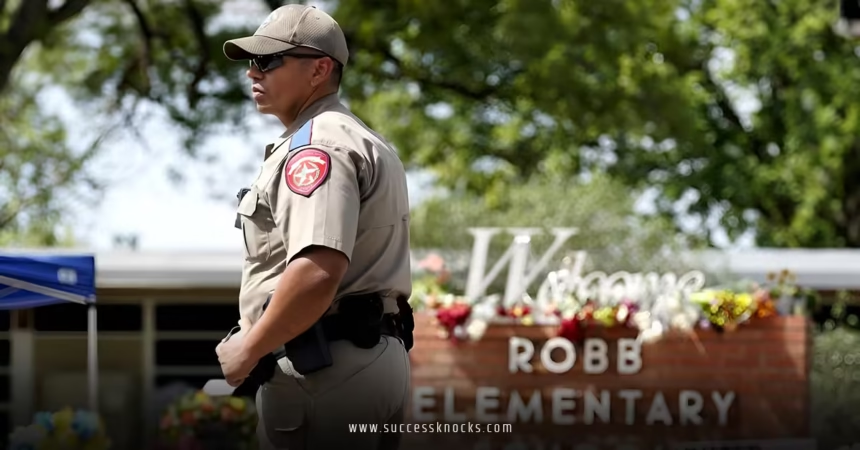
The Uvalde school shooting police response failures remain one of the most heartbreaking chapters in modern American law enforcement history. On May 24, 2022, at Robb Elementary School in Uvalde, Texas, an 18-year-old gunman killed 19 children and two teachers. What turned this tragedy into a national reckoning wasn’t just the loss of life—it was the staggering 77-minute delay before officers finally confronted and neutralized the shooter, despite hundreds of law enforcement personnel on scene.
Multiple investigations, including a scathing Department of Justice report released in 2024, described the response as plagued by “cascading failures” of leadership, decision-making, tactics, policy, and training. These Uvalde school shooting police response failures left terrified children dialing 911 from inside blood-soaked classrooms while officers waited in hallways. Families outside pleaded for action. The question still echoes: How could this happen?
The Timeline of the Uvalde School Shooting Police Response Failures
Picture the chaos unfolding in real time. The gunman, Salvador Ramos, crashed his truck near the school around 11:28 a.m. and entered the building minutes later, armed with rifles. He began firing into Rooms 111 and 112.
- First officers arrive within three minutes and approach the classrooms but retreat after taking fire (shrapnel injuries reported).
- From that point, the situation shifts from “active shooter” protocol—immediate confrontation—to treating it as a “barricaded subject,” requiring special equipment and planning.
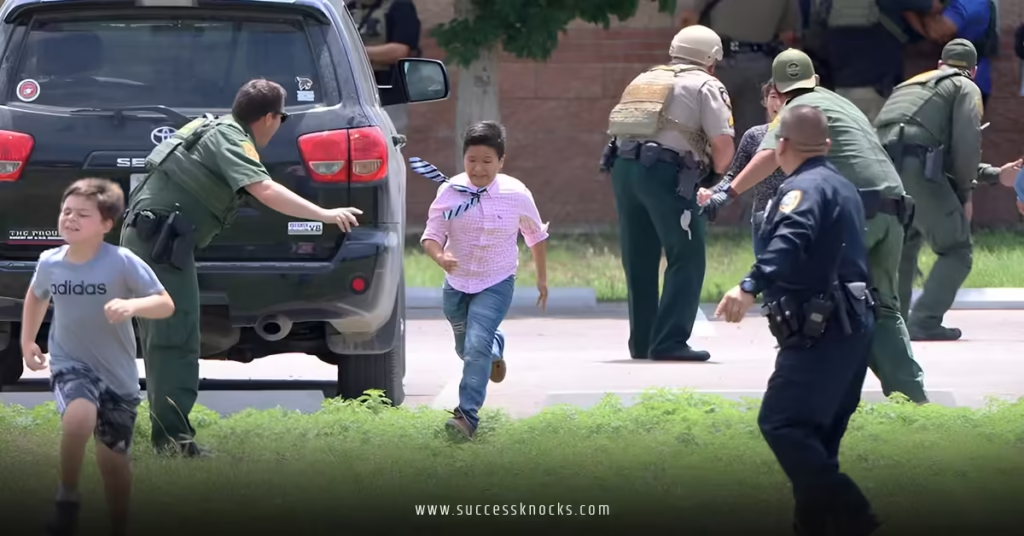
- Over the next hour-plus, nearly 400 officers from local, state, federal, and even Border Patrol agencies converge.
- Children inside make desperate 911 calls, whispering their locations and begging for help.
- Parents outside are restrained or even handcuffed as they demand officers go in.
- Finally, at approximately 12:50 p.m.—77 minutes after the first officers arrived—a tactical team breaches the door and kills the gunman.
This agonizing timeline, pieced together from bodycam footage, 911 transcripts, and official reports, highlights how Uvalde school shooting police response failures allowed the rampage to continue far longer than necessary.
Key Findings from the DOJ Report on Uvalde School Shooting Police Response Failures
In January 2024, the U.S. Department of Justice released a nearly 600-page critical incident review that pulled no punches. The report concluded that the delayed response “needlessly cost lives” and stemmed from a near-total breakdown in policing protocols.
Here are the major systemic failures identified:
- Lack of urgency in establishing command — No clear incident commander took charge quickly. Leadership from multiple agencies (Uvalde PD, school district police, sheriff’s office, Texas DPS) showed “no urgency” for a unified structure.
- Misclassification of the threat — Officers incorrectly treated the incident as a barricaded subject rather than an active shooter, ignoring ongoing gunfire and children’s pleas.
- Poor communication and coordination — Conflicting radio reports, inadequate equipment (like door-breaching tools), and misinformation spread among responders.
- Training and policy gaps — Many officers failed to follow established active shooter protocols that prioritize immediate neutralization of the threat.
- Post-incident issues — Inaccurate information was shared with grieving families, compounding their pain.
Attorney General Merrick Garland emphasized that swift action could have saved lives, stating the response was a profound failure.
The Human Cost: Why the 77-Minute Delay in Uvalde School Shooting Police Response Failures Matters
Imagine being a fourth-grader hiding under a desk, hearing gunshots, and calling 911 while police stand just feet away in the hallway. Or being a parent outside, watching officers with rifles and shields, yet no one enters.
These aren’t hypotheticals—they’re documented realities. The delay meant wounded victims didn’t receive immediate medical care; some who were alive when police finally entered later died en route to hospitals.
The Uvalde school shooting police response failures sparked nationwide outrage, calls for reform, and tough questions about police accountability in active shooter scenarios.
The Ongoing Pursuit of Accountability: Link to the Adrian Gonzales Trial Uvalde School Shooting 2026
The fallout from these Uvalde school shooting police response failures didn’t end with reports. In a historic move, two former Uvalde CISD officers faced criminal charges for their roles.
The most prominent case is the Adrian Gonzales trial Uvalde school shooting 2026, which began in January 2026 in Corpus Christi (after a venue change for fairness). Gonzales, one of the first officers on scene, faces 29 counts of child abandonment or endangerment—one for each child in the affected classrooms.
Prosecutors argue he had opportunities to engage, distract, or delay the shooter before the gunman fully entered the building but failed to follow active shooter training by advancing toward the gunfire. The defense counters that the scene was chaotic, with conflicting information and no clear command.
The trial has featured emotional testimonies, including from teachers and survivors, and dramatic moments—like a key witness’s testimony being partially tossed due to discrepancies. As the first criminal prosecution of an officer tied to this response (the other involves former Chief Pete Arredondo), the Adrian Gonzales trial Uvalde school shooting 2026 tests whether individual officers can be held criminally accountable amid systemic breakdowns.
For more details on this landmark proceeding, see our in-depth coverage of the Adrian Gonzales trial Uvalde school shooting 2026.
Lessons Learned and Reforms After the Uvalde School Shooting Police Response Failures
The tragedy forced changes across Texas and beyond:
- Enhanced active shooter training mandates.
- Better interagency coordination and equipment readiness.
- Stricter protocols for immediate threat neutralization.
Yet for Uvalde families, these steps feel too late. Memorials now stand where the school once operated, reminding everyone that Uvalde school shooting police response failures cost precious time—and lives.
Conclusion: Moving Forward from the Uvalde School Shooting Police Response Failures
The Uvalde school shooting police response failures expose painful truths about leadership, training, and courage under pressure. The 77-minute delay wasn’t just a mistake; it was a cascade of missed opportunities that amplified an already devastating tragedy. While reforms are underway and cases like the Adrian Gonzales trial Uvalde school shooting 2026 seek accountability, the real path forward lies in honoring the victims through relentless improvement. We owe it to those 21 lives—and to every child in every school—to ensure nothing like this ever happens again. Let’s turn heartbreak into unbreakable resolve.
FAQs About Uvalde School Shooting Police Response Failures
What caused the 77-minute delay in the Uvalde school shooting police response failures?
The delay stemmed from misclassifying the incident as a barricaded subject, lack of clear command, poor coordination among agencies, and failure to follow active shooter protocols, as detailed in the DOJ report.
How many officers responded to the Robb Elementary shooting amid Uvalde school shooting police response failures?
Nearly 400 officers from various local, state, and federal agencies arrived, yet it took over an hour to confront the shooter.
What did the DOJ report say about the Uvalde school shooting police response failures?
It described “cascading failures” in leadership, tactics, and training, concluding the delayed response needlessly cost lives.
Is anyone facing charges related to the Uvalde school shooting police response failures?
Yes—former officer Adrian Gonzales is on trial in the Adrian Gonzales trial Uvalde school shooting 2026, facing 29 child endangerment counts, while former Chief Pete Arredondo faces similar charges.
What reforms followed the Uvalde school shooting police response failures?
Texas mandated better active shooter training, interagency exercises, and equipment access to prevent future delays.