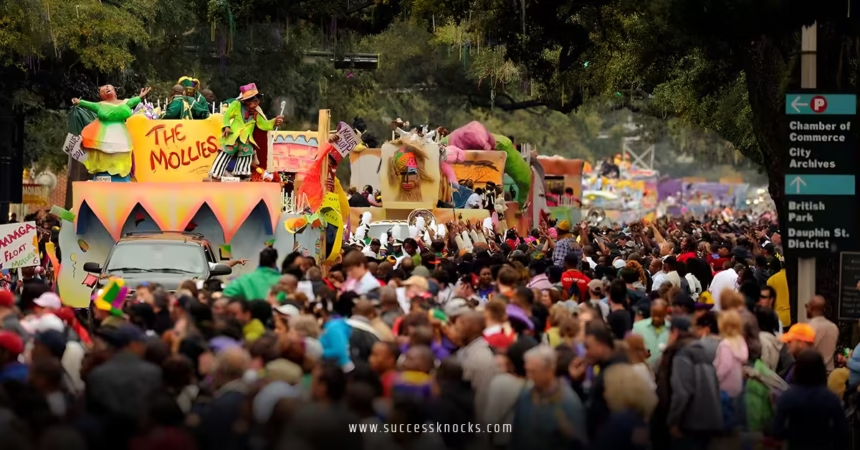
History of Mardi Gras Parades traces a fascinating journey through time, evolving from secretive gatherings in the 19th century to the electrifying spectacles we know today. Picture this: streets alive with colorful floats, masked revelers, and the infectious beat of brass bands—all stemming from a mix of European customs and American ingenuity. As we explore this rich tapestry, keep in mind how it connects to modern events like the Mardi Gras celebrations in New Orleans February 2026, where these historical roots continue to inspire millions.
In this article, we’ll dive deep into the origins, key milestones, and cultural impacts of Mardi Gras parades, highlighting how they’ve shaped New Orleans’ identity. Whether you’re a history buff or a first-time visitor, understanding this evolution adds layers of meaning to the festivities. For a sneak peek at what’s coming up, you can link to our detailed guide on Mardi Gras celebrations in New Orleans February 2026 [blocked], which builds on this very history.
The Origins of Mardi Gras Parades in the Early Days
Ever wondered how a simple pre-Lenten tradition ballooned into one of the world’s most iconic parades? History of Mardi Gras Parades kicks off in the early 1700s, when French settlers in Mobile, Alabama (then part of French Louisiana), brought over the concept of Mardi Gras from Europe. It was initially a modest affair—think small masked balls and processions tied to the Catholic tradition of feasting before Lent. By the 1800s, as New Orleans grew as a melting pot, these events started incorporating influences from Spanish, African, and Native American cultures, creating a unique blend that feels like a cultural stew simmering for centuries.
Fast-forward to 1827, and we see the first recorded Mardi Gras parade in America, right in Mobile. But it was New Orleans that truly elevated it. In 1837, the first informal parade rolled through the streets, with revelers on horseback tossing trinkets to the crowd—much like the bead-throwing traditions that dominate today. History of Mardi Gras Parades shows how these early events were often chaotic and unorganized, more like spontaneous parties than the structured affairs we see now. According to records from the Louisiana State Museum, the festivities were sometimes met with resistance from city officials, who viewed them as rowdy disruptions.
By the mid-19th century, social clubs known as “krewes” emerged to bring order and flair. The Mystick Krewe of Comus, founded in 1856, organized the first official night parade in 1857, complete with illuminated floats and themed costumes. It’s like watching a secret society turn a local holiday into a grand production—think of it as the original Hollywood spectacle, but with way more feathers and fewer scripts. This innovation set the stage for what History of Mardi Gras Parades would become: a showcase of creativity and community spirit.
Early Influences and Cultural Fusion in History of Mardi Gras Parades
What makes History of Mardi Gras Parades so captivating is the cultural fusion at its core. In the 1800s, New Orleans was a hub for immigrants, and their traditions mixed in unexpected ways. French “Mardi Gras” (Fat Tuesday) met African rhythmic dances and Native American rituals, resulting in vibrant parades that told stories of resilience and joy. For instance, the Zulu Social Aid and Pleasure Club, formed in 1909 by African American communities, introduced elements like hand-decorated coconuts, symbolizing abundance and community ties.
Rhetorical question: Isn’t it amazing how these parades became a platform for social expression? During the Civil War era, they even served as subtle acts of resistance, with floats satirizing political figures. By the early 20th century, as documented in archives from the Historic New Orleans Collection, parades grew larger, incorporating elaborate floats built by local artisans. This period marked a shift, where History of Mardi Gras Parades began reflecting broader societal changes, from post-war recovery to the Jazz Age’s exuberance.
The Evolution of Mardi Gras Parades Through the 20th Century
As we move into the 1900s, History of Mardi Gras Parades entered a golden age of expansion and innovation. The Krewe of Rex, established in 1872, introduced the concept of a parade “king” and standardized routes along Canal Street, making it more accessible and family-friendly. By 1900, parades had become annual staples, drawing crowds from across the U.S. and evolving with the times—like a chameleon adapting to its environment.
In the 1920s and 1930s, the influence of the Great Depression and World War II meant scaled-back celebrations, but they never vanished. Instead, smaller krewes kept the spirit alive, emphasizing neighborhood parades that fostered local pride. History of Mardi Gras Parades during this era highlights resilience; for example, the 1941 parade featured themes of unity amid global turmoil. Then came the post-war boom: By the 1950s, with economic growth, parades exploded in scale, incorporating motorized floats and professional designs.
One pivotal moment? The 1960s and 1970s, when civil rights movements influenced History of Mardi Gras Parades. Krewes like the Krewe of Bacchus, founded in 1968, brought in celebrity participants and larger-than-life floats, democratizing the event. It’s as if the parades mirrored society’s push for inclusivity, evolving from elite affairs to public celebrations. Experts from Tulane University’s Carnival Collection note that this period saw a surge in participation, with parades becoming a canvas for social commentary.
Iconic Krewes and Their Role in History of Mardi Gras Parades
Let’s zoom in on the krewes—they’re the heartbeat of it all. History of Mardi Gras Parades isn’t complete without mentioning groups like Endymion (founded in 1967), known for its massive super-floats and celebrity grand marshals. These organizations not only organize events but also fund community projects, blending fun with philanthropy. Think of them as the architects of a living history, where each parade builds on the last.
By the late 20th century, environmental concerns started shaping History of Mardi Gras Parades. In the 1990s, efforts to use recyclable materials for floats emerged, foreshadowing the sustainable practices we’ll see in events like Mardi Gras celebrations in New Orleans February 2026. This evolution underscores the parades’ adaptability, ensuring they remain relevant in a changing world.
Modern Era: History of Mardi Gras Parades in the 21st Century and Beyond
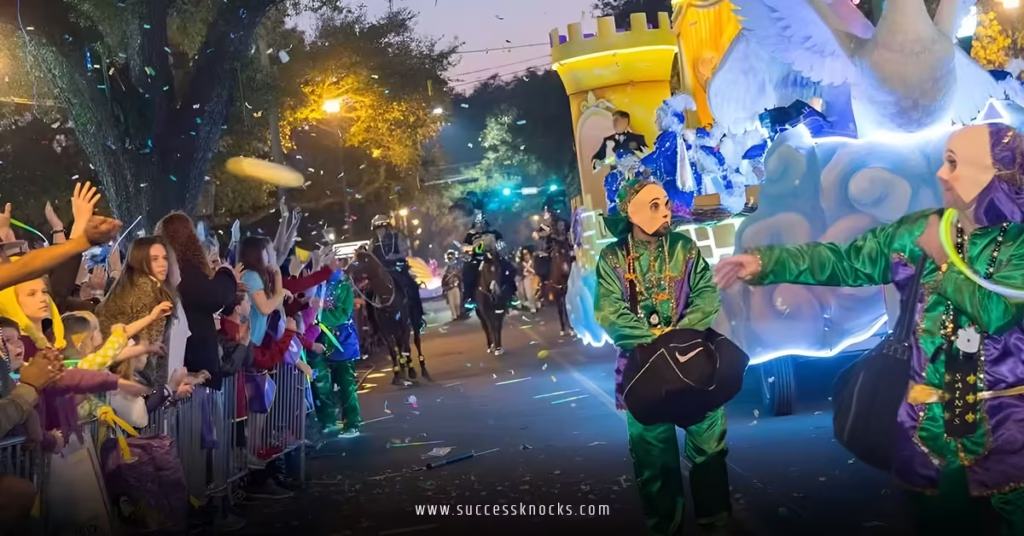
Today, History of Mardi Gras Parades is a blend of tradition and technology. The 21st century brought digital apps for tracking routes, virtual parades during the COVID-19 era, and a focus on diversity. In 2000, the Krewe of Orpheus added high-tech elements like LED-lit floats, making the experience more immersive than ever. It’s like upgrading a classic car with modern engines—still recognizable, but with extra oomph.
Looking ahead, History of Mardi Gras Parades influences future events, including the upcoming Mardi Gras celebrations in New Orleans February 2026, where tech and tradition will merge seamlessly. For instance, augmented reality might let viewers interact with historical themes in real-time, bridging past and present.
Rhetorical question: How do we keep such a historic event fresh? Through innovation, like the inclusion of LGBTQ+ krewes in recent years, which has made History of Mardi Gras Parades more inclusive. According to the New Orleans Tourism Marketing Corporation, attendance has rebounded post-pandemic, with millions participating annually.
The Cultural and Economic Impact of History of Mardi Gras Parades
Beyond the spectacle, History of Mardi Gras Parades has shaped New Orleans’ economy and culture. These events generate billions in revenue, supporting local businesses and artists. Culturally, they’ve preserved traditions while adapting to social changes, acting as a barometer for the city’s spirit.
In essence, History of Mardi Gras Parades isn’t just about parties—it’s about community and legacy.
Conclusion: The Enduring Legacy of History of Mardi Gras Parades
History of Mardi Gras Parades reveals a story of evolution, from simple processions to global phenomena, all while staying true to New Orleans’ vibrant soul. As we look forward to events like Mardi Gras celebrations in New Orleans February 2026, remember that these parades are more than entertainment—they’re a testament to human creativity and resilience. Whether you’re planning a visit or just curious, diving into this history enriches the experience.
Frequently Asked Questions
What are the origins of the first Mardi Gras parades mentioned in History of Mardi Gras Parades?
The first documented Mardi Gras parades date back to the 1830s in Mobile and New Orleans, evolving from European traditions as outlined in History of Mardi Gras Parades.
How have krewes influenced the development of History of Mardi Gras Parades?
Krewes like Comus and Rex have organized and themed parades since the 1800s, playing a key role in the progression seen in History of Mardi Gras Parades.
What modern changes are reflected in History of Mardi Gras Parades?
Recent updates include technology and inclusivity, which connect to future events like Mardi Gras celebrations in New Orleans February 2026, as per History of Mardi Gras Parades.
How does History of Mardi Gras Parades impact New Orleans’ culture today?
It fosters community and economic growth, with ongoing influences seen in preparations for Mardi Gras celebrations in New Orleans February 2026.
Are there ways to experience History of Mardi Gras Parades virtually?
Yes, digital archives and apps allow virtual participation, linking back to the traditions in History of Mardi Gras Parades and upcoming celebrations.