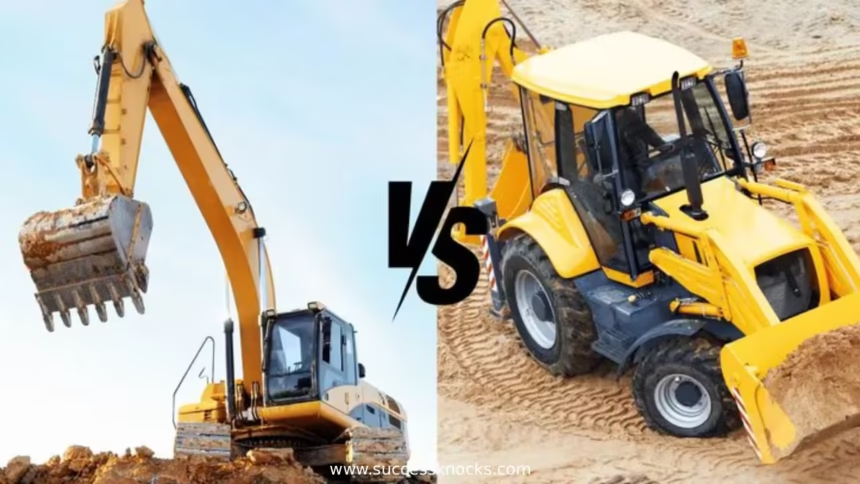
Backhoe vs excavator decisions trip up more contractors than you’d think. Both machines dig, both move dirt, and both cost serious money—but they’re built for completely different jobs. Here’s the thing: pick wrong, and you’ll either overpay for capabilities you don’t need or struggle with a machine that can’t handle your workload.
Quick Overview: The Real Differences
Backhoe vs excavator boils down to versatility versus power. Here’s what separates them:
- Backhoes: Smaller, wheeled, versatile machines perfect for utility work and light construction
- Excavators: Tracked powerhouses built for heavy digging and demolition
- Size range: Backhoes typically 14,000-20,000 lbs; excavators span 3,000-200,000+ lbs
- Mobility: Backhoes drive on roads; excavators need trailers for transport
- Cost: Backhoes generally cheaper upfront and to operate
What Exactly Is a Backhoe?
A backhoe is essentially a tractor with attitude. Picture a loader bucket up front and a digging arm out back—that’s your backhoe. The official name is “backhoe loader,” but nobody calls it that on job sites.
These machines ride on four wheels, not tracks. You can literally drive one down the highway at 25 mph. That mobility changes everything.
Core backhoe characteristics:
- Wheeled chassis for road travel
- Front loader bucket
- Rear digging arm (the “backhoe”)
- Stabilizer legs for digging operations
- Cab that swivels 180 degrees
Most backhoes weigh between 14,000-20,000 pounds. They’re the Swiss Army knife of construction equipment.
Understanding Excavators
Excavators are single-purpose digging monsters. No front bucket, no road wheels—just pure excavation power on tracks.
The operator sits in a cab that rotates 360 degrees on top of a tracked chassis. Everything about an excavator screams “dig deep, move fast.”
Excavator fundamentals:
- Track-based movement only
- 360-degree cab rotation
- Hydraulic digging arm and bucket
- No front attachment
- Range from mini (3,000 lbs) to massive (200,000+ lbs)
Think of excavators as precision tools that happen to weigh 40 tons.
Backhoe vs Excavator Performance Comparison
| Feature | Backhoe | Excavator |
|---|---|---|
| Digging Depth | 14-18 feet typical | 6-30+ feet (size dependent) |
| Reach | 16-20 feet | 15-40+ feet |
| Transport | Self-propelled on roads | Trailer required |
| Versatility | High (loading + digging) | Moderate (digging focused) |
| Stability | Needs outriggers | Inherently stable |
| Operating Cost | Lower | Higher |
| Learning Curve | Moderate | Steep |
Digging Power: Where Excavators Dominate
Excavators win the pure digging contest. Their hydraulic systems generate more force, and the tracked base provides superior stability for heavy lifting.
A mid-size excavator can dig 30% deeper than a comparable backhoe. When you’re trenching for utilities or digging foundations, that extra reach matters.
But here’s the kicker: backhoes dig fast enough for most jobs. Unless you’re moving mountains, the difference might not justify the extra cost.
Versatility: Backhoe’s Secret Weapon
Backhoes handle three jobs simultaneously: loading, digging, and transport. Need to load trucks? Swing around to the front bucket. Digging utilities? Deploy the rear arm. Moving between sites? Drive there yourself.
Excavators do one thing brilliantly. Everything else requires different equipment.
When to Choose a Backhoe vs Excavator
Perfect Backhoe Jobs
Utility work tops the list. Installing water lines, fixing sewer systems, or any job requiring frequent site changes favors backhoes. You’re not digging massive holes—you’re making precise cuts and moving around constantly.
Urban construction projects love backhoes. Tight spaces, frequent relocation, and the need to load trucks make backhoes irreplaceable.
Farm and ranch work practically demands backhoes. Cleaning ditches, moving hay, fixing fences—the versatility pays off daily.
When Excavators Make Sense
Heavy excavation calls for excavators. Foundation work, pond construction, or any project requiring serious digging depth needs excavator power.
Demolition projects favor excavators. The stability and hydraulic force make quick work of concrete and structures.
Large-scale earth moving where you’re staying in one area for extended periods makes excavator efficiency worth the transportation hassle.
Cost Breakdown: Backhoe vs Excavator Economics
Purchase Prices (2026 estimates)
New backhoes: $80,000-$150,000 for standard models New excavators: $60,000-$300,000+ depending on size
Don’t let excavator pricing fool you. While mini excavators start cheaper, comparable-sized machines typically cost more than backhoes.
Operating Costs
Backhoes win the operating cost battle decisively:
- Fuel consumption: 3-5 gallons/hour vs 4-8 gallons/hour for excavators
- Maintenance: Simpler systems, easier access
- Transportation: Self-transport saves $200-400 per move
- Versatility: One machine replaces multiple tools
According to Equipment World’s 2026 operating cost analysis, backhoes average 15-20% lower total operating costs than comparable excavators.
Rental Markets
Daily rental rates tell the real story:
- Backhoe: $300-500/day
- Compact excavator: $250-400/day
- Mid-size excavator: $400-800/day
Weekly and monthly rates favor backhoes even more significantly.
Size Categories and Applications
Backhoe Sizing
Most backhoes fall into narrow size ranges. The standard backhoe weighs 16,000-18,000 pounds with 14-16 foot digging depth.
Compact backhoes (10,000-14,000 lbs) handle residential work and tight spaces. Standard backhoes dominate commercial construction. Large backhoes (20,000+ lbs) tackle heavy utility work.
The beauty? Size differences matter less with backhoes. A standard unit handles 80% of jobs effectively.
Excavator Categories
Mini excavators (3,000-10,000 lbs): Landscaping, residential utilities Compact excavators (10,000-20,000 lbs): Small construction, trenching
Mid-size excavators (20,000-45,000 lbs): Commercial construction, demolition Large excavators (45,000+ lbs): Heavy construction, mining, major earthwork
Size selection critically impacts excavator performance. Too small means struggling; too large means overpaying.
Step-by-Step Decision Framework
1. Define Your Primary Task
Write down your most frequent job type. If it’s utility repair, fence installation, or general property maintenance, lean backhoe. If it’s foundation digging, pond construction, or demolition, consider excavators.
2. Calculate Transportation Frequency
Count how often you change job sites daily. More than twice per day strongly favors backhoes. The self-transport capability alone saves 2-3 hours daily.
3. Evaluate Digging Requirements
Measure your typical digging depth and reach needs. Under 15 feet deep and 18 feet reach? Backhoes handle it easily. Beyond those limits, excavators become necessary.
4. Consider Multitasking Needs
List secondary tasks: loading trucks, moving materials, clearing brush. Each additional task makes backhoes more attractive economically.
5. Run the Numbers
Calculate total project costs including equipment rental, transportation, and labor. Include the hidden costs—trailer rental for excavators, multiple machines for complex jobs.
Common Mistakes When Choosing Between Backhoe vs Excavator
Mistake 1: Focusing Only on Digging Performance
The fix: Consider total job requirements, not just excavation needs.
Mistake 2: Ignoring Transportation Costs
The fix: Calculate trailer rental and transport time into project budgets.
Mistake 3: Underestimating Learning Curves
The fix: Factor operator training time and efficiency differences.
Mistake 4: Choosing Based on Initial Price Only
The fix: Analyze total operating costs over 2-3 years.
Mistake 5: Forgetting About Versatility Value
The fix: Price out renting multiple specialized machines vs. one backhoe.
Regional Considerations for USA Markets
East Coast urban markets heavily favor backhoes due to space constraints and frequent relocations. The Associated General Contractors of America reports that backhoe utilization rates exceed 85% in major metropolitan areas.
Western states with large-scale construction projects see higher excavator adoption. Open spaces and longer project durations make excavator efficiency more valuable.
Southern markets show mixed preferences based on soil conditions. Clay-heavy regions favor excavator power, while sandy soils work fine with backhoe capabilities.
Key Takeaways
- Backhoes excel at versatility and frequent site changes
- Excavators dominate heavy-duty digging and demolition
- Transportation capability gives backhoes significant cost advantages
- Operating costs favor backhoes by 15-20% typically
- Size selection matters more for excavators than backhoes
- Urban work strongly favors backhoes; rural projects allow either option
- Rental markets reflect backhoe versatility with competitive pricing
- Training requirements are generally lower for backhoes
Conclusion
Backhoe vs excavator isn’t really a fair fight—they’re different tools for different jobs. Backhoes win when versatility, mobility, and cost matter most. Excavators win when pure digging power takes priority.
For most contractors, especially those handling diverse projects or working in urban environments, backhoes deliver better overall value. The self-transport capability alone saves enough time and money to tip the scales.
Your next step? Honestly assess your typical job requirements and transportation needs. The right choice becomes obvious once you factor in real-world operating conditions.
The best machine is the one that makes you money consistently, not the one with the most impressive specs.
Frequently Asked Questions
Q: Can a backhoe do everything an excavator can do?
A: No, backhoes can’t match excavator digging depth or power. However, backhoes handle 80% of common excavation tasks while offering superior versatility for loading and transport.
Q: Why choose an excavator over a backhoe for construction work?
A: Choose excavators when digging depth exceeds 18 feet, when you need maximum hydraulic power for breaking rock or concrete, or when working on single-location projects for extended periods.
Q: What’s the real difference in operating costs between backhoe vs excavator?
A: Backhoes typically cost 15-20% less to operate due to lower fuel consumption, reduced transportation costs, and simplified maintenance requirements.
Q: Can you drive a backhoe on public roads legally?
A: Yes, most backhoes are street-legal with proper licensing and can travel at 20-25 mph on public roads, eliminating trailer transport costs for nearby job sites.
Q: Which machine is easier for new operators to learn?
A: Backhoes generally have gentler learning curves due to simpler control layouts and more forgiving hydraulic responses, though both require proper training and certification.