
On-Page SEO Checklist for Small Businesses gives owners a practical, no-fluff roadmap to make every page work harder for traffic and conversions.
Forget complex theory. These on-page tweaks—titles, headings, content structure, images, and more—help Google understand your site while delivering what searchers actually want.
Pair this checklist with regular SEO audit tools for small business websites and you’ll catch issues early while building pages that rank.
- It targets user intent with clear, helpful content.
- It optimizes elements search engines weigh heavily in 2026, like EEAT signals and page experience.
- It improves readability and engagement on mobile devices.
- Small consistent changes compound into steady organic growth without big ad spend.
Why On-Page SEO Still Dominates for Small Businesses in 2026
Bigger brands throw money at backlinks. You win by controlling what you own—your pages.
On-Page SEO Checklist for Small Businesses focuses on elements you can fix today: keyword placement, structure, and user signals that influence rankings and AI Overviews.
What usually happens is owners publish “good enough” pages and wonder why traffic stalls. Nail on-page first. It amplifies everything else. In my experience, optimizing existing pages often beats creating new ones for quick wins.
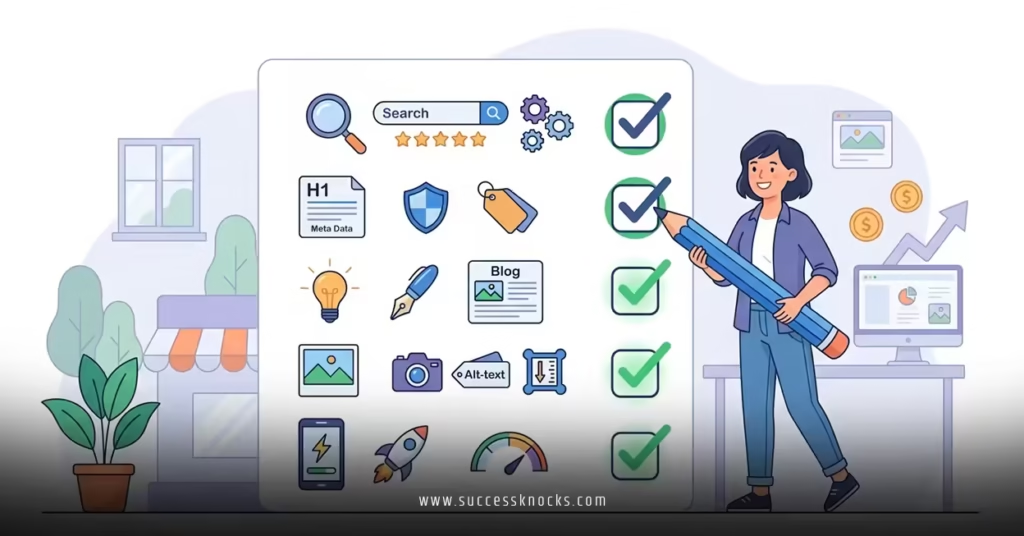
Complete On-Page SEO Checklist for Small Businesses
Run through this every time you create or update a page.
1. Keyword Research & Intent Matching
Pick one primary keyword per page. Support it with related terms. Match search intent—informational, local, or transactional. Tools like Google Search Console or free keyword planners help spot real opportunities.
2. Title Tags
Front-load the main keyword. Keep under 60 characters. Make it compelling so people click. Unique for every page. Example: “Best Coffee Shop in Austin | Fresh Roasts Daily – [Business Name]”.
3. Meta Descriptions
Under 160 characters. Include the keyword, a benefit, and a soft call-to-action. Not a ranking factor directly, but it drives clicks that matter.
4. URL Structure
Short, descriptive, keyword-rich. Use hyphens. Avoid dates or numbers unless necessary. Example: /best-plumber-austin-tx
5. Headings (H1, H2, H3)
One H1 per page with the primary keyword. Use H2s and H3s to break up topics logically. This helps both readers and Google.
6. Content Quality & Length
Deliver real value. Aim for comprehensive yet scannable content. Answer questions directly. Use short paragraphs, bullet points, and bold key phrases. Update old pages regularly for freshness.
7. Image Optimization
Compress files. Use descriptive file names and alt text with keywords where natural. Add captions when helpful.
8. Internal & External Linking
Link to other relevant pages on your site. Point to high-authority external resources when backing up claims. Internal links spread page authority and guide users deeper.
9. Page Speed & Mobile Experience
Core Web Vitals matter. Compress images, minify code, use caching. Ensure full mobile responsiveness—Google indexes mobile-first.
10. Schema Markup & Technical Polish
Add Local Business schema for location-based searches. Ensure HTTPS, clean code, and fast load times.
On-Page SEO Checklist Table for Quick Reference
| Element | Best Practice (2026) | Quick Win Tip | Impact Level |
|---|---|---|---|
| Title Tag | <60 chars, keyword front-loaded | Make it click-worthy | High |
| Meta Description | <160 chars, benefit + CTA | Test variations in GSC | Medium |
| Headings | One H1, logical H2/H3 | Use keywords naturally | High |
| Content | Intent-focused, scannable | 800–2000+ words for competitive terms | High |
| Images | Optimized, alt text | Descriptive filenames | Medium |
| Internal Links | 3–10 relevant per page | Contextual anchor text | High |
| URL | Short, readable | Include primary keyword | Medium |
| Page Speed | Under 3s load, good CWV | Use PageSpeed Insights | Very High |
Step-by-Step Action Plan
Here’s exactly what I’d do for a typical small business site:
- Audit current pages using your favorite SEO audit tools for small business websites to spot quick fixes.
- Pick target keywords for top 5–10 pages based on search volume and competition.
- Rewrite titles and metas across the site.
- Restructure content with better headings and bullet points.
- Optimize images and speed.
- Add internal links and schema where it fits.
- Publish or update, then monitor performance in Google Search Console for 2–4 weeks.
Repeat monthly for new pages.
Common Mistakes & How to Fix Them
- Keyword stuffing. Fix: Write for humans first, then refine naturally.
- Thin or duplicate content. Fix: Merge pages or expand with unique details and examples.
- Ignoring mobile. Fix: Test on real phones and use Google’s Mobile-Friendly Test.
- Weak internal linking. Fix: Create topic clusters so related pages support each other.
- Set-it-and-forget-it. Fix: Schedule quarterly content reviews.
Your website is like a storefront window. Polish the display (on-page elements) and more people stop, enter, and buy.
Key Takeaways
- On-Page SEO Checklist for Small Businesses delivers fast, controllable wins.
- Focus on user intent and readability over exact keyword counts.
- Combine with technical audits for maximum results.
- Title tags, headings, and speed remain high-impact in 2026.
- Update content regularly to stay fresh for Google and AI search.
- Measure clicks, time on page, and conversions—not just rankings.
- Small businesses win by being hyper-relevant locally and helpfully detailed.
Nail on-page optimization and your site becomes a reliable customer magnet instead of digital wallpaper.
Your next step? Grab your top service page and run it through this checklist today. Then link it internally from your homepage.
FAQs
How long does it take to see results from an On-Page SEO Checklist for Small Businesses?
Many see traffic lifts in 4–8 weeks after updates, especially with solid technical foundations and SEO audit tools for small business websites guiding the process.
Do I need paid tools for on-page SEO as a small business?
No. Start with Google Search Console, free PageSpeed Insights, and built-in WordPress editors. Scale to Semrush or SurferSEO only when ready for deeper optimization.
Should every page follow the full On-Page SEO Checklist for Small Businesses?
Prioritize high-traffic and money pages first. Thin supporting pages still benefit from basic optimization like titles, headings, and speed.