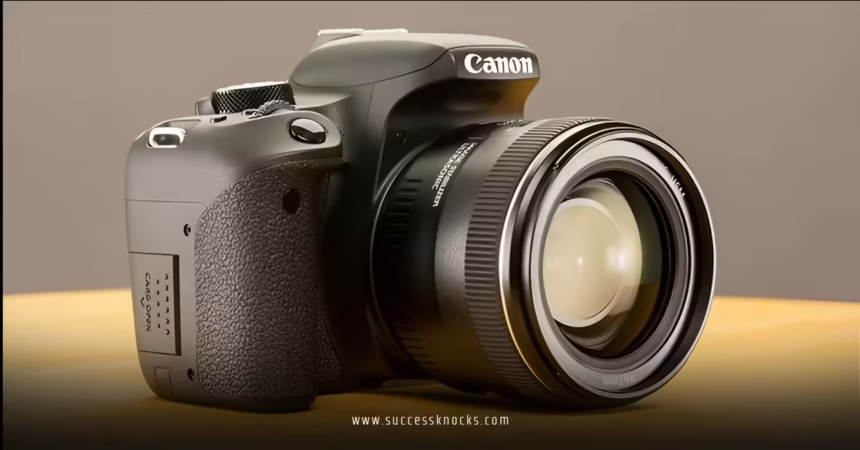
Best mirrorless cameras for beginners 2026 come down to three things: easy handling, reliable autofocus that actually sticks, and a price that doesn’t make you flinch. Mirrorless systems have matured beautifully by 2026, giving new shooters sharp images, real-time previews, and smart features without the bulk of older gear.
If you’re just stepping up from your phone or upgrading from a basic point-and-shoot, these picks help you learn fast and grow without frustration.
Quick overview:
- Top budget pick: Canon EOS R50 – tiny, intuitive, great for everyday shooting and vlogs.
- Best all-rounder under $1,000–1,200: Nikon Z50 II – solid build, excellent AF, and room to expand.
- Best value full-frame entry: Nikon Z5 II – big sensor, strong low-light performance, future-proof.
- Creative favorite: Fujifilm X-S20 or X-T5 – fun colors straight out of camera, retro controls that feel engaging.
- Video hybrid option: Sony ZV-E10 or a6700 – vlogging-friendly with sticky eye AF.
Related: Not sure if mirrorless is right for you? Check out this digital SLR vs mirrorless camera comparison to see the full picture before buying.
Why Mirrorless Makes Sense for Beginners in 2026
Mirrorless cameras ditch the heavy mirror mechanism of DSLRs. You get a smaller body, lighter kit, and an electronic viewfinder that shows exactly how your photo will look—exposure, colors, and all.
For beginners and intermediates, that real-time feedback speeds up learning. Autofocus tracks eyes, faces, and moving subjects across the frame, so you nail more shots without constant tweaking.
Battery life has improved, lens options exploded, and prices dropped on solid entry models. In the USA market, you can start strong for $500–800 with a kit lens and scale up later.
No format is perfect, but mirrorless now dominates for good reason: it’s more forgiving and more capable right out of the gate.
Key Features Beginners Should Prioritize
Don’t get lost in spec sheets. Focus on these:
- Autofocus — Subject detection for people, pets, wildlife. Saves hours of missed shots.
- Ergonomics — Comfortable grip, intuitive menus, flip-out or vari-angle screen.
- Image quality — Good low-light performance and dynamic range so your photos look pro even if you’re still learning exposure.
- Video — At least solid 4K if you ever shoot clips.
- Lens ecosystem — Plenty of affordable native glass plus used options.
- Weight and size — Something you actually carry on hikes or trips.
Short and sweet: Pick a camera that feels good in your hands and gets out of your way so you can focus on the photo.
Top Mirrorless Cameras for Beginners in 2026
Here are standout options based on real-world performance, value, and beginner-friendliness. Prices are approximate body-only or with kit lens as of early 2026—check current deals.
1. Canon EOS R50 – Best Ultra-Budget Starter
Tiny body. Lightweight. Super simple interface with guided modes that teach you as you shoot.
Excellent eye detection AF, flip-out screen for selfies or vlogs, and decent 4K video.
Pair it with the RF 50mm f/1.8 for beautiful portraits or the kit zoom for versatility.
Perfect if your budget stays under $600–700. It grows with you without overwhelming.
2. Nikon Z50 II – Best Balanced APS-C Pick
Nikon nailed the entry-level sweet spot here. 20.9MP APS-C sensor, fast EXPEED 7 processor, and AI-powered autofocus that tracks subjects reliably.
Improved ergonomics over the original, electronic viewfinder, and weather sealing on higher models in the line.
Great battery life for the class. Native Z lenses are sharp; adapters open up older F-mount glass.
Ideal for travel, street, and family photos. Around $900–1,100 with kit lens.
3. Nikon Z5 II – Best Affordable Full-Frame Entry
Want that creamy full-frame look and better low-light performance? This is one of the strongest values in 2026.
Solid in-body stabilization, excellent dynamic range, and autofocus that punches above its price.
Compact for a full-framer, with a bright EVF and articulating screen.
Great for landscapes, portraits, and available-light shooting. Often available near $1,500–1,800 body only, sometimes on sale lower.
4. Fujifilm X-S20 or X-T5 – Best for Fun, Film-Like Results
Fujifilm delivers joy. Film simulations give beautiful JPEGs straight from the camera—no heavy editing needed.
X-S20 offers strong video and IBIS; X-T5 brings higher resolution and classic controls that make photography feel engaging.
APS-C sensor keeps lenses small and affordable. Retro dials encourage you to learn manual settings playfully.
Choose these if you want creativity and character over clinical sharpness.
5. Sony a6700 or ZV-E10 – Best for Hybrid Video Shooters
Sony’s autofocus remains class-leading—eye and subject tracking that rarely misses.
a6700 brings pro-level features in a compact APS-C body: 4K/120fps options, IBIS, and weather sealing.
ZV-E10 strips the EVF for lower cost and focuses on vlogging with a flip screen and product showcase mode.
Excellent if you mix stills with social content or YouTube clips.
Comparison Table: Best Mirrorless Cameras for Beginners 2026
| Camera | Sensor Type | Approx. Price (Body/Kit) | Key Strengths | Best For | Drawbacks |
|---|---|---|---|---|---|
| Canon EOS R50 | APS-C | $500–700 | Tiny, simple menus, great eye AF | Absolute beginners, vlogs | Limited weather sealing |
| Nikon Z50 II | APS-C | $900–1,100 | Reliable AF, good ergonomics, EVF | Travel, everyday shooting | APS-C lens selection growing |
| Nikon Z5 II | Full-Frame | $1,500–1,800 | Low light, dynamic range, IBIS | Portraits, landscapes | Slightly heavier |
| Fujifilm X-S20 | APS-C | $1,000–1,300 | Film simulations, fun controls, video | Creative shooters, JPEG lovers | Menus can feel unique |
| Sony a6700 | APS-C | $1,300–1,500 | Best-in-class AF, 4K video | Hybrid photo/video | Grip smaller for big hands |
This table gives you a fast side-by-side. Prices fluctuate—shop around at major US retailers.
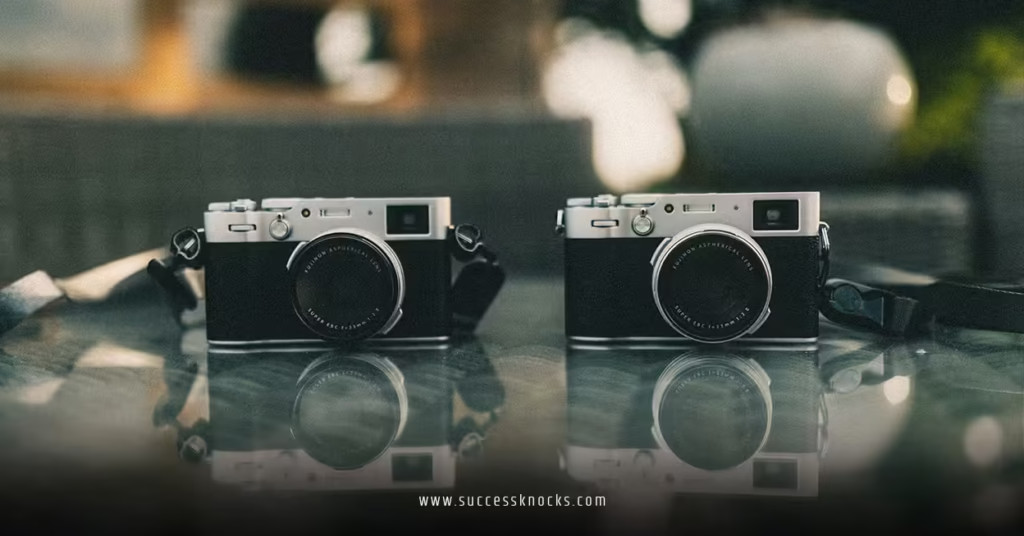
Buying Tips from the Trenches
Start with a body + versatile zoom kit (like 18-45mm or 16-50mm equivalent). Add a fast prime (50mm f/1.8 or 35mm equivalent) later for low-light and portraits.
Consider where you shoot most. Travel light? Prioritize small APS-C bodies. Low light or shallow depth of field? Lean full-frame like the Z5 II.
Try before you buy. Camera stores let you hold models and test menus. Feel matters more than specs on paper.
Budget breakdown: 40-50% on body, rest on lenses and accessories (extra battery, memory card, simple bag). Lenses hold value longer than bodies.
If you’re coming from a DSLR, check adapters—many let you use existing glass while transitioning.
Common Mistakes Beginners Make
- Buying the cheapest body and ignoring lenses. Glass makes the biggest difference.
- Over-focusing on megapixels instead of autofocus and handling.
- Skipping extra batteries—mirrorless drains faster with EVFs.
- Choosing based on brand loyalty alone instead of trying systems.
- Forgetting to factor weight if you plan to carry the camera daily.
Fix: Define your main subjects first, then match the camera to them.
Step-by-Step Action Plan to Choose Your First Mirrorless Camera
- List your budget and primary subjects (portraits, travel, sports, video?).
- Narrow systems: Canon for ease, Nikon for ergonomics/value, Sony for AF, Fujifilm for fun.
- Research current deals and used options on reputable sites.
- Visit a store or rent from a local shop to handle the cameras.
- Buy body + one good zoom first. Shoot for a month before adding more glass.
- Learn one mode at a time—start in Auto or Program, then move to Aperture Priority.
- Join online communities or local meetups to get feedback on your shots.
Follow this and you’ll avoid gear regret.
Key Takeaways
- The best mirrorless cameras for beginners 2026 balance simplicity, strong AF, and growth potential.
- Canon EOS R50 wins for pure budget entry; Nikon Z50 II or Z5 II for balanced performance.
- Prioritize how the camera feels and how well it tracks subjects over raw specs.
- APS-C keeps things light and affordable; full-frame adds low-light punch at higher cost.
- Lenses matter more long-term—invest in a system with good native options.
- Try in person. No review beats hands-on time.
- Mirrorless accelerates learning with real-time previews and smart automation.
Conclusion
Picking one of the best mirrorless cameras for beginners 2026 gets you sharp photos faster and more joy from the process. Whether you go ultra-budget with Canon, value-packed with Nikon, or creative with Fujifilm, the right choice is the one that makes you want to shoot every day.
Start simple. Master the basics. Upgrade lenses or bodies later as skills grow.
Next step: Head to a camera store this weekend or check current prices online. Grab the model that excites you most—and get out there making photos.
External Links
- Photography Life: The Best Mirrorless Cameras of 2026, Ranked — In-depth rankings with comparisons including beginner-friendly models like Nikon Z5 II and Z6 III.
- DPReview: The 9 Best Mirrorless Cameras in 2026 — Expert buying guide highlighting best value options like Nikon Z50 II and Z5 II.
- RTINGS: The 6 Best Mirrorless Cameras For Beginners of 2026 — Lab-tested recommendations with focus on Canon EOS R10 and other entry-level picks.
- Explore with Alec: The 11 Best Mirrorless Cameras (Plus 5 Beginner Options) — Budget-focused list including Canon EOS R50 and Sony ZV-E10.
- Amateur Photographer: The best mirrorless cameras you can buy — Highlights Olympus OM-D E-M10 Mark IV and Nikon Z50 II as strong beginner choices.
FAQ :
1. What makes a mirrorless camera good for beginners?
A beginner-friendly mirrorless camera should have an intuitive interface, guided shooting modes, a flip-out touchscreen, reliable autofocus (especially eye/face detection), good image quality in auto modes, and a lightweight body. It should also offer an affordable kit lens and room to grow with additional lenses. Features like in-body stabilization (IBIS) and 4K video are bonuses for learning both photos and video.
2. What is the best budget mirrorless camera for beginners in 2026?
The Canon EOS R50 (or its updated R50 V variant) is frequently recommended as one of the top budget options. It offers excellent ease of use, strong autofocus, a fully articulating screen, and great color science right out of the camera — ideal for those upgrading from a smartphone. Other strong contenders include the Nikon Z50 II (around $1,000) and Sony ZV-E10 for vloggers.
3. Should beginners choose APS-C or full-frame mirrorless cameras?
For most beginners, APS-C sensors (crop-sensor) are better — they are more affordable, have smaller/lighter lenses, and still deliver excellent image quality. Popular APS-C choices include the Nikon Z50 II, Fujifilm X-S20, and Canon EOS R10/R50.
Full-frame options like the Nikon Z5 II provide better low-light performance and shallower depth of field but cost more and come with larger lenses. Many experts suggest starting with APS-C and upgrading to full-frame later.
4. Which mirrorless brand is best for beginners in 2026?
Canon: Easiest user interface and color rendering (great for portraits and everyday shooting).
Nikon: Excellent ergonomics, value (especially Z5 II and Z50 II), and reliable autofocus.
Sony: Best autofocus and lens ecosystem, but menus can feel more complex for absolute beginners.
Fujifilm: Fun film simulations and retro controls, ideal for creative learners (e.g., X-S20).
Nikon and Canon often top “beginner” lists for simplicity.
5. What should I consider besides the camera body when buying as a beginner?
Focus on the kit lens (usually 16-50mm or similar zoom), battery life, weight (important for carrying), and ecosystem cost (lenses can add up). Check for sales on bundles. Also consider your main interest — still photography, vlogging, or travel. Start with a camera under $1,000 body-only if possible, and prioritize one with good subject tracking AF to make learning easier. Always buy from reputable retailers for warranty support.