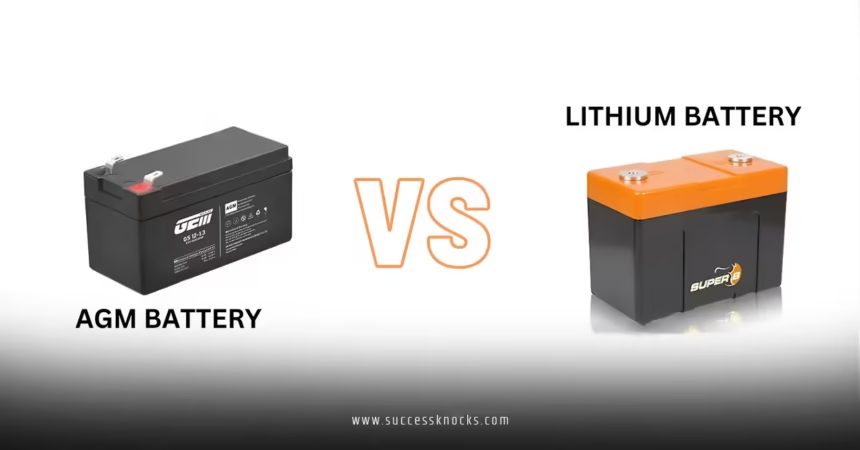
Lithium battery vs AGM battery decisions are reshaping how we think about portable and backup power in 2026. While AGM technology revolutionized sealed lead-acid systems, lithium batteries have pushed the envelope even further with unprecedented performance metrics and radically different cost structures.
Quick Overview: What You Need to Know
- Lithium batteries weigh 60-70% less than AGM equivalents and last 8-15 years
- AGM batteries cost significantly less upfront but require replacement 2-3 times during a lithium battery’s lifespan
- Lithium batteries deliver 95% usable capacity versus AGM’s 50% safe discharge depth
- AGM batteries work with existing charging systems while lithium requires specialized equipment
- Temperature performance and safety considerations vary dramatically between technologies
Understanding Lithium vs AGM Battery Technologies
Lithium Battery Technology in 2026
Modern lithium batteries use lithium iron phosphate (LiFePO4) chemistry—a far cry from the volatile lithium-ion cells in early electric cars. Think of them as precision-engineered power banks that happen to be incredibly robust.
LiFePO4 cells operate through lithium ion movement between cathode and anode without the liquid electrolyte mess. No acid. No gas emissions. Just clean, efficient energy storage that packs serious punch into lightweight packages.
AGM Battery Technology Recap
AGM (Absorbent Glass Mat) batteries represent the pinnacle of lead-acid evolution. They use fiberglass mats to immobilize electrolyte between lead plates, creating sealed units that eliminate maintenance while improving performance over flooded batteries.
If you’re coming from traditional lead-acid systems, understanding how AGM battery vs lead acid technologies compare provides crucial context for appreciating lithium’s advantages.
Lithium Battery vs AGM Battery: Performance Showdown
| Feature | Lithium (LiFePO4) | AGM Battery |
|---|---|---|
| Weight | 25-30 lbs (100Ah) | 65-75 lbs (100Ah) |
| Lifespan | 8-15 years | 4-7 years |
| Usable Capacity | 95-100% | 50% (safe limit) |
| Charging Speed | 1-3 hours (0-100%) | 6-8 hours (0-100%) |
| Cycle Life | 3,000-5,000 cycles | 500-1,000 cycles |
| Temperature Range | -4°F to 140°F | -40°F to 140°F |
| Initial Cost | $800-$1,500 (100Ah) | $250-$400 (100Ah) |
| Voltage Stability | Flat discharge curve | Declining voltage |
Game-Changing Performance Differences
Weight Revolution: A 100Ah lithium battery weighs what a 30Ah AGM battery weighs. For RVs, boats, and portable applications, this weight savings translates to better fuel economy and easier handling.
Usable Capacity Reality: Here’s where lithium batteries truly shine. That 100Ah AGM battery? You can safely use 50Ah before risking damage. The 100Ah lithium battery gives you 95-100Ah without breaking a sweat.
Charging Speed: Lithium batteries accept charge rates that would cook an AGM battery. What takes AGM 8 hours, lithium accomplishes in 90 minutes with proper charging equipment.
Voltage Stability: AGM voltage drops steadily during discharge. Lithium maintains consistent voltage until nearly depleted, meaning your devices get stable power throughout the cycle.
Cost Analysis: The Great Equalizer
Upfront Investment Reality Check
Let’s be honest—lithium batteries hurt your wallet initially. A quality 100Ah lithium battery costs $1,000-$1,200, while an equivalent AGM runs $300-$400.
But here’s where the math gets interesting.
Total Cost of Ownership (15-Year Analysis)
AGM Path:
- Initial battery: $350
- Replacement year 5: $350
- Replacement year 10: $350
- Partial replacement year 14: $350
- Total: $1,400
Lithium Path:
- Initial battery: $1,100
- Total: $1,100
The crossover point? About year 8-9, when your second AGM replacement makes lithium the cheaper option.
Factor in the superior performance during those 15 years, and lithium delivers exceptional value for heavy-use applications.
Application-Specific Recommendations
When Lithium Batteries Make Sense
RV and Marine Applications: The weight savings and deep-cycle capability make lithium ideal for recreational vehicles where every pound matters and space is premium.
Solar Power Systems: Lithium’s charge acceptance rate and depth of discharge maximize solar panel efficiency. You capture and use more of your solar investment.
Golf Carts and Electric Vehicles: The combination of weight reduction and consistent power delivery dramatically improves range and performance.
Professional Use: Contractors, emergency services, and commercial operators benefit from lithium’s reliability and reduced downtime.
When AGM Still Rules
Budget-Constrained Projects: If your initial budget is tight and performance demands are modest, AGM provides reliable service at accessible prices.
Backup Power Systems: For standby generators or emergency systems that rarely cycle, AGM’s lower cost makes more sense than lithium’s premium features.
Extreme Cold Applications: AGM batteries handle sub-zero temperatures better than lithium, which can struggle below 0°F without heating systems.
Simple Charging Requirements: Existing lead-acid charging systems work perfectly with AGM batteries but require expensive upgrades for lithium.
Charging System Requirements
Lithium Battery Charging Needs
Lithium batteries demand precision. You’ll need:
Specialized Chargers: Lithium-specific charging profiles prevent overcharging and cell imbalance. Budget $200-$500 for quality chargers.
Battery Management Systems (BMS): Built into quality lithium batteries, BMS units protect against overcharge, overdischarge, and thermal issues.
Voltage Compatibility: Some equipment designed for 12V lead-acid systems may not work optimally with lithium’s 13.2V nominal voltage.
AGM Battery Charging Simplicity
AGM batteries work with virtually any lead-acid charger. Most modern chargers include AGM-specific profiles, but even basic automotive chargers won’t damage them.
This compatibility makes AGM batteries drop-in upgrades for existing systems.
Safety Considerations for 2026
Lithium Battery Safety
Modern LiFePO4 batteries are remarkably safe—far safer than early lithium-ion technology. They don’t catch fire, don’t explode, and don’t emit toxic gases under normal use.
Key safety features:
- Thermal runaway protection
- Built-in BMS monitoring
- Non-flammable chemistry
- No acid or gas emissions
AGM Battery Safety
AGM batteries are inherently safe for most applications:
- Sealed design prevents acid spills
- Minimal gas emissions under normal use
- Established safety protocols
- Compatible with existing safety equipment
Common Mistakes to Avoid
Lithium Battery Mistakes
Using Incompatible Chargers: Standard lead-acid chargers can damage lithium batteries. Always verify compatibility before connecting.
Ignoring Temperature Limits: While lithium batteries handle heat well, extreme cold without heating systems can cause permanent damage.
Mixing Battery Types: Never mix lithium and AGM batteries in series. Their different charging characteristics will damage both types.
AGM Battery Mistakes
Expecting Lithium Performance: AGM batteries can’t match lithium’s depth of discharge or charging speed. Plan accordingly for your power needs.
Overloading Weight Limits: AGM batteries are heavy. Ensure your mounting systems and vehicle capacity can handle the weight.
Ignoring Cycle Life: Frequent deep cycling will kill AGM batteries quickly. Size your system to avoid regular deep discharges.
Step-by-Step Decision Framework
1. Define Your Performance Requirements
Critical Questions:
- How often will you cycle the battery?
- What depth of discharge do you need?
- Are weight and space constraints important?
- How fast do you need charging capability?
2. Analyze Your Budget Timeline
Short-term (1-3 years): AGM batteries cost less initially Medium-term (4-8 years): Costs begin equalizing Long-term (8+ years): Lithium becomes more economical
3. Evaluate System Compatibility
Existing Systems: AGM batteries integrate easily New Installations: Lithium batteries may justify system redesign for optimal performance
4. Consider Maintenance Preferences
Set-and-Forget: Lithium batteries require minimal attention Hands-On Management: AGM batteries need periodic monitoring
5. Factor Environmental Conditions
Temperature Extremes: AGM handles cold better; lithium excels in heat Vibration/Shock: Both technologies handle rough conditions well Space/Weight Constraints: Lithium provides significant advantages
Key Takeaways
- Lithium batteries cost 3-4 times more initially but last 2-3 times longer than AGM
- Usable capacity differences are dramatic—95% vs 50% safe discharge depth
- Weight savings with lithium technology can transform mobile applications
- AGM batteries remain the practical choice for budget-conscious installations
- Charging system compatibility favors AGM for retrofit applications
- Total cost of ownership typically favors lithium for heavy-use scenarios
- Temperature considerations vary significantly between technologies
- Safety profiles are excellent for both technologies when properly implemented
Advanced Considerations for 2026
Technology Evolution Trends
Lithium battery prices continue dropping while capacity increases. Many manufacturers now offer 10-15 year warranties, reflecting improved confidence in longevity.
AGM technology has matured with enhanced electrolyte formulations and improved internal designs extending service life.
Integration with Renewable Energy
Solar and wind systems increasingly favor lithium batteries for their charge acceptance rates and deep-cycle capability. The ability to utilize 95% of stored energy maximizes renewable energy investments.
AGM batteries work well for smaller solar installations where budget constraints outweigh performance optimization.
Smart Battery Features
Modern lithium batteries include Bluetooth monitoring, smartphone apps, and cloud connectivity for remote system management. This intelligence helps optimize performance and predict maintenance needs.
AGM batteries remain largely “analog” but benefit from external monitoring systems for professional applications.
Future-Proofing Your Investment
Technology Longevity
Lithium batteries represent the current pinnacle of practical energy storage. While new technologies emerge regularly, LiFePO4 chemistry has proven stable and reliable for mainstream applications.
AGM technology is mature and stable but faces pressure from advancing lithium capabilities and falling prices.
Compatibility Considerations
As electric vehicles and renewable energy expand, charging infrastructure increasingly optimizes for lithium battery characteristics. This trend may influence future equipment design and compatibility.
AGM batteries benefit from decades of established infrastructure and widespread compatibility across existing equipment.
Conclusion
The lithium battery vs AGM battery decision centers on balancing performance needs against budget realities. Lithium batteries deliver transformational improvements in weight, capacity, and charging speed at premium prices. AGM batteries provide reliable, cost-effective power storage with proven compatibility and safety records.
For high-performance applications where weight matters and cycling frequency is high, lithium batteries justify their premium cost through superior total value proposition. For budget-conscious installations with modest performance requirements, AGM batteries deliver excellent service at accessible prices.
Your decision should align with actual usage patterns rather than aspirational performance goals. Honest assessment of your power needs, budget constraints, and timeline will guide you to the right technology.
The battery landscape continues evolving rapidly, but both lithium and AGM technologies have earned their places in 2026’s energy storage ecosystem.
Choose based on your real-world requirements, not marketing hype or peer pressure.
Frequently Asked Questions
Q: Can I upgrade from AGM to lithium batteries in my existing system?
A: Usually yes, but you’ll need compatible charging equipment and may require system modifications. Lithium batteries often need different charging profiles and voltage settings than AGM batteries.
Q: How much weight can I save switching from AGM to lithium battery systems?
A: Typically 60-70% weight reduction for equivalent capacity. A 100Ah AGM battery weighing 75 pounds becomes a 25-30 pound lithium equivalent with superior usable capacity.
Q: Do lithium battery vs AGM battery systems require different maintenance schedules?
A: Both require minimal maintenance, but lithium batteries include built-in monitoring systems that provide detailed performance data. AGM batteries benefit from periodic voltage checks and terminal cleaning.
Q: Which battery type works better for solar power systems?
A: Lithium batteries typically excel in solar applications due to faster charging acceptance and deeper discharge capability, maximizing solar panel efficiency and energy storage utilization.
Q: Are lithium batteries safe for indoor installation compared to AGM batteries?
A: Yes, modern LiFePO4 lithium batteries are extremely safe for indoor use with no gas emissions or fire risk. AGM batteries are also safe indoors but may emit minimal hydrogen gas during charging.