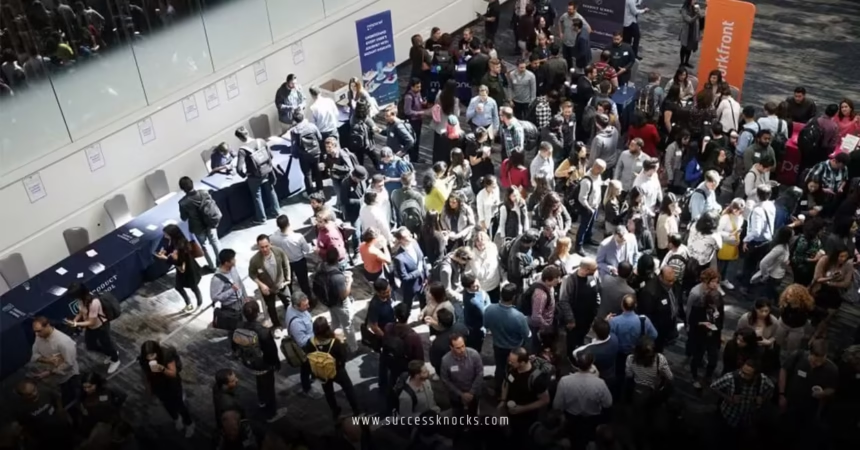
Conference networking checklist. If that phrase makes you think of scattered sticky notes and last‑minute chaos, you’re not alone.
The good news? With a tight checklist and a clear plan, conferences stop being expensive field trips and start becoming fuel for pipeline, partnerships, and brand visibility.
Use this conference networking checklist to walk into any event knowing exactly who you’re meeting, what you’re saying, and how you’re following up.
Why a conference networking checklist matters
You don’t wing your product roadmap. Don’t wing your conferences either.
A clear checklist helps you:
- Maximize the time you spend on-site (and avoid “wandering the expo hall” syndrome).
- Focus on high‑value conversations instead of random small talk.
- Capture and organize contact data cleanly.
- Follow up in ways that actually get responses.
- Measure whether the conference was worth the budget.
Think of this as your standard operating procedure for every event. Tweak it per show, but don’t reinvent it from scratch.
High-level conference networking checklist (quick scan)
If you only have a minute, start here:
Before the conference
- Define your networking goals and target personas.
- Research attendees, speakers, and exhibitors; build a hit list.
- Lock in meetings on the calendar before you travel.
- Polish your pitch and talking points.
- Finalize your assets (business cards, QR codes, and your media kit—yes, that includes preparing a b2b media kit for conference networking).
During the conference
- Use a daily networking plan (who, when, where).
- Take notes immediately after each meaningful interaction.
- Capture contact info in one system (CRM, spreadsheet, or app).
- Be intentional with social events and hallway time.
After the conference
- Triage leads by priority and fit.
- Send fast, personalized follow‑ups.
- Add contacts to your CRM with context.
- Review ROI and refine your checklist for next time.
Now let’s break that down, step by step.
Step 1: Set clear networking goals
If you don’t know what you want from a conference, you’ll say yes to everything and remember nothing.
Ask yourself:
- Are we here to generate sales leads?
- Build partnerships or channel relationships?
- Recruit talent?
- Support thought leadership and speaking?
- Court investors, analysts, or media?
Pick a primary goal and one secondary goal. That’s it. This will influence who you meet, what you bring, and how you follow up.
Pro tip: Attach numbers to those goals.
Example: “Book 15 qualified meetings and create 5 partner opportunities.” Now you’ve got something you can measure.
Step 2: Know your targets before you land
The best conference networking doesn’t start at the venue. It starts in your inbox and LinkedIn feed weeks before.
Build a target list
Pull from:
- Speaker lists and their companies
- Exhibitor/sponsor directories
- Attendee lists (if the event provides them)
- LinkedIn event attendees
- Relevant community groups or Slack channels around the event topic
Then segment:
- Tier 1: Must-meet (high-fit prospects, dream partners, media, key influencers)
- Tier 2: Good-to-meet (warm prospects, adjacent partners, vendors worth exploring)
- Tier 3: Opportunistic (interesting people you’d meet if timing works)
Start outreach early
Send short, specific messages:
- Mention why you want to connect.
- Reference something relevant (their talk, their role, their product).
- Suggest a time/location (“coffee between sessions” beats “let’s connect at some point”).
The goal isn’t a perfect pitch. The goal is a calendar event.
Step 3: preparing a b2b media kit for conference networking
Here’s the underrated move: treat yourself like a mini brand going on tour.
Your media kit is your portable credibility. Even at a conference, people want something they can revisit later or share with a team.
What to include in your media kit
Your preparing a b2b media kit for conference networking should cover:
- A one-sentence company description
- Who you serve and what problem you solve
- Your key offers or products
- Proof points (logos, testimonials, case highlights)
- Leadership or speaker bios (if relevant)
- Clear contact info and next steps
Share it as:
- A one-page PDF you can email or link via QR code
- A clean landing page optimized for mobile
When someone says, “Can you send me something I can share with my team?” you don’t need to scramble. You just send the kit. Easy.
Step 4: Tighten your core pitch
Conferences are noisy. You’ve got maybe 20 seconds to sound coherent.
Craft your conference pitch
You need two flavors:
- Short intro pitch (10–20 seconds)
- Who you are
- What you do
- Who you help
“We help mid-market SaaS companies turn customer proof into sales assets that speed up deals.” - Expanded pitch (30–60 seconds)
- Add one concrete example
- Mention a result or outcome
- Include a soft call to continue the conversation
“We helped a sales team cut their proof-collection time by 50%, which shaved weeks off their deals. I’d love to see if that’s relevant for your team too.”
Practice this out loud. If it sounds like a brochure, it’s wrong. Make it sound like you actually talk.
Step 5: Prep your networking assets
This is where the conference networking checklist gets practical.
Physical and digital basics
- Business cards (yes, they still work in many B2B settings)
- QR code to your LinkedIn or scheduling page
- QR code/short link to your media kit
- Slide or one-sheet about your offer (if you’re doing more formal conversations)
- Branded badge holder or lanyard if allowed (helps visibility)
Systems and tools
- A simple way to take notes quickly (notes app, CRM mobile app, or even photos of badges with notes)
- A shared document or sheet for your team to track conversations
- Calendar app ready for on-the-spot meeting bookings
The more you streamline this, the less you rely on “I’ll remember later.” You won’t.
Step 6: Plan your days like a playbook
Walking into a conference without a plan is how you end up chatting with the same three people on day two.
Use a daily structure
- Must-attend sessions: Where your targets are speaking or attending
- Booked meetings: Coffee, lunches, quick huddles at the expo
- Expo hall routes: Key booths you actually want to visit
- Buffer blocks: For spontaneous meetings and follow-ups
Think in blocks, not open time. Open time gets filled with random.
Say yes strategically
It’s fine to be open, but filter invitations by:
- Relevance to your goals
- Who else will be there
- Energy and schedule (you’re not a robot)
You want to leave the event tired, not fried.
Step 7: Network with intention during the event
Here’s where the rubber meets the carpet.
Start conversations well
A few easy openers:
- “What brought you to this event?”
- “Which session has been most useful so far?”
- “What’s the one thing you’re hoping to leave with?”
Then, pivot quickly to whether there’s mutual value. Not every chat needs to turn into a lead. That’s fine.
Capture context immediately
After each meaningful conversation, log:
- Name
- Company and role
- How you met
- What they care about
- Next step you agreed to
Two minutes of notes now saves you from sending “Remind me where we met?” later. That email screams “you weren’t important.”
Step 8: Avoid these networking mistakes
Even seasoned pros fall into these traps.
Over-pitching
If you talk more than you listen, you’re losing. Ask questions first, then offer value.
Collecting cards without context
A stack of business cards is not a pipeline. It’s clutter.
Pair every card with a note: “Product marketer, interested in customer stories for Q4.”
Ignoring social moments
Some of the best conversations happen at:
- Coffee lines
- After-parties
- Speaker dinners
- Hallways right after sessions
You don’t need to attend everything. But do pick a few where your target people will likely be.
Not using your own content
If you have:
- Case studies
- A good media kit
- Relevant blog posts or guides
Use them. They’re excuses to follow up with something helpful instead of “Great to meet you.”
Step 9: Follow up like a pro
The real work of a conference starts when you get home.
Triage your contacts
Bucket into:
- Hot (clear fit, agreed next step)
- Warm (potential fit, needs more nurturing)
- Other (interesting but low priority)
Send follow-ups quickly
Aim for within 48–72 hours. Reference:
- Where you met
- What you discussed
- The specific next step
Example:
“Great chatting after the product marketing panel. You mentioned needing better customer proof for Q4 campaigns. Here’s a one-page overview of how we help teams like yours, plus a link to a case story. Want to explore this in a 20-minute call next week?”
This is where having that preparing a b2b media kit for conference networking pays off. You can drop it right into the email and look put-together instead of scrambling.
Log everything into your system
- Update your CRM with notes and tags
- Add them to appropriate sequences or nurture paths
- Schedule your own follow-ups if needed
Don’t rely on memory. Memory is not a system.
Step 10: Measure and improve
One conference won’t make or break you. But the pattern over 3–5 events absolutely will.
Track:
- Number of quality conversations
- Meetings booked on-site
- Opportunities created
- Deals influenced or closed
- Partnerships initiated
Then ask:
- Which prep steps made the biggest difference?
- Which events are worth repeating?
- Where did we waste time?
Tweak your conference networking checklist based on reality, not vibes.
Quick conference networking checklist (printable-style)
Before the conference:
- Clear goals and KPIs
- Target list (Tier 1/2/3)
- Pre-booked meetings
- Pitch polished
- preparing a b2b media kit for conference networking ready to send
- Business cards, QR codes, and one-pagers printed or digitized
During the conference:
- Daily schedule mapped
- Conversations logged with notes
- Contact info captured cleanly
- Intentional presence at key sessions and social events
After the conference:
- Contacts triaged (hot/warm/other)
- Personalized follow-ups sent within 72 hours
- New contacts added to CRM with context
- Outcomes measured and lessons documented
Use this as your template. Refine after each event. The compounding effect is real.
FAQs
How early should I start using a conference networking checklist?
Ideally, start 3–4 weeks before the event if possible. That gives you enough time to do outreach, book meetings, and finalize assets like your slide deck and media kit without panic.
Do I really need a media kit for conference networking?
Yes, if you want to look credible and make follow-up easier. Even a simple one-page preparing a b2b media kit for conference networking gives prospects and partners something concrete they can review and share after the noise of the event.
How many meetings should I aim for per day at a conference?
It depends on the event, but in practice, 4–6 quality meetings per day is a strong target for most B2B professionals. The key is quality and fit, not volume—aim for conversations aligned with your goals, supported by clear notes and a solid follow-up plan.