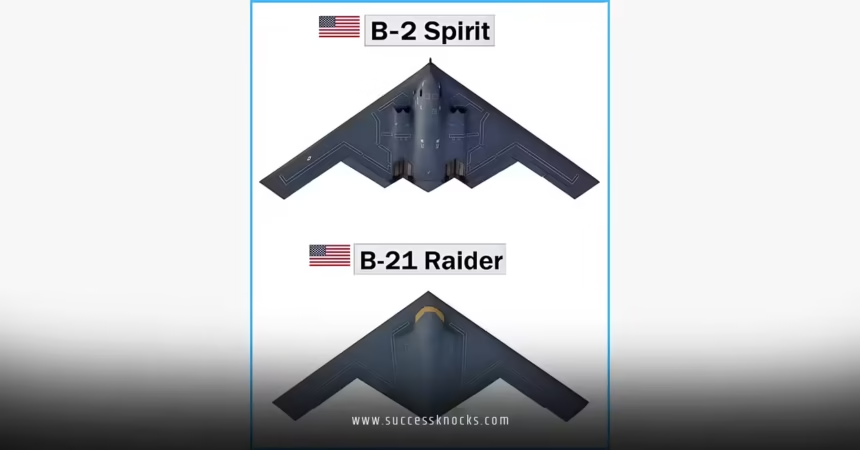
B-21 Raider vs B-2 Spirit Comparison reveals two generations of flying-wing stealth bombers separated by decades of hard lessons. The B-21 Raider shrinks the footprint, slashes costs, and amps up future-proofing while the B-2 Spirit remains a proven heavyweight that redefined airpower in the 1990s.
- The B-21 is smaller, cheaper to fly, and built for easier upgrades.
- Stealth tech on the Raider pushes detection thresholds lower than the already impressive B-2.
- Payload favors the B-2, but the Raider trades some muscle for better range efficiency and survivability.
- Maintenance and operating costs drop dramatically with the newer design.
- The Raider program learns directly from B-2 operations, including real-world data from Edwards testing.
B-21 Raider vs B-2 Spirit Comparison matters right now because the Air Force is shifting from a small fleet of ultra-expensive bombers to a larger, more sustainable force. Here’s the no-BS breakdown.
Design and Size: Compact Evolution
Both aircraft share that signature flying-wing shape. Northrop Grumman perfected it with the B-2 and refined it for the Raider.
The B-2 stretches across a 172-foot wingspan and weighs in heavy at takeoff. The B-21 looks noticeably sleeker — estimates put its wingspan around 145-155 feet. It’s lighter, more refined, and optimized for production at scale.
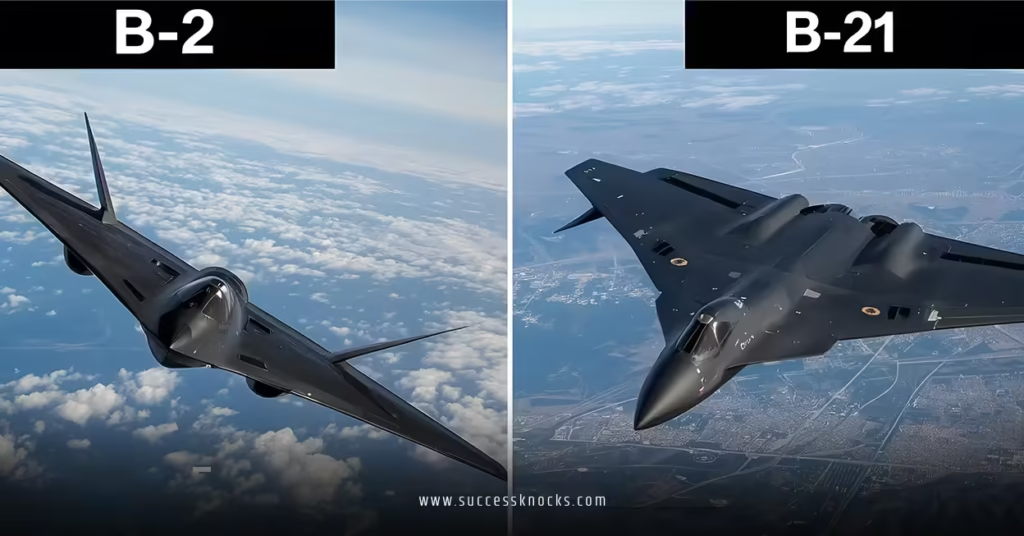
Cockpit windows tell part of the story too. The B-2 offers a broad wraparound view. The Raider uses smaller, segmented glazing — a trade-off that supports even lower radar returns.
Edwards Air Force Base B-21 testing updates continue to validate these design choices in real flight conditions.
Stealth and Survivability
The B-2 set the standard for low-observable technology. Its radar cross-section is tiny. Yet the B-21 takes it further.
Advanced materials, edge treatments, and integrated systems make the Raider harder to spot across more frequencies. It’s built from the ground up for contested airspace where adversaries field better sensors than they did in the B-2 era.
Think of it like this: the B-2 is a ghost. The B-21 is a ghost that also knows exactly where every other ghost is and can coordinate with them instantly.
Performance Specs Side-by-Side
| Feature | B-2 Spirit | B-21 Raider | Winner/Notes |
|---|---|---|---|
| Wingspan | ~172 ft | ~145-155 ft | B-21 (more compact) |
| Payload | 40,000+ lbs | ~30,000 lbs | B-2 |
| Range | ~6,000 nm | ~6,500 nm (est.) | B-21 |
| Max Speed | ~Mach 0.95 | Slightly higher (est.) | B-21 |
| Unit Cost | ~$2 billion (flyaway) | ~$692 million (target) | B-21 |
| Flight Hour Cost | ~$163,000 | ~$95,000 (est.) | B-21 |
| Crew | 2 | 2 | Tie |
| Stealth Generation | 1990s tech baseline | 6th-gen advancements | B-21 |
Numbers come from public Air Force fact sheets and credible defense analyses. Exact B-21 figures remain partially classified.
Cost and Maintainability: The Real Game Changer
This is where the B-21 shines brightest. The B-2 program delivered only 21 aircraft at eye-watering prices. Sustainment proved brutal — each flight hour costs a fortune.
The Raider targets affordability from day one. Open systems architecture means software and hardware upgrades without ripping the jet apart. Digital engineering from the start reduces surprises.
In my experience, programs that obsess over lifecycle costs early actually deliver. The B-21 team studied B-2 pain points hard. Result? A bomber the Air Force can actually afford to operate in numbers — at least 100 planned.
Mission Capabilities and Role
Both are dual-capable: conventional and nuclear.
The B-2 proved itself over Kosovo, Iraq, and beyond with massive precision strikes. It carries the biggest bombs in the inventory, including the MOP for hardened targets.
The B-21 focuses on penetrating deeper, coordinating better, and doing it more often. It will network with drones, fighters, and other assets in ways the B-2 never could. Weapons bays support modern standoff and direct-attack munitions.
B-21 Raider vs B-2 Spirit Comparison shows the Raider as the future penetrator while B-2s handle high-end missions until phased out.
Step-by-Step: How the Air Force Transitions
Beginners tracking this shift, follow these steps:
- Review official fact sheets. Start at af.mil for baseline specs.
- Compare missions. Understand B-2’s combat history versus B-21’s design goals.
- Track testing. Follow Edwards Air Force Base B-21 testing updates for real performance data.
- Watch budgets. Annual defense bills reveal production and sustainment realities.
- Study architecture. Open mission systems on the B-21 mean faster adaptation to new threats.
- Look at fleet mix. The B-52 stays for standoff; B-21 handles the dangerous stuff.
Common Mistakes & How to Fix Them
Mistake 1: Assuming bigger is always better. Bigger payload sounds great until you can’t afford to fly it often. Fix: Focus on sortie generation rates and total force effectiveness.
Mistake 2: Over-hyping “invisible” claims. No bomber is invisible. Fix: Study frequency-specific low-observables and real operational tactics.
Mistake 3: Ignoring sustainment. Flashy first-flight photos miss the long game. Fix: Dig into cost-per-flight-hour data and maintenance concepts.
Mistake 4: Treating them as direct replacements one-for-one. The Raider enables a larger fleet. Fix: Think in terms of overall bomber force capability.
Future Outlook
The B-21 will gradually take over penetrating strike roles. B-2s fly on with upgrades until the 2030s or beyond. Production ramp-up and base preparations at Ellsworth, Whiteman, and Dyess move forward.
The kicker? This isn’t just about two airplanes. It’s about a family of systems where the Raider leads.
Key Takeaways
- The B-21 is smaller, cheaper, and more maintainable than the B-2.
- Stealth and networking represent generational leaps.
- Payload trades off for efficiency and survivability.
- Target fleet size of 100+ B-21s changes the math completely.
- Open architecture ensures decades of relevance.
- Testing at Edwards proves the design in real conditions.
- The two bombers will operate together during transition.
- Affordability drives the B-21’s biggest advantage.
B-21 Raider vs B-2 Spirit Comparison boils down to this: the Spirit wrote the book on stealth bombing. The Raider rewrites it for a tougher world while keeping costs sane. America gets more bombers that actually fly more often.
Stay sharp on official releases and credible defense reporting. The next chapter unfolds fast.
FAQs
How does the B-21 Raider compare to the B-2 Spirit in stealth?
The B-21 advances the technology significantly with newer materials and shaping for better all-aspect low observability against modern threats.
Which has better range, B-21 Raider or B-2 Spirit?
Public estimates give the B-21 a slight edge in efficient range despite its smaller size, thanks to refined aerodynamics and systems.
Why is the B-21 Raider cheaper than the B-2 Spirit?
Modern manufacturing, digital design, open architecture, and lessons from the B-2 program all drive down unit and operating costs dramatically.