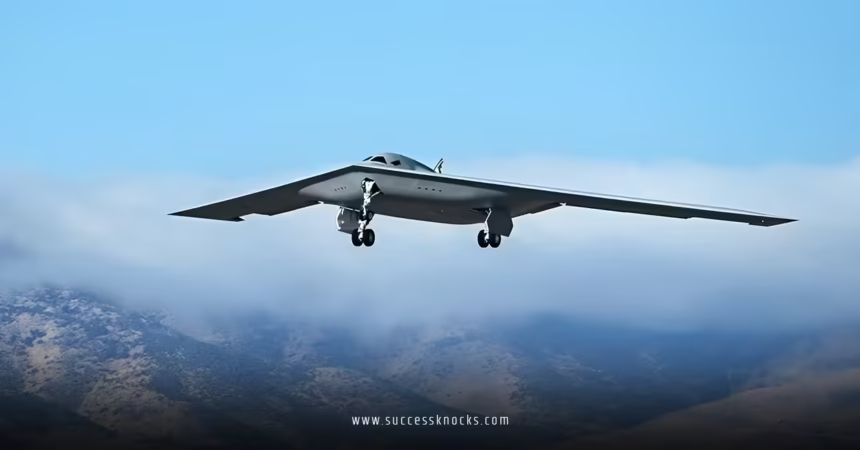
Edwards Air Force Base B-21 testing updates keep defense watchers glued to California’s high desert. The U.S. Air Force’s next-generation stealth bomber program is hitting milestones fast at Edwards, with two test aircraft now pushing mission systems, weapons integration, and operational readiness.
- The second B-21 Raider arrived at Edwards in September 2025, doubling test capacity.
- Developmental and operational test pilots flew together for the first time in June 2026 — an unusually early integration.
- Testing has compressed timelines dramatically, with one major campaign finished in 73 days instead of the planned 180.
- The Raider is on track to become the backbone of the bomber fleet, replacing aging B-1s and B-2s while delivering both conventional and nuclear options.
- Fiscal 2026 brings major construction at future main operating bases.
Edwards Air Force Base B-21 testing updates matter because this bird represents America’s edge in penetrating defended airspace. Skip the hype — here’s what’s actually happening on the ramp and in the air.
What the B-21 Raider Brings to the Fight
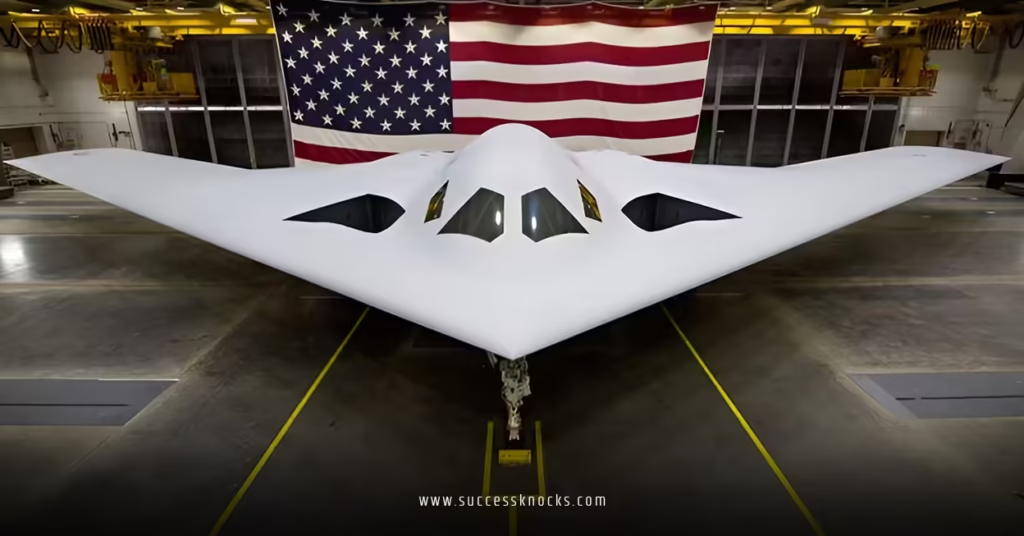
Think of the B-21 as a stealthy long-range punch that’s smarter and more maintainable than its predecessors. Built by Northrop Grumman, it emphasizes open architecture for future upgrades, digital engineering from the start, and a design that prioritizes affordability over the B-2’s gold-plated approach.
Edwards Air Force Base serves as the perfect proving ground. Its massive dry lake beds, restricted airspace, and test infrastructure let crews wring out the aircraft without eyes on every move. The Raider Combined Test Force — a mix of Air Force, Northrop, and contractor talent — runs the show.
What usually happens in these programs? Early flights focus on basic handling and envelope expansion. Now, with two aircraft, they’re digging into the hard stuff: sensors, communications, weapons bay doors, and how the jet plays with tankers and other assets.
Edwards Air Force Base B-21 testing updates show real momentum. The first aircraft has been flying regularly since late 2023. The second arrived from Palmdale in September 2025 and quickly joined the fray.
Recent Milestones at Edwards
June 2026 delivered a head-turner. An operational test pilot from AFOTEC Detachment 5 climbed into the cockpit alongside a developmental test pilot. Col. Matt Guasco called it unprecedented this early. That move blends “will it fight?” questions with “can it fly?” data right from the jump.
Gen. Dale White met with the test team days earlier, hammering home urgency without recklessness. The message: get it right, but get it done.
The test force also smashed a 180-day developmental campaign into 73 days. That kind of compression tells you the digital models and ground tests paid off big. Pilots say the jet handles like the simulator — high praise in this business.
Aerial refueling tests have been spotted too, expanding the jet’s legs for global reach.
Here’s the thing: two test birds change everything. One flies while the other gets mods or maintenance. Parallel testing accelerates everything from software loads to weapons separation trials.
| Milestone | Date | Impact |
|---|---|---|
| First B-21 arrives at Edwards | Late 2023 | Starts flight test campaign |
| Second B-21 arrives | Sept 11, 2025 | Doubles test capacity for systems/weapons |
| Operational pilot flies with dev pilot | June 2026 | Early OT/DT integration |
| 180-day campaign completed | By May 2026 | Finished in 73 days |
| FY2026 base construction begins | 2026 | Preps Ellsworth, Whiteman, Dyess |
Why Edwards Air Force Base B-21 Testing Updates Signal Bigger Shifts
The Air Force wants this jet in the fight sooner rather than later. Peer competitors are closing gaps. The B-21’s low-observable tech, range, and payload promise to keep adversaries guessing.
In my experience covering these programs, early operational involvement like this June flight cuts years off traditional timelines. It surfaces real-world maintainer and operator feedback before the design freezes too hard.
What would I do if I were advising the program office? Push aggressive but smart concurrency — test and production learning from each other. Monitor software maturity like a hawk. And keep congressional oversight briefed with real data, not PowerPoint dreams.
Edwards Air Force Base B-21 testing updates also tie into broader nuclear modernization. The Raider will handle both conventional strikes and nuclear deterrence missions. That dual role demands flawless reliability.
Step-by-Step Guide for Beginners: Following B-21 Progress
New to this? Here’s how to track developments without drowning in jargon.
- Start with official sources. Bookmark Edwards AFB news and Air Force public affairs releases. They drop verified updates.
- Understand the phases. Developmental testing (DT) proves the jet works. Operational testing (OT) proves it fights. The recent mixed flight blurs those lines productively.
- Watch for visuals carefully. Spotters sometimes catch tankers or chase planes. Confirm with official photos — don’t chase every rumor.
- Learn key terms. Low-observable means stealth. Open mission systems mean easier upgrades. Combined Test Force is the team running it all.
- Follow related programs. Tanker availability, base infrastructure, and munitions all affect the Raider’s real impact.
- Check budget docs. Look at Air Force budget justification books each year for honest cost and schedule data.
Stick to this and you’ll sound like you know the program cold.
Common Mistakes & How to Fix Them
Mistake 1: Treating every rumor as fact. Social media lights up with unverified sightings. Fix: Cross-check against .mil sites and reputable defense reporters.
Mistake 2: Assuming “stealth bomber” means invisible. No aircraft is invisible. The B-21 delays detection and complicates enemy targeting. Fix: Read up on low-observable design principles from public Air Force fact sheets.
Mistake 3: Ignoring sustainment. Fancy jets die without good maintenance. Fix: Pay attention to reports on digital engineering and open architecture — they exist to keep operating costs manageable.
Mistake 4: Over-focusing on first flight dates. Schedules slip. Focus on capability achieved, not calendar dates. The recent acceleration proves the team gets this.
Edwards Air Force Base B-21 testing updates often get buried under hype. Stay grounded in verifiable progress.
Deeper Dive: Technical Testing at Edwards
The high desert environment stresses everything — heat, dust, high altitude takeoffs. Engineers love it for replicating tough operating conditions.
Weapons integration testing ramps up now with the second jet. Expect captive carry trials, then separation tests. Mission systems testing covers everything from radar to electronic warfare suites.
The program leans hard on digital twins — virtual models that mirror the physical jet. That’s why they compressed timelines so aggressively.
One fresh analogy: Think of the B-21 test program like debugging a massive software release while simultaneously building the factory that makes more copies. Every flight feeds both.
Rhetorical question: What happens when your newest bomber arrives with mature software? You move faster than anyone expected — exactly what we’re seeing.
Another: How do you blend combat-experienced pilots into testing without slowing things down? Put them in the seat early and listen hard.
Future Outlook
Production ramp-up discussions continue. Fiscal 2026 funding supports more aircraft and base prep at Ellsworth (first main base), Whiteman, and Dyess.
The Raider won’t replace the B-52 fleet — it complements it. B-52s for standoff, B-21s for penetrating tough targets.
Edwards Air Force Base B-21 testing updates point to initial operational capability in the mid-to-late 2020s. Watch for more aircraft deliveries and expanded test envelopes.
Key Takeaways
- Two B-21 test aircraft at Edwards are accelerating mission systems and weapons work.
- Operational pilots joined testing unusually early in June 2026.
- Schedule compression shows strong digital engineering payoff.
- The program supports both conventional and nuclear roles as part of Air Force modernization.
- Base construction ramps up in FY2026 at future operating locations.
- Focus remains on capability over arbitrary deadlines.
- Public updates come primarily through official Air Force channels.
- The B-21 will incrementally replace B-1 and B-2 bombers while working alongside B-52s.
Edwards Air Force Base B-21 testing updates reveal a program moving with purpose. The Raider isn’t just another airplane — it’s a strategic signal that America intends to keep its bomber edge sharp.
Stay plugged into Edwards releases and official DoD announcements. The next big milestone could drop any quarter. What matters most? A jet that delivers when the nation needs it, tested rigorously right here in the California desert.
FAQs
What are the latest Edwards Air Force Base B-21 testing updates as of 2026?
The second test aircraft arrived in September 2025, and by June 2026 operational test pilots were already flying alongside developmental pilots. Testing has moved into advanced mission systems and weapons integration phases with strong progress.
Why does Edwards Air Force Base play such a big role in B-21 testing?
Its vast restricted airspace, long runways, and specialized test infrastructure make it ideal for expanding the flight envelope and integrating complex systems safely.
When will the B-21 enter operational service?
The program targets delivery to Ellsworth Air Force Base in the mid-2020s, with testing at Edwards paving the way for initial operational capability shortly after.