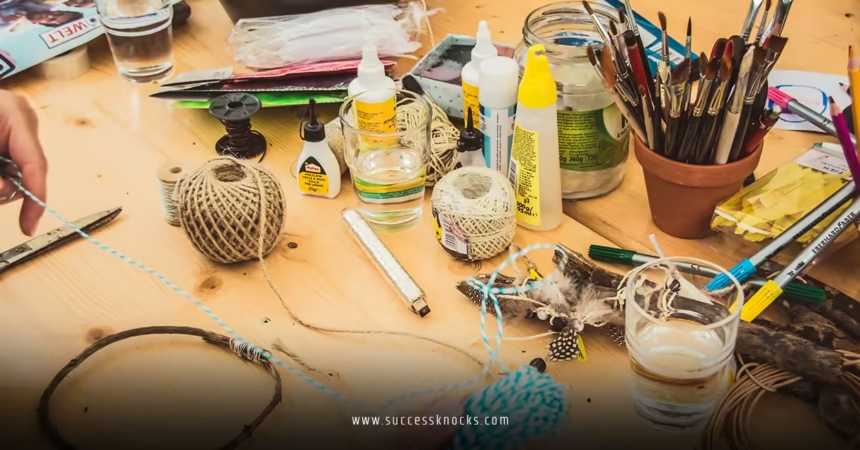
Craft business marketing strategies have evolved light-years beyond posting pretty pictures and crossing your fingers. In 2026’s hyper-competitive handmade market, strategic marketing separates the businesses that thrive from the hobbyists who struggle to break even.
The harsh reality? Amazing products don’t market themselves. You could craft the most stunning jewelry or create the coziest home décor, but without effective marketing, you’re essentially throwing masterpieces into a black hole.
Here’s what modern craft business marketing actually involves:
• Multi-channel brand building that creates genuine connections with your ideal customers • Content marketing systems that showcase your expertise while driving sales • Email marketing automation that converts browsers into loyal, repeat buyers • Social proof strategies that build trust and credibility at scale • Paid advertising approaches that generate positive ROI without burning cash
The game has changed. Cookie-cutter social media posts won’t cut it anymore.
Why Traditional Marketing Advice Fails Craft Businesses
Most marketing advice treats all businesses the same. But craft businesses operate differently. You’re not selling widgets—you’re selling stories, emotions, and personal connections.
The Small Business Administration reports that creative businesses have 40% higher customer lifetime values than traditional retail, but only when they leverage relationship-based marketing effectively.
Think of craft business marketing like hosting a dinner party. You don’t want just anyone showing up—you want people who appreciate your cooking, enjoy your company, and tell their friends about the amazing evening they had.
Strategy 1: Build Your Brand Story Foundation
Your brand story isn’t your biography. It’s the bridge between your creative process and your customer’s desires.
The Story Framework That Converts:
The Challenge: What problem does your craft solve? (Beyond “I make pretty things”) The Journey: How did you discover or develop your unique approach? The Solution: What transformation do customers experience? The Proof: Real customer results and testimonials
Example Story Arc:
“After struggling to find quality, affordable wall art that reflected my family’s personality, I started creating custom pieces from reclaimed wood. Each piece tells a story—your story—turning empty walls into conversation starters that guests remember months later.”
Notice how this isn’t about the creator’s life story. It’s about the customer’s transformation.
Strategy 2: Master Content Marketing That Sells
Content marketing for craft businesses isn’t about churning out daily posts. It’s about creating valuable content that demonstrates expertise while naturally leading to sales.
High-Converting Content Types:
| Content Type | Purpose | Frequency | Example |
|---|---|---|---|
| Process Videos | Build trust, show expertise | 2-3/week | Time-lapse jewelry making |
| Tutorial Content | Attract new audiences | 1/week | “5 Ways to Style Handmade Earrings” |
| Customer Spotlights | Social proof | 1-2/week | Customer wearing your products |
| Behind-the-Scenes | Humanize your brand | 3-4/week | Workshop organization, inspiration |
| Educational Posts | Establish authority | 2/week | “How to Care for Silver Jewelry” |
The 80/20 Content Rule:
80% valuable, educational, entertaining content 20% direct sales content
This builds trust before asking for the sale.
Strategy 3: Email Marketing That Actually Works
Email marketing generates $36 for every $1 spent, according to the Data & Marketing Association. But most craft businesses treat email like an afterthought.
Essential Email Sequences for Craft Businesses:
Welcome Series (5 emails over 10 days):
- Email 1: Welcome + brand story
- Email 2: Your process and quality standards
- Email 3: Customer transformation stories
- Email 4: Most popular products
- Email 5: Exclusive subscriber discount
Educational Nurture Series:
- Care instructions for your products
- Styling tips and inspiration
- Seasonal decoration ideas
- Gift-giving guides
Re-engagement Campaign:
- Win-back inactive subscribers
- Special offers for past customers
- New product announcements
Email List Building Strategies:
• Offer exclusive discounts for new subscribers • Create downloadable guides (care instructions, styling tips) • Host giveaways that require email signup • Add pop-ups to your website (but make them valuable, not annoying)
The key is providing value before asking for anything in return.
Strategy 4: Social Media That Converts
Social media for craft businesses isn’t about vanity metrics. It’s about building relationships that lead to sales.
Platform-Specific Strategies:
Instagram:
- Use Stories for behind-the-scenes content
- Reels for process videos and tutorials
- Feed for polished product photography
- IGTV for longer educational content
TikTok:
- Quick process videos
- Before/after transformations
- Trending audio with craft twists
- Educational content in bite-sized formats
Facebook:
- Join niche groups (don’t spam, add value)
- Facebook Shops for direct sales
- Live videos for real-time engagement
- Community building around your brand
Pinterest:
- SEO-optimized pins for long-term traffic
- Seasonal boards for holiday marketing
- Tutorial pins that link back to your site
- Lifestyle images showing products in use
The Engagement Strategy That Works:
Respond to every comment and DM within 2 hours during business hours. Social media is called “social” for a reason.

Strategy 5: Leverage Customer Reviews and Social Proof
Social proof is your secret weapon. One authentic review carries more weight than a dozen self-promotional posts.
Review Generation System:
- Follow up after delivery: Send a personal email asking about their experience
- Make it easy: Provide direct links to review platforms
- Incentivize honestly: Offer small discounts for honest reviews
- Display prominently: Feature reviews on your website and social media
- Respond to all reviews: Thank positive reviewers, address concerns professionally
User-Generated Content Strategy:
- Create branded hashtags for customers to use
- Repost customer photos (with permission)
- Feature customer stories in your marketing
- Run contests encouraging product photos
Strategy 6: Paid Advertising That Pays Off
Organic reach is declining across all platforms. Strategic paid advertising amplifies your best-performing content to reach new customers.
Facebook/Instagram Ads for Craft Businesses:
Campaign Types That Work:
- Retargeting: Show ads to website visitors who didn’t buy
- Lookalike Audiences: Target people similar to your best customers
- Interest Targeting: Reach people interested in your craft category
- Local Awareness: Perfect for craft fair promotion
Ad Creative Best Practices:
- Use authentic, lifestyle images over stock photos
- Include customer testimonials in ad copy
- Test different calls-to-action (Shop Now vs. Learn More)
- Create video ads showing your process
Google Ads for Craft Businesses:
- Target long-tail keywords (“custom wooden signs for nursery”)
- Use Google Shopping ads for product visibility
- Create location-based campaigns for local customers
- Retarget website visitors with display ads
Budget Allocation: Start with $5-10 per day and scale up based on results. Track cost per acquisition and lifetime customer value to ensure profitability.
Strategy 7: Seasonal Marketing That Maximizes Revenue
Craft businesses often see 60-70% of annual sales during holiday seasons. Strategic seasonal marketing can make or break your yearly revenue.
Year-Round Seasonal Calendar:
Q1 (January-March):
- Valentine’s Day promotions
- Spring home décor push
- Easter/Mother’s Day prep
Q2 (April-June):
- Mother’s Day campaigns
- Wedding season marketing
- Father’s Day promotions
Q3 (July-September):
- Back-to-school themes
- Fall preparation content
- Halloween product launches
Q4 (October-December):
- Halloween promotions
- Black Friday/Cyber Monday deals
- Christmas marketing blitz
- New Year reset themes
Holiday Marketing Timeline:
Start promoting seasonal items 6-8 weeks before the holiday. This gives customers time to discover, consider, and purchase while allowing for shipping delays.
Strategy 8: Partnership and Collaboration Marketing
Strategic partnerships can expose your brand to new audiences without the cost of paid advertising.
Profitable Partnership Ideas:
Cross-Promotion with Complementary Brands:
- Partner with home décor brands if you make organizational products
- Collaborate with clothing brands if you create accessories
- Team up with wedding planners for bridal market access
Influencer Collaborations:
- Micro-influencers (1K-100K followers) often have higher engagement
- Look for authentic brand alignment, not just follower count
- Provide products in exchange for honest reviews and posts
Local Business Partnerships:
- Consignment arrangements with boutiques
- Pop-up shops in established stores
- Cross-referral programs with related service providers
Common Marketing Mistakes That Kill Growth
Mistake 1: Trying to Be Everywhere at Once
The Fix: Master 2-3 marketing channels before expanding. Depth beats breadth every time.
Mistake 2: Focusing on Features Instead of Benefits
The Fix: Customers don’t buy products; they buy better versions of themselves. Focus on transformation.
Mistake 3: Inconsistent Posting and Engagement
The Fix: Create a content calendar and batch content creation. Consistency builds trust.
Mistake 4: Neglecting Email List Building
The Fix: Treat every social media interaction as an opportunity to drive email signups.
Mistake 5: Copying Competitors Instead of Differentiating
The Fix: Study competitors for inspiration, but focus on what makes you unique.
Measuring Marketing Success: KPIs That Matter
Track metrics that directly impact your bottom line:
Primary Metrics:
- Customer Acquisition Cost (CAC): How much you spend to gain one customer
- Customer Lifetime Value (LTV): Average revenue per customer over time
- Email Open Rates: Industry average is 21% for retail
- Website Conversion Rate: Industry average is 2-3%
- Social Media Engagement Rate: Quality interactions, not vanity metrics
Secondary Metrics:
- Social media follower growth
- Website traffic sources
- Email list growth rate
- Return customer percentage
Set monthly targets for each metric and adjust strategies based on performance.
Your 90-Day Marketing Implementation Plan
Days 1-30: Foundation Building
- Define your brand story and unique value proposition
- Set up email marketing automation
- Choose 2-3 primary marketing channels
- Create content calendar for first month
Days 31-60: Content Creation and Consistency
- Develop library of educational content
- Launch welcome email sequence
- Begin consistent social media posting
- Start collecting customer reviews
Days 61-90: Optimization and Expansion
- Analyze performance data
- Optimize best-performing content
- Test one paid advertising campaign
- Plan seasonal marketing calendar
Connecting to Your Business Foundation
If you’re just starting out, understanding how to start a craft business provides the essential foundation these marketing strategies build upon. You need proper business structure, pricing strategy, and legal compliance before implementing advanced marketing tactics.
Marketing amplifies what you’ve already built—it can’t fix fundamental business problems.
Key Takeaways
• Brand storytelling connects emotionally with customers beyond product features • Email marketing provides the highest ROI and builds lasting customer relationships
• Content marketing establishes expertise while naturally leading to sales • Social proof and reviews carry more weight than self-promotional content • Seasonal planning can generate 60-70% of annual revenue in key periods • Consistent execution beats perfect strategy every single time • Data-driven optimization separates growing businesses from stagnant ones • Multi-channel approach reduces risk and increases customer touchpoints
The Reality Check
Marketing isn’t magic. It’s systematic relationship building that compounds over time. The craft businesses thriving in 2026 started building these systems years ago.
Your biggest competitor isn’t another craft business—it’s customer indifference. These strategies turn browsers into buyers and buyers into brand advocates.
Start with one strategy. Execute it consistently for 90 days. Then add another.
The handmade market rewards businesses that think like businesses, not hobbyists hoping for viral moments.
Frequently Asked Questions
Q: How much should I spend on marketing my craft business?
A: Aim for 7-10% of revenue on marketing once you’re profitable. For new businesses, expect to invest $200-500 monthly across all channels. Start small with one channel and reinvest profits into expansion.
Q: Which social media platform is best for craft businesses?
A: Instagram and Pinterest typically perform best for visual products, while TikTok excels for process videos. Choose based on where your target customers spend time, not where you’re most comfortable.
Q: How often should I email my subscribers?
A: Start with weekly emails. Monitor unsubscribe rates—if they’re above 2%, you’re either emailing too frequently or not providing enough value. Quality beats quantity every time.
Q: Should I offer discounts to attract new customers?
A: Use discounts strategically, not desperately. Offer them for email signups, first-time purchases, or seasonal promotions. Avoid constant discounting, which devalues your brand and attracts bargain hunters.
Q: How do I know if my marketing is working?
A: Track customer acquisition cost versus customer lifetime value. If you’re acquiring customers for less than they spend over time, your marketing is profitable. Also monitor email list growth and repeat purchase rates.