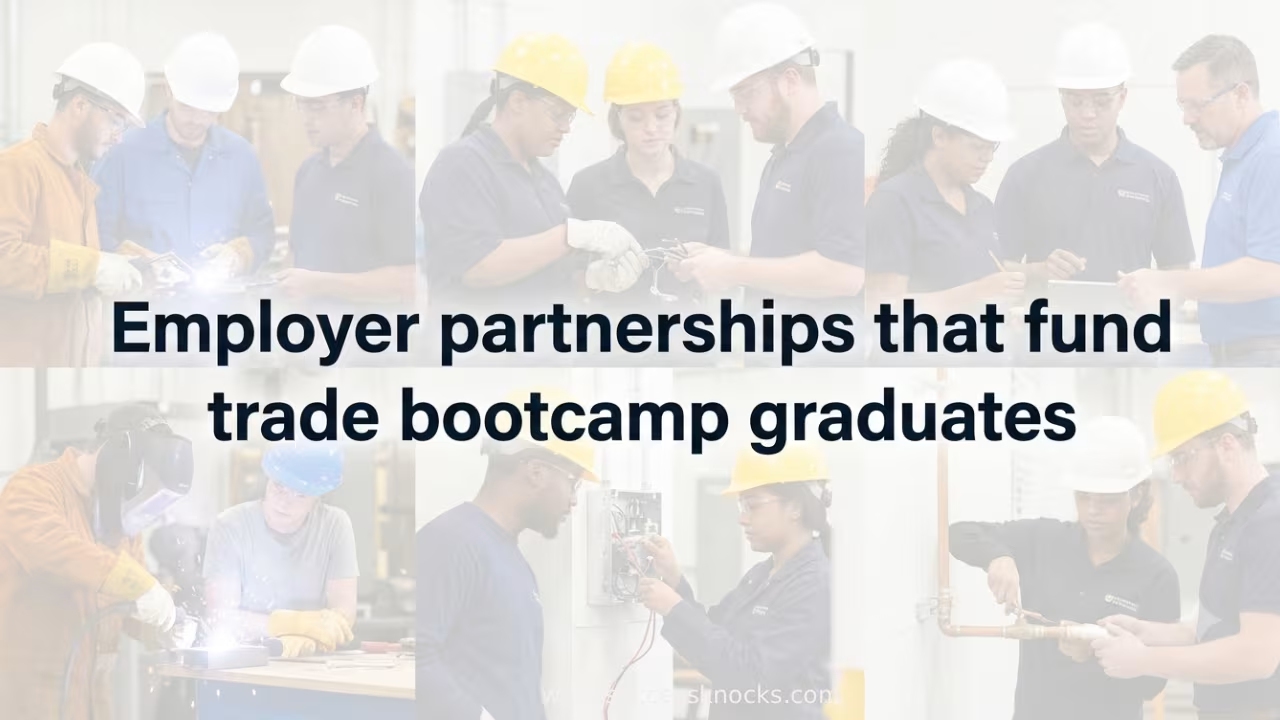
Employer partnerships that fund trade bootcamp graduates are rewriting the rulebook on how Americans enter high-demand skilled trades. These deals let companies foot part or all of the training bill in exchange for first crack at job-ready talent. Think free or heavily subsidized short programs in electrical, HVAC, plumbing, welding, or construction, often with a job offer waiting at the end.
Here’s the quick rundown:
- Companies cover tuition, tools, stipends, or even travel so graduates skip student debt.
- Many programs guarantee interviews or employment with the sponsoring employer or its contractors.
- Bootcamps run weeks instead of years, pairing classroom work with hands-on practice.
- The model helps employers close labor gaps while giving beginners a low-risk entry point.
- National players and local contractors both run versions of these partnerships across the U.S.
For the bigger picture on why trade skill demand keeps climbing in 2026, see the full guide on trade skill bootcamp demand trends. The kicker? These partnerships are no longer rare experiments. They’re becoming standard playbooks for data-center builders, home-improvement retailers, manufacturers, and contractors hungry for reliable crews.
Why Employer Partnerships That Fund Trade Bootcamp Graduates Matter Right Now
Labor shortages in the trades aren’t slowing down. Retirements keep outpacing new entrants, and infrastructure, energy, and data-center projects need warm bodies yesterday. Employers figured out that waiting for traditional pipelines is too slow and expensive. So they started writing checks directly to training providers—or running their own accelerated programs.
In my experience working with contractors and workforce teams, the companies that treat training as a talent pipeline, not a cost center, pull ahead. Graduates show up already oriented to the company’s standards. Turnover drops. Recruiting costs shrink. Workers get skills without stacking debt. Everyone wins when the incentives line up.
Big-name examples from 2026 illustrate the shift. Meta launched America’s Workforce Academy with a $115 million first-year investment. The free five-week bootcamp covers electrical, plumbing, welding, HVAC, and related trades. Participants get travel, lodging, materials, and a daily stipend covered. Every graduate receives a conditional job offer with a Meta data-center construction contractor plus industry-recognized credentials. The program started in Louisiana, Ohio, Indiana, and Texas and is open nationwide.
Retail giants are in the game too. The Lowe’s Foundation has poured more than $60 million into skilled-trades training since 2023 and expanded its commitment toward $250 million to help train 250,000 tradespeople by 2035. Grants go to community colleges and nonprofits that run hands-on programs in HVAC, electrical, plumbing, and construction—often with built-in employer connections. The Home Depot Foundation continues channeling funds through its Path to Pro initiative, supporting training and job placement for new entrants and career switchers.
BlackRock, Ford, Google, and Carhartt formed the Alliance for America’s Skilled Trades to scale apprenticeships and pre-apprenticeship pathways. Google.org committed $50 million to prepare hundreds of thousands of workers through unions and trade associations. These aren’t feel-good press releases. They’re operational responses to empty job postings.
Local and mid-size employers play the same game on a smaller scale. Many HVAC and electrical contractors partner with regional bootcamps or community colleges, covering tuition in return for hiring preference or first-look interviews. Some manufacturers reimburse a portion of training costs under state workforce programs or federal grants that reward employer co-investment.
How Employer Partnerships That Fund Trade Bootcamp Graduates Actually Work
The structures vary, but most follow a few clear patterns.
Employers either fund an existing bootcamp provider, co-design a custom program, or run their own academy. Funding can cover full tuition, tools and PPE, living stipends, or wage subsidies during training. In return, the employer often gets guaranteed access to graduates, input on curriculum, or a commitment that completers will interview or accept offers.
Some programs operate like accelerated pre-apprenticeships. Others feed straight into registered apprenticeships. A few, like Meta’s, skip the long apprenticeship ramp and put graduates to work on active projects immediately.
State and federal dollars frequently braid with private money. The U.S. Department of Labor’s Industry-Driven Skills Training Fund, for example, reimburses employers for a portion of training costs when they partner with workforce agencies on high-demand trades. Several states collect employer assessments that feed training funds employers can then access.
Here’s a practical comparison of common partnership models:
| Model | Who Pays | Typical Length | Job Guarantee? | Best For |
|---|---|---|---|---|
| Corporate Academy (e.g., Meta AWA) | Employer covers all costs + stipend | 4–6 weeks | Yes, with contractors | Career switchers, zero-experience beginners |
| Foundation Grants to Colleges | Foundation + college + sometimes employer match | 8–16 weeks | Strong hiring preference | Local residents near partner employers |
| Contractor-Sponsored Bootcamp | Employer reimburses tuition or pays provider | 6–12 weeks | Often first-interview rights | People already in the geographic area |
| Apprenticeship Pipeline Partnership | Employer + public funds + sometimes unions | Varies; pre-apprenticeship shorter | Path into registered apprenticeship | Those seeking long-term credentials |
The table shows why these deals appeal. Speed plus reduced financial risk for the trainee equals higher completion rates and faster hiring for the company.
If you’re weighing broader public and private money sources that can stack with employer help, check the breakdown of funding and grants available for trade training.

Step-by-Step Action Plan for Beginners
Want to land in one of these funded seats? Here’s what I’d do if I were starting from scratch today.
- Identify the trades with active employer demand in your region or the regions you’re willing to relocate to. Data-center construction, residential HVAC, and electrical work currently pull the heaviest private funding.
- Search for corporate academies and foundation-backed programs first. Meta’s America’s Workforce Academy, Lowe’s and Home Depot partner sites, and BlackRock Future Builders recipients publish application windows. Set calendar alerts.
- Contact local community colleges and technical centers. Ask specifically about employer-sponsored cohorts or programs that receive Gable Grants or similar foundation money. Many keep quiet lists of upcoming funded seats.
- Reach out directly to contractors and manufacturers in your target trade. Say you’re willing to train in exchange for employment consideration. Smaller shops often cover tuition once they see motivation.
- Prepare the basics: clean background check readiness, basic physical ability, reliable transportation or willingness to relocate for training, and a short statement about why the trade appeals to you. Most programs prioritize attitude and reliability over prior experience.
- Apply early and follow up. Seats fill fast once a cohort opens. Have transcripts, ID, and any prior certifications ready.
- Once accepted, treat the bootcamp like a job interview that lasts several weeks. Show up early, ask questions, network with instructors and visiting employers.
That’s the playbook. No magic. Just targeted hustle.
Common Mistakes and How to Fix Them
I’ve watched plenty of motivated people miss these seats. Here are the patterns that trip people up.
Mistake one: Applying only to free public programs and ignoring employer-funded ones. Fix: Treat corporate and foundation programs as priority targets. They often move faster and carry stronger job outcomes.
Mistake two: Waiting until you’re “ready.” Most of these bootcamps assume zero experience. Fix: Apply as soon as you decide. The training exists to get you ready.
Mistake three: Ignoring location. Some of the best-funded programs require short-term travel or relocation for the training period. Fix: Factor travel support into your decision. Programs that cover lodging and travel remove that barrier.
Mistake four: Treating the partnership as a free ride with no obligation. Employers invest because they need workers. Fix: Understand any post-training work commitment or interview expectation upfront. Walk away if the terms feel one-sided.
Mistake five: Overlooking soft skills and reliability signals. Fix: Show up prepared, communicate clearly, and demonstrate basic work ethic in the application process and during training.
Avoid those and your odds improve dramatically.
What I’d Do If I Were Building or Expanding a Partnership
On the employer side, the smartest operators start small. Pilot a 10–20 person cohort with one trusted training provider. Measure completion rate, 90-day retention, and productivity of the new hires. Then scale what works. Involve supervisors in curriculum input so the training matches real job-site expectations. Offer clear wage progression so graduates see a path beyond the entry role. Publicize the partnership—it becomes a recruiting magnet for the next round.
The analogy that sticks with me: these partnerships function like a farm system in professional sports. The company invests early, develops talent on its terms, and fields a stronger roster without overpaying free agents later.
Key Takeaways
- Employer partnerships that fund trade bootcamp graduates remove the biggest barrier—upfront cost—while giving companies a direct talent pipeline.
- Major 2026 players include Meta’s America’s Workforce Academy, Lowe’s and Home Depot foundation programs, and multi-company alliances focused on apprenticeships and pre-apprenticeships.
- Models range from fully free corporate academies with job guarantees to tuition-reimbursement deals with local contractors.
- Beginners should target these funded seats first, apply early, and treat the training period as the real interview.
- Stacking private employer money with public grants multiplies opportunities.
- Reliability and attitude often matter more than prior experience when seats are limited.
- Both individuals and employers benefit when incentives align around speed, skills, and retention.
The bottom line is simple. These partnerships turn a chronic labor shortage into a structured opportunity for people willing to train hard and show up ready to work. Pick a high-demand trade, hunt the funded programs in that space, and apply with clear intent. The next cohort is already forming somewhere. Get in it.
FAQs
Do employer partnerships that fund trade bootcamp graduates require prior experience?
Most do not. Programs such as Meta’s America’s Workforce Academy and many foundation-backed college cohorts explicitly welcome beginners. The training itself builds the entry-level skills employers need.
Are there work commitments after completing an employer-funded trade bootcamp?
It depends on the partnership. Some guarantee a job offer with the sponsor or its contractors. Others offer preferred interview status. Read the agreement carefully so you understand any expected employment period or repayment clause if you leave early.
How do I find current employer partnerships that fund trade bootcamp graduates near me?
Start with the corporate program websites, local community college workforce departments, and state apprenticeship offices. Search for foundation grants tied to Lowe’s, Home Depot, or BlackRock Future Builders recipients in your state. Direct outreach to regional contractors often surfaces quieter local deals.