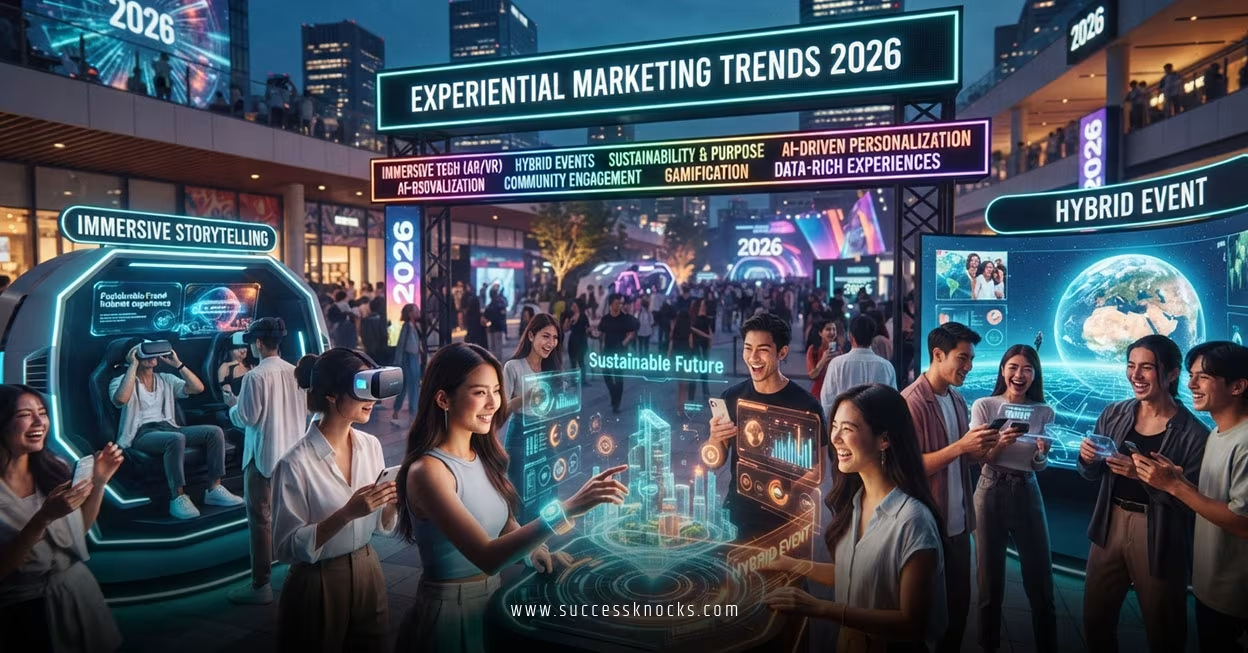
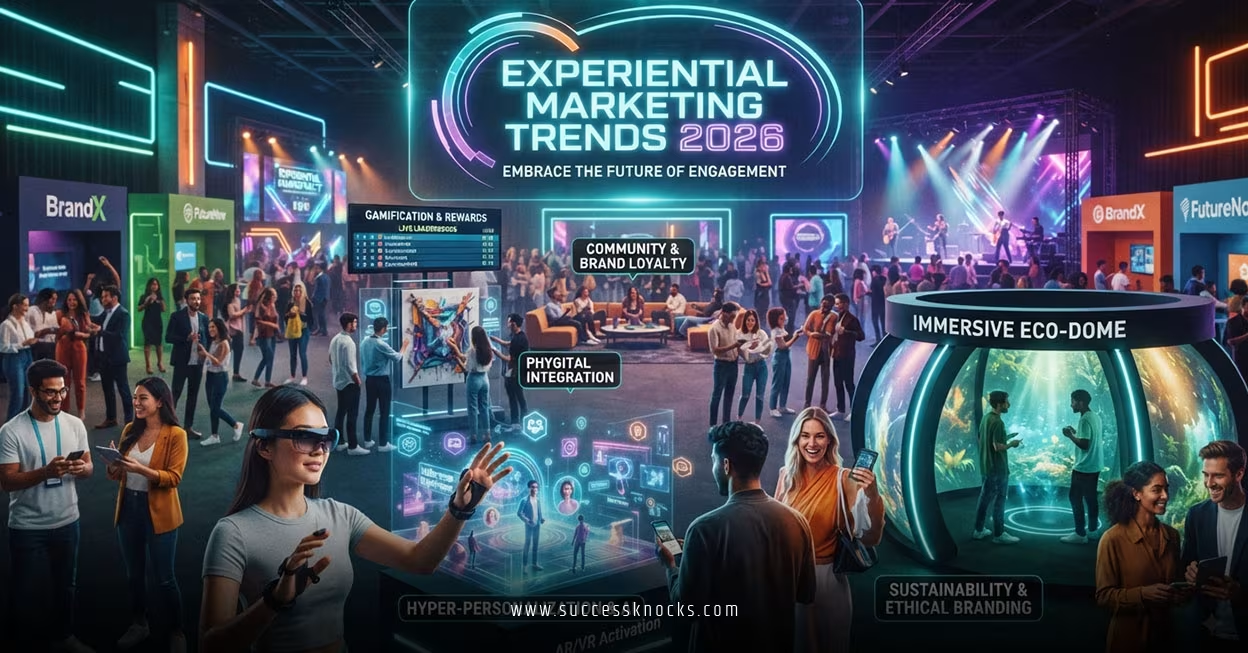
Experiential Marketing Trends 2026 are pushing brands in one clear direction: less spectacle, more substance. The winners are building smarter, smaller, more measurable experiences that feel personal, work across physical and digital channels, and keep paying off after the event ends.[1][2][13]
- Hybrid and phygital experiences are now table stakes — not a bonus feature.[1][2][14]
- Micro-experiences are outperforming oversized activations because they feel more curated and easier to personalize.[1][4][16]
- AI and real-time data are shaping everything from audience segmentation to on-site content adjustments.[2][4][15]
- Sustainability is no longer a brand virtue signal; it’s becoming a baseline expectation in RFPs and production planning.[1][4][16]
- Community-building is replacing one-off event thinking, with brands treating activations as long-term ecosystems.[1][13][19]
Why Experiential Marketing Trends 2026 matter now
The big shift is simple: people do not want to be marketed at. They want to be part of something worth remembering.
That’s why experiential marketing in 2026 is leaning harder into participation, relevance, and follow-through. Brands are using live events, retail activations, tours, and hybrid touchpoints as content engines, not isolated stunts.[13][20] If the experience does not create usable data, social lift, lead flow, or community momentum, it gets cut fast.
And that changes the game.
You’re no longer asking, “How big can this be?” You’re asking, “How well does this move people?”
The biggest Experiential Marketing Trends 2026
| Trend | What it means | Why it matters |
|---|---|---|
| Hybrid / phygital design | One experience designed for both in-person and remote audiences | Extends reach and improves content reuse[1][2][14] |
| Micro-experiences | Smaller, tighter, more curated activations | Better personalization, easier logistics, stronger engagement[1][4][16] |
| AI personalization | Audience targeting and content adaptation in real time | Makes experiences feel specific instead of generic[2][4][15] |
| Sustainability by default | Low-waste production, ethical sourcing, and cleaner operations | Influences vendor selection and brand trust[1][4][16] |
| Community over one-offs | Experiences built as ongoing ecosystems | Drives retention, advocacy, and repeat engagement[1][13][19] |
1. Hybrid is no longer optional
Hybrid events used to be a workaround. In 2026, they’re the standard operating model for brands that want reach without losing intimacy.[1][2][14]
That means the physical audience and digital audience each get a reason to show up. Same event. Different value. If you just livestream a room and call it hybrid, you’re already behind.
2. Micro-experiences are beating mega-events
This is one of the cleanest Experiential Marketing Trends 2026 signals out there. Smaller events are easier to personalize, easier to measure, and easier to make memorable.[1][4][16]
Think of it like this: a giant activation is a stadium concert. A micro-experience is the front-row acoustic set that people actually talk about later. Both have value. Only one feels personal.
3. AI is moving from support tool to core strategy
AI in experiential marketing is no longer just for backstage logistics. It’s being used for segmentation, personalization, staffing forecasts, content adaptation, and post-event analysis.[2][4][15]
The kicker is speed. Real-time adjustment beats post-mortem analysis every time. If attendees are ignoring one zone, AI-supported data can help teams shift messaging, staffing, or creative before the moment dies.
4. Sustainability is now part of the brief
Sustainability is not a decorative layer in 2026. It is baked into planning, vendor selection, materials, and production expectations.[1][4][16]
Brands are getting asked harder questions: Where does the material come from? What gets reused? What is the waste plan? What is the transport footprint? That pressure is not fading.
5. Experiences are becoming community platforms
A one-night event that disappears without a trace is weak strategy. In 2026, the better brands are designing experiences that keep generating content, conversation, and belonging after the doors close.[1][13][19]
That shift matters because community is sticky. Attention is rented. Community is owned.
What brands should do with Experiential Marketing Trends 2026
If you’re planning campaigns this year, the move is not to chase every trend. The move is to build a better operating system.
Step-by-step action plan
- Audit your current event model
Ask whether your activations still rely on scale instead of relevance. - Design for two audiences
Every experience should serve the room and the remote viewer. - Shrink the format if needed
A tighter guest list often creates better results than a bigger crowd. - Build in data capture early
Don’t tack on analytics after the creative is done. - Bake sustainability into procurement
Materials, vendors, shipping, and waste plans should all be part of the brief. - Create a post-event content path
Plan what gets published, repurposed, and followed up before the event starts. - Measure outcomes, not just attendance
Track leads, engagement depth, content use, and community lift.
Where the smart money is going
The smartest brands are treating experiential as a content-and-relationship engine. That includes pop-ups, product launches, field marketing, retail activations, and trade events that are built to travel across social, email, paid media, and sales follow-up.[13][20]
That’s also why industry gatherings matter. If you want to see where experiential is headed next, trade environments are where new formats get tested first. A strong example of that kind of planning context is EPEX Experiential Planner Expo Dubai September 2026, which fits naturally into the broader conversation about global event strategy, supplier discovery, and live experience design.
How to connect this topic to EPEX Experiential Planner Expo Dubai September 2026
If you’re creating content, this is the cleanest keyword bridge:
Experiential Marketing Trends 2026 at EPEX Experiential Planner Expo Dubai September 2026
That phrase does two jobs at once. It captures the trend-based search intent and links it to a specific expo query that readers may already be researching. It also gives you a strong internal linking anchor for related event-industry content.
Use it in a sentence like this:
Brands tracking Experiential Marketing Trends 2026 at EPEX Experiential Planner Expo Dubai September 2026 are looking for practical ways to turn live activations into measurable business outcomes.
That’s natural. It is specific. It earns the click.
Common mistakes brands still make
Mistake 1: Building for applause instead of action
A flashy experience is not automatically a useful one.
Fix: Tie every activation to a business outcome before creative starts.
Mistake 2: Treating hybrid as a video feed
That is not hybrid. That is a camera pointed at a room.
Fix: Give digital attendees something designed specifically for them.
Mistake 3: Ignoring the follow-up journey
The event is not the finish line. It is the first handoff.
Fix: Build email, sales, content, and community follow-up into the plan.
Mistake 4: Making sustainability an afterthought
This is where trust gets lost fast.
Fix: Put sustainability criteria into vendor selection and production planning.
Mistake 5: Measuring the wrong thing
Attendance alone is a vanity metric.
Fix: Track engagement quality, lead quality, content reuse, and downstream conversion.
What this means for U.S. brands
For U.S. marketers, 2026 is basically a reset year. The brands that win will be the ones that stop thinking in isolated event calendars and start thinking in connected experience systems.
That means your pop-up should feed your social content. Your trade show should feed your sales pipeline. Your live activation should feed your community. If it doesn’t connect, it leaks value.
And that is the real story behind Experiential Marketing Trends 2026: the experience itself matters, but the surrounding system matters even more.
Key Takeaways
- Experiential Marketing Trends 2026 are centered on personalization, hybrid design, sustainability, and measurable outcomes.[1][2][4]
- Micro-experiences are outperforming oversized activations because they are easier to tailor and easier to remember.[1][4][16]
- AI is now part of the planning stack, not just an optional tool.[2][4][15]
- Hybrid and phygital formats are expected, not experimental.[1][2][14]
- Sustainability is becoming a standard planning requirement.[1][4][16]
- Community-building is replacing one-off event thinking.[1][13][19]
- Brands should design experiences as content engines, not standalone moments.[13][20]
- The keyword bridge to EPEX Experiential Planner Expo Dubai September 2026 works best when used naturally in a trend-and-events context.
Experiential marketing in 2026 rewards clarity, restraint, and follow-through. If the goal is to stand out, the next move is simple: build experiences people can feel, measure, and remember — then connect that strategy to the right industry events, including EPEX Experiential Planner Expo Dubai September 2026.
FAQs
What are the top Experiential Marketing Trends 2026?
The biggest trends are hybrid experiences, micro-experiences, AI personalization, sustainability, and community-led brand engagement.[1][2][4]
How does EPEX Experiential Planner Expo Dubai September 2026 fit into Experiential Marketing Trends 2026?
It can serve as a relevant industry context for planners, brands, and vendors looking to explore how live experiences, supplier relationships, and event strategy are evolving.
What should brands do first when adapting to Experiential Marketing Trends 2026?
Start by aligning each activation with a clear outcome, then build hybrid delivery, data capture, and post-event follow-up into the plan.