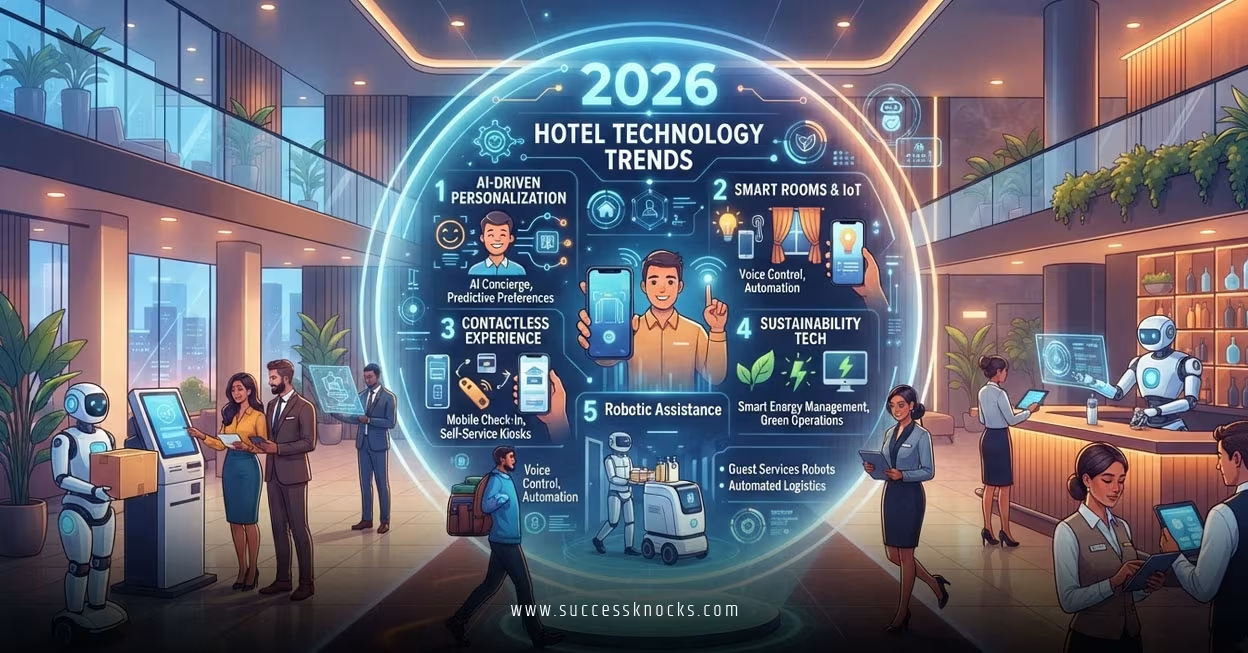
Hotel technology trends 2026 are being driven by AI-native operations, composable tech stacks, mobile-first guest journeys, smarter room controls, and a harder focus on efficiency.[1][4][7][12][16] The biggest shift is simple: hotels are moving away from “more software” and toward better-connected systems that reduce friction for staff and guests.[4][12][15]
- AI is moving into core operations, not just guest chat.[1][7][15][16]
- Composable systems are replacing rigid all-in-one setups faster than many teams expected.[4][12]
- Mobile check-in, digital keys, and messaging are now baseline expectations in many hotels.[2][10][14]
- Smart rooms and IoT are becoming practical, not gimmicky.[2][9][17]
- Sustainability tech is increasingly tied to cost control and asset value.[5][9][17]
If you are mapping industry events and market signals, the Hotel Resort Innovation Expo London September 2026 is a useful keyword to connect broader hospitality innovation with the trends shaping hotel buying decisions in 2026.
Hotel technology trends 2026: the big picture
The 2026 hotel tech conversation is not about whether hotels should digitize. That ship sailed. The real question is which tools create smoother operations, better guest experiences, and stronger margins without adding another layer of complexity.[1][4][13]
That is where the market is heading. HotelTechReport’s 2026 reporting highlights strategic shifts such as AI-native operations, direct-booking consolidation, and the rise of composable hotel tech stacks.[4] EHL and other industry sources point to AI, personalization, and operational efficiency as central themes for hospitality in 2026.[7][13]
Here’s the thing: a shiny demo is not a strategy. A system that removes ten minutes of manual work from every front-desk interaction? That gets attention.
What hotel technology trends 2026 mean in practice
In practical terms, hotel technology trends 2026 fall into a few buckets:
- Tools that save labor
- Tools that improve guest convenience
- Tools that create better data
- Tools that reduce energy and maintenance costs
- Tools that help hotels personalize at scale
The best tech now behaves like a good backstage crew. You do not see it. You feel the result. Check-in is faster. Requests are handled cleanly. The room works the way it should. Staff spend less time chasing tasks and more time serving guests.
Top hotel technology trends 2026 to watch
1. AI becomes part of the operating model
AI is no longer just a chatbot on a website. It is being used for guest messaging, forecasting, revenue support, task routing, and internal workflow automation.[1][7][15][16] In 2026, the strongest AI tools are the ones that reduce repetitive work and help teams make better decisions faster.
HotelDive and other industry coverage show that AI is now woven into daily hospitality operations, from service support to commercial planning.[8][19] In short: AI is shifting from novelty to utility.
2. Composable tech stacks keep gaining ground
Hotels are moving away from giant, all-in-one systems toward modular stacks made of best-in-class tools that integrate more cleanly.[4][12] That matters because every property has different needs, and no single vendor solves everything perfectly.
This trend is one of the clearest signals in hotel technology trends 2026. It gives operators more flexibility and reduces the pain of replacing an entire platform just to improve one function.[4][12]
3. Mobile-first guest journeys are the new normal
Mobile check-in, mobile keys, guest messaging, digital concierge tools, and app-based service requests are now central to the guest journey.[2][10][14] Guests are already comfortable using phones for travel, so hotels that make the mobile path simple usually win.
The key is usefulness. If the app is clunky, nobody wants it. If the flow is clean, it quietly improves satisfaction and reduces front-desk pressure.[10][14]
4. Smart room technology is maturing
Smart rooms are moving beyond novelty and into real operational value.[2][9][17] Guests can control lighting, temperature, curtains, and entertainment more easily, often through a phone or voice interface.
The best smart room setups feel invisible. The guest just notices that the room works better. That is the goal.
5. Predictive maintenance is becoming a money saver
Predictive maintenance tools monitor equipment and flag problems before they turn into outages.[9] That matters in hospitality because one broken HVAC unit or elevator failure can damage the guest experience fast.
This is one of those trends that sounds boring until you calculate the cost of emergency repairs, downtime, and guest complaints. Then it gets interesting.
6. Sustainability tech is moving into the budget conversation
Energy management, smart HVAC, lighting controls, and other sustainability tools are becoming part of hotel operations strategy, not just branding.[5][9][17] Hotels are under pressure to cut costs and prove environmental progress at the same time.
That makes sustainability tech especially attractive when it can reduce utility bills and support reporting. Two problems. One tool. That is the kind of math operators like.
7. Guest-facing automation has to earn trust
Hotel guest tech is being judged on usefulness, not flash. HotelTechReport’s 2026 guest technology report found that many guests find chatbots helpful for simple inquiries, while tech-savvy travelers are more influenced by mobile check-in, digital keys, and in-app personalization.[10]
That tells you exactly where the market is: useful automation wins, fake convenience loses.
Answer-ready table: what hotel teams should prioritize in 2026
| Trend | Primary benefit | Best use case | Risk if done badly |
|---|---|---|---|
| AI workflow tools | Less manual work | Messaging, routing, forecasting | Bad outputs and staff distrust |
| Composable systems | More flexibility | Replacing one weak function at a time | Integration headaches |
| Mobile guest tools | Less friction | Check-in, keys, service requests | Low adoption if UX is poor |
| Smart room tech | Better comfort and control | Upscale and resort properties | Overcomplication |
| Predictive maintenance | Lower downtime | HVAC, elevators, equipment monitoring | Ignored alerts and bad calibration |
| Sustainability tech | Lower operating costs | Energy, water, reporting | Upfront spend without ROI clarity |
Hotel technology trends 2026 and what operators should do now
If you run or advise hotels, the best response is not to chase every trend. It is to pick the right ones for your property type and guest profile.
What I’d do if I ran a city hotel
I would focus on mobile check-in, guest messaging, AI-assisted service, and direct-booking tools first. City hotels live and die on speed and convenience, so anything that shortens queues and improves communication earns its keep quickly.[10][14][19]
What I’d do if I ran a resort
I would prioritize smart room controls, personalized guest communication, F&B ordering, activity booking tools, and automation that supports a larger, more distributed property.[8][9][17] Resorts win when the experience feels effortless.
What I’d do if I were on a tight budget
I would not try to “digitally transform” everything at once. I would target the single biggest pain point, measure it, and solve that first. That might be staff messaging, maintenance tracking, or guest check-in. Small wins are still wins.
Step-by-step action plan for beginners
If you are new to hotel technology trends 2026, start here:
- Pick one business problem
Choose a pain point you can actually measure. - Learn the basic tech categories
PMS, CRM, revenue tools, guest messaging, digital keys, and automation are the starting point. - Compare vendors by outcome, not features
Ask what the tool changes in day-to-day hotel work. - Check integration early
A tool that cannot connect with your stack is a problem waiting to happen. - Pilot before rollout
Test on one property, one team, or one workflow first. - Train staff properly
Adoption lives or dies here. - Measure impact
Look at time saved, guest satisfaction, labor efficiency, or revenue lift.
Common mistakes and how to fix them
| Mistake | Why it hurts | Fix |
|---|---|---|
| Buying tech because it looks modern | No measurable business value | Start with a problem, not a product |
| Ignoring integration | Creates silos and staff frustration | Map your systems before purchasing |
| Undertraining teams | Low adoption and bad rollout | Train before launch, not after |
| Chasing every trend | Budget gets spread too thin | Prioritize the highest-ROI use cases |
| Forgetting the guest experience | Tech becomes friction instead of help | Design for simplicity first |
How this connects to industry events and innovation scouting
Industry events are often where these trends become visible early. That is why the Hotel Resort Innovation Expo London September 2026 keyword can be a useful research anchor if you are tracking how hotel technology trends 2026 show up in supplier conversations, conference agendas, and buyer priorities.
Use it as a signal, not a slogan. The point is to see which technologies are being discussed by operators, vendors, and investors in the same room.
Why these trends matter for SEO and content strategy too
Search behavior around hotel technology trends 2026 is very intent-driven. People are usually looking for one of three things: a definition, a shortlist of trends, or practical buying guidance.
That means the best content should be clear, scannable, and grounded in current industry sources. Google’s SEO guidance rewards helpful, original content that is written for people first and kept up to date.[6] That same standard works in hospitality: useful beats bloated every time.
Key takeaways
- Hotel technology trends 2026 are centered on AI, integration, mobile convenience, and operational efficiency.[1][4][7][12][16]
- Hotels are shifting from all-in-one systems toward composable tech stacks.[4][12]
- Guest-facing tech has to be simple and useful or it will not get used.[10][14]
- Predictive maintenance and sustainability tools are becoming practical ROI plays.[5][9][17]
- Resorts and city hotels should prioritize different technologies based on their guest journey.
- Beginners should start with one problem, one pilot, and one measurable result.
- Industry events and innovation research, including the Hotel Resort Innovation Expo London September 2026 keyword, can help identify what is gaining traction.
- The best hotel tech in 2026 is the kind that disappears into the background and makes service feel easier.
The next move is simple: choose one workflow, one metric, and one tool category worth testing. That is how hotel teams turn trends into results.
FAQs
What are the top hotel technology trends 2026?
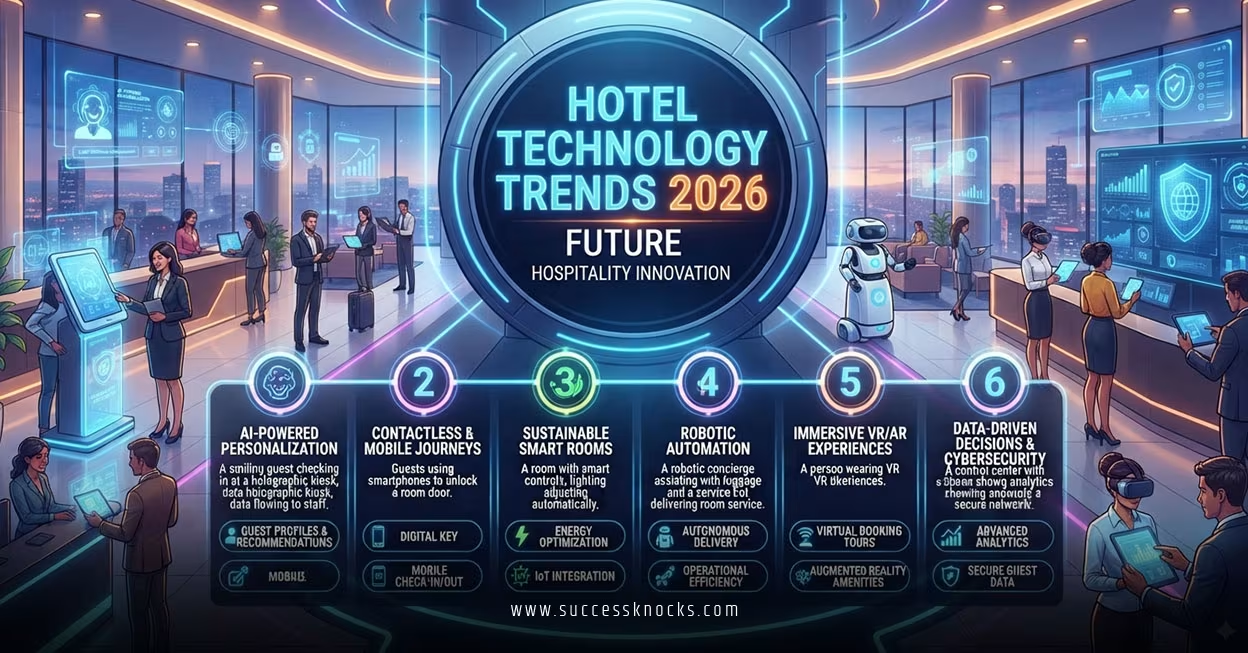
The biggest trends are AI-native operations, composable systems, mobile-first guest journeys, smart room tech, predictive maintenance, and sustainability-focused tools.[1][4][7][9][16]
How can hotels benefit from hotel technology trends 2026?
Hotels can reduce labor pressure, improve guest satisfaction, increase direct bookings, and lower operating costs by choosing tools that solve real operational problems.[10][12][17]
Why is the Hotel Resort Innovation Expo London September 2026 relevant to hotel technology trends 2026?
It is a strong keyword and research point for hospitality innovation because expo-style events often surface the technologies, vendors, and ideas that shape buying decisions in 2026.