
How to leverage subject matter experts for content creation starts with recognizing one simple truth: your best stories and sharpest insights already sit inside your organization’s heads. Not in some generic template or AI prompt. Real people doing real work. In 2026, with AI flooding feeds and search engines prioritizing E-E-A-T signals harder than ever, tapping those experts separates content that ranks from content that gets ignored.
Here’s the quick rundown:
- How to leverage subject matter experts for content creation means pulling firsthand knowledge from engineers, practitioners, analysts, and leaders to fuel accurate, authoritative pieces.
- It builds trust fast. Readers smell generic fluff a mile away.
- Done right, it boosts efficiency, improves rankings, and turns one interview into multiple assets.
- The kicker? Most teams struggle with busy experts who see marketing requests as extra chores.
Skip this, and your content stays surface-level. Nail it, and you become the trusted voice in your space.
Why Bother With SMEs in the First Place?
Seasoned marketers know generic content dies quietly. Expert-backed material lives longer and converts better.
It directly supports Google’s emphasis on experience and expertise. Content showing real-world application ranks higher in traditional results and AI Overviews.
Busy teams waste hours fact-checking. SMEs cut that noise. One solid conversation hands you specifics, examples, and contrarian takes no outsider could fake.
The payoff shows up in reach too. Expert quotes and bylines encourage sharing within professional networks. Suddenly your article gains traction beyond your owned channels.
Here’s the thing: SMEs don’t just add facts. They add soul. That one story about a project that nearly imploded but taught a key lesson? Gold.
Identifying the Right Subject Matter Experts
Not every knowledgeable person makes a good collaborator. Look for depth plus willingness.
Start inside. Who do new hires bug with questions? Who speaks up in meetings with battle-tested examples? Map these people against your content calendar.
External SMEs work too, especially for niche topics. Check LinkedIn for active voices, conference speakers, or association members. Professional groups like industry bodies often provide referrals.
Pro tip: Create a simple SME profile doc. Note expertise areas, communication preferences, and past collaboration notes. Update it quarterly. It saves headaches later.
How to Leverage Subject Matter Experts for Content Creation: Step-by-Step Action Plan
Beginners, this is your blueprint. Keep asks small. Respect time. Build relationships.
1. Align on Goals and Topics Up Front
Sit down (or jump on a quick call) and explain the “why.” What audience pain are you solving? How does this piece fit the bigger strategy?
Share a one-page brief: target keywords, desired outcomes, timeline. Ask what excites them. Alignment prevents wasted effort.
2. Prepare Like Your Reputation Depends on It
Do background research. Learn basic jargon so you don’t waste their time on 101 questions. Send 5-7 focused questions 48 hours ahead.
Record sessions (with permission). Use transcription tools. This frees you to listen deeply.
3. Conduct the Interview as a Skilled Guide
Open with easy wins to build rapport. Then dig: “Walk me through a recent project where X happened. What surprised you?”
Listen for stories. Probe assumptions. Act as translator—turn complex ideas into accessible language without losing truth.
Keep it to 30 minutes max when possible. Focused beats rambling.
4. Draft, Review, Refine
Write in their voice where it counts. Send drafts for accuracy checks. Limit review rounds to two. Clear feedback loops keep momentum.
5. Publish, Attribute, and Repurpose
Give credit. Bylines or strong quotes with titles build mutual wins. Turn one interview into a blog, LinkedIn carousel, video snippet, and email nurture sequence.
How to leverage subject matter experts for content creation shines brightest in this multiplication phase.
6. Follow Up and Nurture the Relationship
Thank them publicly. Share performance metrics. Ask for future input early. Strong relationships turn one-offs into ongoing pipelines.
Tools and Tactics That Make Collaboration Smoother
Shared docs, project management platforms, and recording software remove friction. Some teams use simple questionnaires for async input.
For video or webinar formats, co-create outlines. Test lightweight tools that let SMEs comment directly on drafts.
Pros and Cons Comparison
| Aspect | Using SMEs | Going Solo (No SME Input) |
|---|---|---|
| Accuracy | High – firsthand validation | Medium – requires heavy research |
| Time Efficiency | Faster after initial investment | Slower due to fact-checking |
| Credibility | Strong E-E-A-T signals | Weaker, risks seeming generic |
| Engagement | Stories and examples boost reads | Often flatter, less memorable |
| Scalability | Builds reusable knowledge base | Constant reinventing the wheel |
| Cost | Internal: low; External: variable | Lower upfront, higher long-term |
This table shows the trade-offs clearly. Most teams see ROI within a few pieces.
Common Mistakes and How to Fix Them
Even pros trip here.
Mistake 1: Vague or massive asks. “Write a 2000-word post” kills enthusiasm. Fix: Request 30-minute interviews or bullet-point feedback.
Mistake 2: Ignoring their schedule. Springing last-minute requests breeds resentment. Fix: Build buffers and respect boundaries. Offer async options.
Mistake 3: Poor translation. Leaving jargon intact alienates readers. Fix: Act as the bridge. Simplify without dumbing down.
Mistake 4: No feedback loop. Experts hate seeing misquotes. Fix: Always review final versions and share results afterward.
Mistake 5: One-and-done mindset. Treating SMEs as vending machines. Fix: Invest in relationships. Celebrate their contributions.
What usually happens is teams learn these the hard way. A little empathy goes far.
Measuring Success
Track more than vanity metrics. Look at time saved on research, engagement rates, conversion lifts, and organic traffic from expert pieces. Survey internal SMEs on collaboration ease too.
How to Leverage Subject Matter Experts for Content Creation in Different Formats
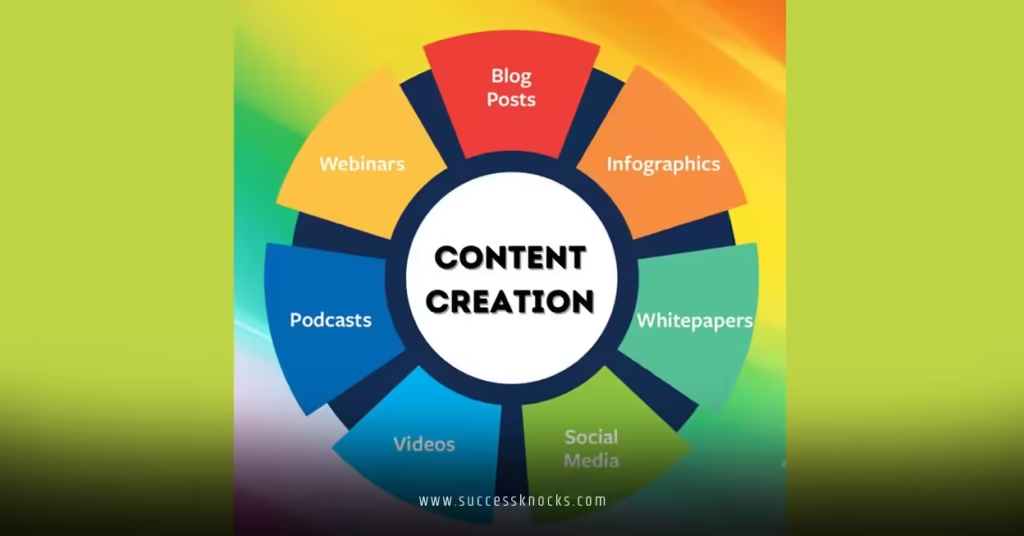
Blog posts and guides: Interviews plus bylines.
Videos and podcasts: Co-hosted or guest spots.
Ebooks and reports: Deeper involvement in outlines.
Social content: Quick quotes and insights repurposed.
Adapt the process but keep core principles: respect, preparation, accuracy.
Like turning raw ore into refined steel, SMEs provide the raw material. Your job polishes it into something sharp and useful.
Key Takeaways
- How to leverage subject matter experts for content creation delivers authority no amount of research alone can match.
- Start small, prepare thoroughly, and always give credit.
- Build relationships over transactions for sustainable results.
- Focus on stories and practical examples that resonate with your audience.
- Measure both content performance and collaboration health.
- Repurpose ruthlessly—one strong SME session fuels months of assets.
- Prioritize E-E-A-T by showcasing real experience transparently.
- Stay flexible. Different experts need different approaches.
Nail this process and your content stops competing on volume. It wins on trust and depth.
Ready to put it into action? Pick one upcoming piece, identify the best internal expert, and schedule that first focused conversation this week. The difference will show immediately.
FAQs
How do I convince reluctant subject matter experts to participate in content creation?
Show the mutual benefit. Highlight exposure, thought leadership positioning, and how it supports company goals they care about. Keep the initial ask tiny and deliver on promises of efficiency.
What’s the best way to prepare for interviews when learning how to leverage subject matter experts for content creation?
Research basics, send questions early, and focus on their unique experiences rather than facts you could Google. Active listening during the call uncovers the real gems.
Can small teams effectively leverage subject matter experts for content creation without dedicated resources?
Absolutely. Prioritize high-impact topics, use async methods, and repurpose aggressively. Even one strong SME relationship compounds over time.