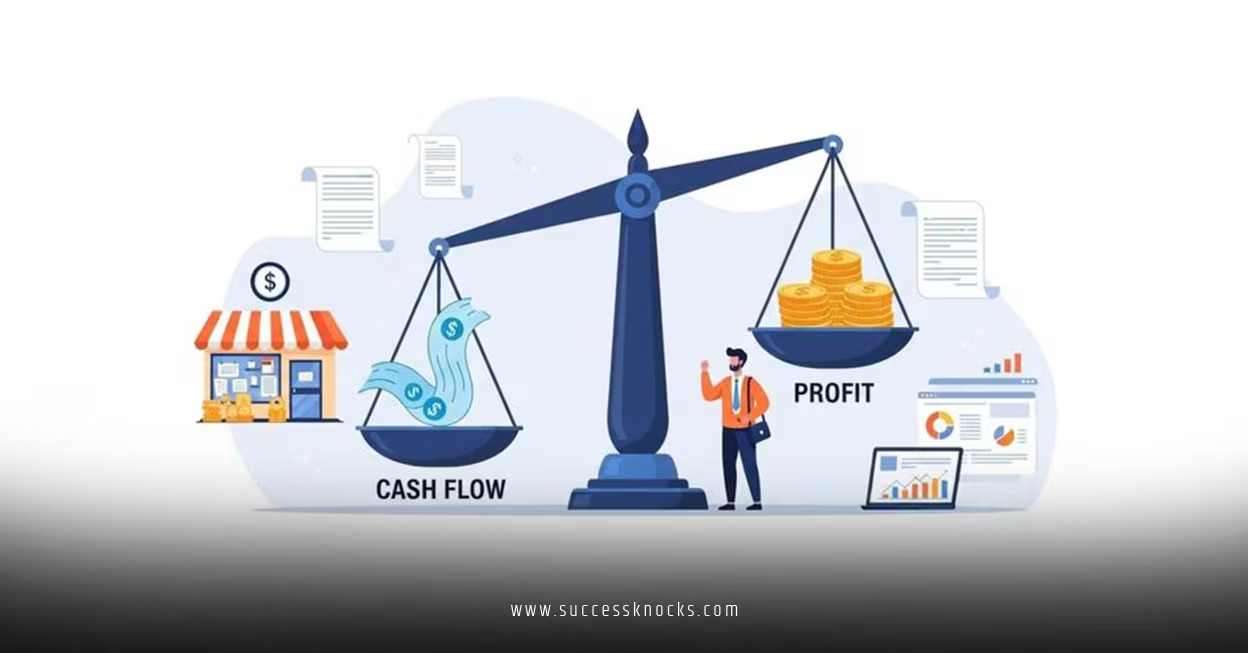
Managing cash flow during economic uncertainty is one of the hardest skills every business owner needs to master. When customers tighten their belts, invoices arrive later, or sales slow without warning, the money coming in can suddenly lag behind the money going out. You’ve felt that pressure before—or you’re feeling it right now. The good news is that cash flow is something you can actively protect and improve, even when the wider picture looks shaky.
In this article, we’re going to be taking a look at managing cash flow during economic uncertainty, and how you can keep your business steady no matter what the economy throws at you. If you would like to find out more, feel free to read on.
Pic – CC0 License
Why Cash Flow Feels Tighter Right Now
Economic uncertainty hits cash flow in predictable ways. Customers delay purchases. Payment terms stretch. Suppliers may ask for deposits or shorter credit periods. Your own costs—rent, wages, stock, energy—rarely slow down at the same pace.
We’ve seen this play out clearly with the UK economy consumer confidence drop 2026. When households feel less secure about their own finances, they spend more carefully. That caution flows straight through to the businesses that serve them. Retailers, service providers, and anyone relying on discretionary spending notice it first. Even if your main market sits outside the UK, similar confidence dips in other regions create the same squeeze.
The businesses that stay healthy through these periods are not always the biggest. They’re the ones that watch cash closely and act early.
Build a Clear Picture of Your Cash Position
Start with visibility. You cannot manage what you cannot see. Create a simple 13-week cash flow forecast. List every expected inflow and outflow week by week. Update it every Friday. This short-term view catches problems while you still have time to fix them.
Separate your numbers into three buckets: confirmed money coming in, probable money, and money that might arrive. Be honest about the “might” category. Over-optimism here is where many businesses get caught out.
Look at your receivables ageing. Who is paying late? Who has started paying later than usual? A polite but firm follow-up system—email at 7 days overdue, phone call at 14 days—often brings money in faster than you expect. Many customers simply need a nudge.
Track your average days sales outstanding. If that number is climbing, act before it becomes a crisis.
Speed Up the Money Coming In
Offer early-payment discounts where the maths works. A 2% discount for payment within 10 days can be cheaper than financing a long wait. Make it easy for customers to pay: clear invoices, multiple payment options, and automated reminders.
Review your payment terms. If you currently offer 60 days, test 30 days with new customers. Existing relationships may need a conversation, but many clients accept tighter terms when you explain the need for mutual reliability.
For service businesses, ask for deposits or staged payments. For product businesses, consider requiring payment before shipping larger orders. These steps reduce the gap between work done and money received.

Control the Money Going Out
Cash flow improves just as much by slowing outflows as by speeding inflows. Negotiate longer payment terms with suppliers where possible. Many will agree if you have a solid payment history. Consolidate orders to reduce delivery costs. Pause non-essential spending—marketing experiments, new equipment, or software you barely use—until cash feels more comfortable.
Watch inventory carefully. Excess stock ties up cash that could sit in the bank. Move slow-moving items with targeted promotions rather than letting them sit.
Review staffing and contractor costs. Overtime, temporary help, and subscriptions often contain quiet savings. Cut with care so you don’t damage capacity you’ll need when demand returns.
Create Buffers and Backup Plans
Aim for a cash reserve that covers at least two to three months of essential operating costs. Build it gradually by setting aside a fixed percentage of every payment that comes in. Even small regular transfers add up.
Explore credit options before you need them. A pre-approved overdraft or invoice finance facility gives you breathing room without the stress of applying under pressure. Use these tools carefully—they are safety nets, not everyday funding.
Scenario-plan. What happens if sales drop 20% for three months? What if a major customer pays 30 days late? Write down the actions you would take in each case. Having the plan ready removes panic when the situation arrives.
Keep Talking and Stay Flexible
Communicate early with lenders, landlords, and key suppliers if you see trouble coming. Most prefer a conversation to a surprise. Customers also appreciate honesty when you need to adjust terms or delivery schedules.
Stay close to your sales pipeline. Economic uncertainty does not remove all demand—it changes where the demand sits. Businesses that keep talking to customers often find new needs they can meet quickly.
Review your pricing. In uncertain times some owners cut prices too far and hurt margins. Others hold firm and lose volume. Test modest adjustments and measure the response rather than guessing.
Making It a Habit
Managing cash flow during economic uncertainty works best when it becomes routine rather than a crisis response. Set a weekly 30-minute cash review in your calendar. Protect that time. Share the key numbers with one trusted person so you are not carrying the full load alone.
The UK economy consumer confidence drop 2026 reminded many of us that confidence can shift faster than forecasts. The businesses that came through strongest were those that treated cash as a daily priority rather than a monthly afterthought.
We hope that you have found this article enlightening in some way and that these practical steps help you keep more control over your cash, whatever the economy does next. Steady cash flow gives you choices—and choices are the real advantage when times feel uncertain.