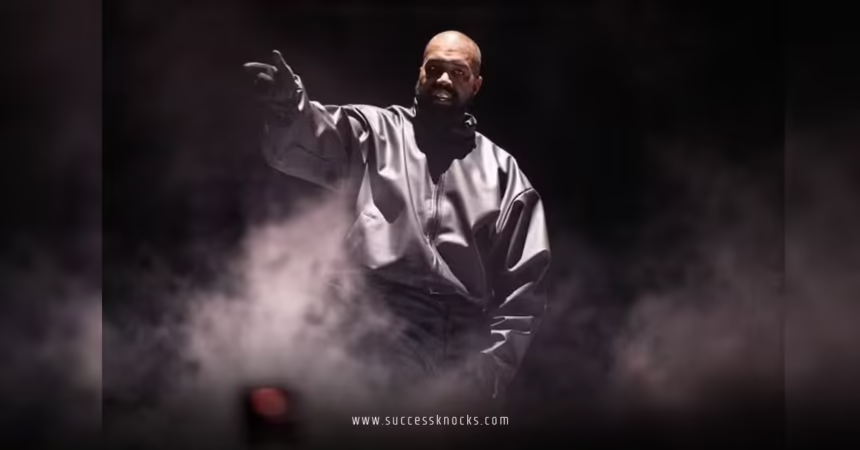
Kanye West diss track explained simply: it’s a song where Ye — sometimes under his own name, sometimes as a target — turns a beat into a public argument. That’s the whole game. No metaphor needed, though we’ll get to one.
Here’s the thing about Kanye’s beef discography — it’s not one feud. It’s a decade-plus war chest spanning Drake, Jay-Z, Taylor Swift, Pusha T, and now younger artists firing back at him. Understanding any single Kanye West diss track means understanding the whole ecosystem it dropped into.
Quick Overview:
- A Kanye West diss track is a song aimed at a specific person, usually a rapper, ex-collaborator, or public figure Ye has a grievance with.
- His feuds span three distinct eras: the Taylor Swift fallout (2009–present), the Drake/Pusha T war (2016–2024), and newer conflicts involving collaborators like Dave Blunts (2025–2026).
- Diss tracks matter because they shape public narrative, chart performance, and sometimes legal exposure faster than any press release could.
- Not every Kanye diss track is a direct attack — some are subtle jabs buried in verses on unrelated songs.
What Counts as a Kanye West Diss Track, Exactly?
A diss track needs a target. That’s the baseline requirement.
It also needs specificity — real names, recognizable details, or lyrics fans can quickly decode. Vague shade doesn’t count; it’s just moody songwriting.
Kanye’s catalog blurs this line constantly. Sometimes he names names outright (“Famous,” “Carnival”). Other times he drops a verse on someone else’s track and lets the internet do the detective work. Genius.com annotations and fan forums usually crack the code within hours.
If you’re trying to figure out exactly who a specific verse targets, I’d point you toward the breakdown on identifying who each track is actually about — it walks through the clue-hunting process line by line.
Kanye West Diss Track Feud History: The Short Version
You can’t explain one Kanye diss track without the backstory. His feuds don’t happen in isolation — they compound.
The Taylor Swift situation started at the 2009 VMAs and never fully died. “Famous” reignited it in 2016. “Carnival” and “Lifestyle” poked it again in 2024. Sixteen-plus years, still simmering.
The Drake feud is messier — ambiguous origins around 2009–2011, a slow burn through Watch the Throne era tension, then a full explosion once Pusha T’s “Infrared” and “The Story of Adidon” dragged Drake’s ghostwriting and personal life into the open in 2018.
What usually happens with Kanye is escalation by proxy. He produces someone else’s diss track (Pusha T), or drops a verse on someone else’s remix (“Like That”), rather than always leading with his own solo attack. That’s a pattern worth recognizing early.
For the full timeline stitched together chronologically, this feud history rundown covers every escalation point in order.
The Most Notable Kanye West Diss Tracks Explained
Let’s get concrete. Here’s how the major entries stack up.
| Track | Year | Primary Target | Why It Mattered |
|---|---|---|---|
| “Famous” | 2016 | Taylor Swift | Sparked the “I made that bitch famous” controversy and the leaked phone call fallout |
| “Infrared” (produced by Kanye) | 2018 | Drake | Set up Pusha T’s ghostwriting allegations that reshaped the Drake beef |
| “Life of the Party” | 2021 | Drake | Leaked during *Certified Lover Boy* vs. *Donda* release battle |
| “Like That” (Remix) | 2024 | Drake, J. Cole | Kanye jumped into the Kendrick Lamar–led rap war with contract-related shots at Drake |
| “Carnival” / “Lifestyle” | 2024 | Taylor Swift | Reopened the decade-old feud with explicit lyrics about Swift and Travis Kelce |
| “Tired of Being Groomed” (Dave Blunts) | 2025–2026 | Kanye West (as target) | A former collaborator turned the tables, accusing Kanye directly instead of the other way around |
Notice something? By 2025, the direction flipped. Kanye spent most of his career throwing the punches. Now he’s absorbing them from people inside his own circle.
Kanye West Diss Track Explained Through the Lyrics
The lyrics are where these tracks either land or completely flop. A diss line without a specific, verifiable detail is just an insult — forgettable by next week.
Kanye’s most effective bars name real events: contract disputes, leaked calls, custody situations, industry politics. Vague shots (“you’re not a real rapper”) rarely stick. Specific ones (“your masters, your deal”) stick for years.
If you want a line-by-line decode of what specific bars actually mean and reference, the lyrics breakdown piece goes deep on the wordplay and hidden references most casual listeners miss.
How Targets Actually Respond
Every diss track creates an obligation. Silence reads as weakness in rap culture — mostly.
Drake’s pattern has been quick, sometimes AI-assisted retaliation (“Taylor Made Freestyle” being the most controversial example industry-wide). Taylor Swift’s pattern is slower, more literary — she waits for an album cycle and buries the response in a song title most people miss on first listen.
Kanye himself, when targeted, has swung between ignoring critics and firing back within days, depending on the year and, frankly, his mental state at the time.
For a full rundown of who clapped back, who stayed silent, and why, the response tracker breaks down every major reply in the timeline.
Step-by-Step: How to Actually Understand a Kanye West Diss Track (Beginner’s Plan)
New to this? Here’s the exact process I’d walk a friend through.
- Identify the release context. Check what album, feud, or event the track dropped around. Timing tells you almost everything.
- Read the lyrics with annotations. Genius.com and similar fan-sourced sites usually flag references within hours of release.
- Cross-check the timeline. Diss tracks rarely exist alone — look for what triggered it and what came before.
- Watch for the reply. The response (or lack of one) often reveals more than the original track.
- Separate fact from theater. Some feuds are genuine; some are promotional theater timed to album drops. Learn to spot the difference.

Common Mistakes & How to Fix Them
Mistake: Assuming every subliminal is about the “obvious” person.
Fix: Cross-reference dates and known beefs before assuming. Kanye has aimed jabs at multiple people in a single verse.
Mistake: Treating leaked/unreleased tracks as canon.
Fix: Confirm official release status. Several Kanye diss verses (like the original “Life of the Party” leak) got altered before official release.
Mistake: Ignoring the production credits.
Fix: Kanye often produces diss tracks for other artists (Pusha T’s “Infrared”) rather than performing them himself. Missing that context means missing his real involvement.
Mistake: Reading one diss track in isolation.
Fix: Always map it against the broader feud. A single song rarely tells the full story.
Fan Reaction: Why This Stuff Blows Up Online
Diss tracks are basically built for social media virality — short, quotable, and loaded with drama. It’s the reality-TV cliffhanger of the music industry.
Reaction videos, TikTok breakdowns, and Twitter/X thread decoders now shape the narrative almost as fast as the track itself drops. That’s a genuinely new dynamic compared to the pre-2015 diss track era.
For a closer look at how fans have actually reacted across each major moment, the fan reaction roundup covers the social media fallout in detail.
Does It Even Move the Charts?
Sometimes. Controversy has historically been a decent, if unreliable, sales driver for Kanye’s catalog. Billboard’s Hot 100 tracking has shown real chart bumps tied to feud-era releases — Billboard’s chart archive documents several of these spikes directly.
Certification data from the Recording Industry Association of America also shows some diss-adjacent tracks going gold or platinum faster than comparable album cuts, purely on attention alone.
For the full numbers — peak positions, streaming spikes, certification timelines — the chart performance analysis lays it all out.
Key Takeaways
- A Kanye West diss track needs a specific, identifiable target — vague shade doesn’t count.
- His feud history spans Taylor Swift, Drake, Pusha T, and now younger collaborators firing back at him.
- Lyrics with concrete, verifiable details land harder and last longer than generic insults.
- Responses matter as much as the original track — silence, speed, and format all send signals.
- Chart and streaming data from sources like Billboard show real commercial impact tied to feud moments.
- By 2025–2026, the direction shifted — former collaborators like Dave Blunts began targeting Kanye instead of the reverse.
- Context (timing, production credits, release status) is everything when decoding intent.
Bottom line: a Kanye West diss track is never just a song. It’s a data point in a much longer, ongoing story — and the ones that age well are the ones built on specifics, not just noise. If you’re digging into a particular track next, start with who it’s actually aimed at, then work outward from there.
FAQs
What makes a song officially a Kanye West diss track versus just a subliminal shot?
Generally, it needs a clearly identifiable target through names, specific events, or details fans can verify — not just vague attitude. Genius annotations and journalist coverage from outlets like Rolling Stone usually confirm intent within days of release.
Has Kanye West ever apologized after releasing a diss track?
Yes, in select cases — most notably around the Taylor Swift feud, where he’s publicly walked back comments at different points, though the underlying tension has resurfaced repeatedly since 2009.
Why do people still search “Kanye West diss track explained” years after some of these songs dropped?
Because the feuds never fully resolve. New tracks (from Kanye or against him) keep reopening old storylines, so people return for context whenever a fresh diss surfaces.