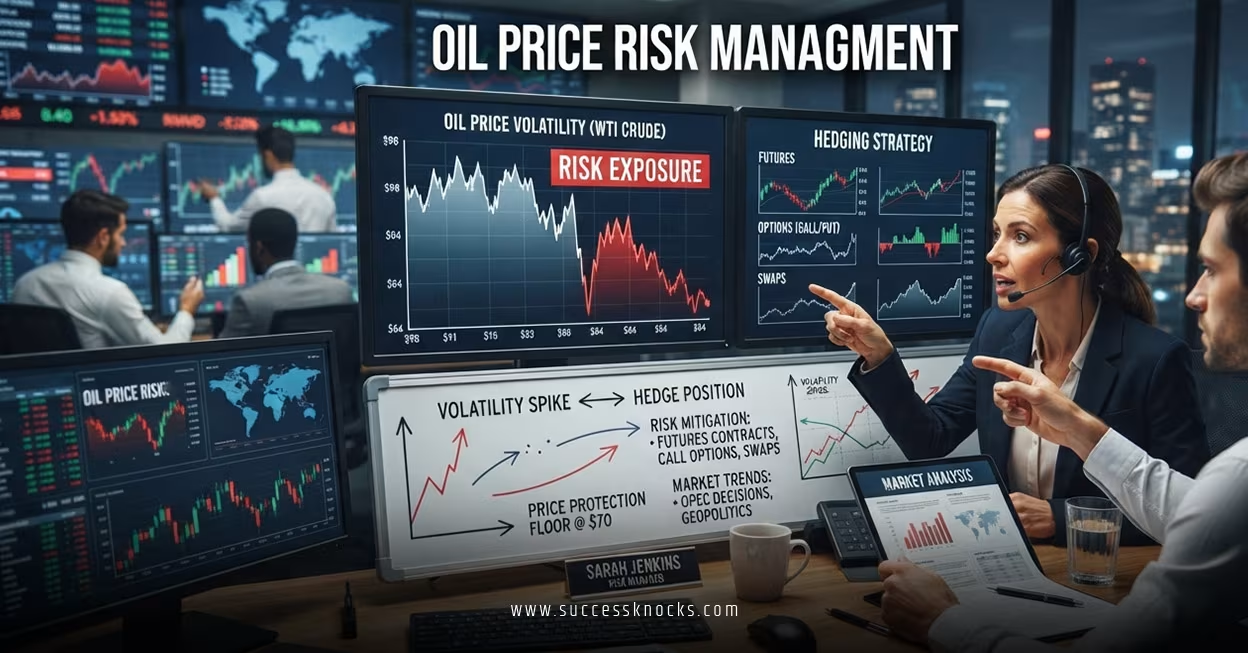
Oil Price Risk Management :
If your business depends on transport, manufacturing, shipping, or imported goods, oil price risk management is not a “finance team only” topic. It is a day-to-day business issue because fuel and crude price swings can hit freight, utilities, packaging, and customer demand faster than many owners expect.[15][20] When prices jump, margins get squeezed; when they fall, planning still gets messy if you did not lock in a cost view early.[1][11]
In this article, we’re going to take a look at oil price risk management, and how you can reduce surprises in your costs, protect profit, and make better pricing decisions. If you would like to find out more, feel free to read on.
What oil price risk management actually means
Oil price risk is the exposure a company has to changes in the spot or forward price of an oil product.[1] In plain English, it means your business can lose money if fuel or crude moves in the wrong direction before you buy, sell, ship, or reprice.
This risk shows up in different ways. Airlines worry about jet fuel, shippers worry about diesel, manufacturers worry about energy-intensive inputs, and importers worry about the knock-on effect of higher freight and supplier charges.[1][7] The goal of oil price risk management is not to guess the market perfectly. It is to make your cash flow, pricing, and margins less fragile when prices become volatile.[3][11]
Why oil prices matter even if you do not buy crude
Many business owners think oil matters only to refineries or energy traders. That is too narrow. Research from the World Bank and IMF shows that oil price volatility affects planning, budgeting, and economic stability well beyond the energy sector.[3][4]
If you run a business in the USA, UK, Australia, Singapore, or Dubai, the effect often arrives through transport, logistics, aviation, and imported goods. That can mean higher delivery charges, pressure on supplier contracts, or weaker consumer spending if households feel fuel inflation first.[15][17] So even if crude is not on your balance sheet, oil can still sit inside your cost base.
The main tools used in oil price risk management
Businesses usually manage oil exposure with hedging tools such as futures, forwards, swaps, and options.[1][7][11] These instruments are widely used because they can help lock in a price, reduce uncertainty, or set a ceiling on costs.
A simple way to think about them is this:
- Futures help set a fixed price for a later date.[1][11]
- Swaps help smooth out price changes over time.[1][6]
- Options give protection while keeping some upside if prices move in your favor.[1][10]
The best tool depends on your risk, your budget, and how much flexibility you need. For example, the IMF notes that hedging can reduce oil price volatility and improve predictability without removing all upside potential.[4] That is why many firms do not try to eliminate risk completely; they try to control it.
Where a Hormuz headline fits into your risk plan
This is where the keyword connection matters. A hormuz draft agreement impact on oil prices can become a trigger for sharper oil moves because the Strait of Hormuz is a major shipping route for crude.[17] If the market believes the agreement reduces the chance of disruption, oil can ease. If the deal looks weak or unstable, prices can stay jumpy or rise on fear alone.[17]
For your business, that means geopolitical headlines should be treated as risk signals, not background noise. The point is not to predict every move. The point is to know when a news event could change your fuel, freight, and inventory costs quickly enough to affect pricing decisions.

A simple risk management process you can actually use
You do not need a complex trading desk to manage oil risk well. You do need a routine. The CAFRAL framework for oil price risk management lays out a practical sequence: engage stakeholders, build the framework, arrange financing, build capacity, execute the hedge, settle, and maintain the program.[2]
A lean version for a smaller business looks like this:
- Identify where oil-linked costs enter your business.
- Quantify the exposure in dollars, not just in percentages.
- Set a policy for when to hedge, reprice, or review contracts.
- Decide who approves the action and how often it is reviewed.
- Track results and adjust the plan as market conditions change.[5][15]
This is where many businesses win or lose. If you only review fuel risk after prices spike, you are already late.
Practical hedging choices for entrepreneurs
Not every business needs the same hedge. The right structure depends on whether you are protecting a cost, a margin, or a future sale price. The ORF review notes that airlines and shippers often use fuel swaps, while refiners and producers use different futures or options structures depending on whether they fear high or low prices.[1]
For business owners, the practical version is:
- If you need price certainty, consider a hedge that locks costs down.
- If you need flexibility, consider an option-based approach.
- If your exposure lasts longer, consider a longer-dated swap or rolling hedge.[1][6][11]
The World Bank also notes that longer-term exposures are often better matched with swaps, while shorter transaction risks can be managed with futures.[6] That matters because a mismatch between your exposure and your hedge can create a false sense of safety.
What to track every month
A good risk plan is only useful if you keep it current. Oil-linked costs can move through freight, packaging, utilities, and supplier contracts before they show up in headline profit numbers.[15] That is why many companies track oil exposure monthly, not quarterly.
Focus on these numbers:
- Fuel-related freight costs
- Supplier surcharge changes
- Gross margin by product line
- Customer price resistance
- Hedge gains or losses versus the underlying cost exposure[15][20]
If your numbers are moving in different directions, that is a signal to review the hedge, the contract terms, or the pricing model. The aim is not just to avoid loss. It is to stay in control.
The business takeaway
Oil price risk management is really about certainty. It helps you plan with less guesswork, protect margin, and avoid making rushed decisions when headlines hit. And when a hormuz draft agreement impact on oil prices story starts moving markets, the businesses that already have a plan usually have the calmest choices available.[3][4][17]