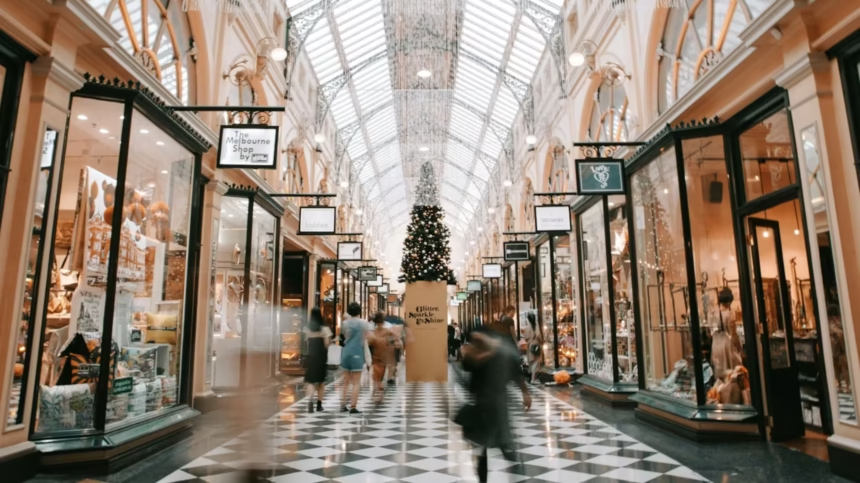
Most people will subconsciously decide how they feel about a business or store the moment they step foot into it. It’s hard to explain and most people wouldn’t be able to, but there’s no doubt it happens. It’s why some of the more high-end stores are designed how they are. There’s intention behind the positioning of everything.
Some of it feels a little nefarious, perhaps a tad manipulative, trying to get us to spend more. Other design elements are there to make us feel more comfortable. And in many cases, stores are designed specifically in a way that makes them easy to browse.
That’s where things get interesting. Because long before a product is picked up or a customer decides to speak to one of your staff, the space has already done most of the talking. That’s why store design plays a bigger role than it might seem at first glance.
Why first impressions happen before anything is said
Walking into a store should feel nice and easy. Just natural. Like there’s space to take it all in without pressure. But when that first step inside feels cramped or confusing, it can create a bit of tension straight away. That’s something a lot of people don’t think about when starting a retail store, but it makes a difference.
Have you ever walked into a shop and immediately felt unsure about where to go? That’s often down to how that first area is set up. Keeping it open gives people time to adjust, look around, and decide where to head next without feeling rushed. It’s the key to introducing your store to your customers and helping their journey through your displays.
Giving customers space to settle in properly
That first stretch inside the door is more important than it looks. It’s where people switch from the outside world into your space. It’s where your store layout opens up to them. And so, it helps to keep things simple there. No clutter. No overwhelming displays. Just enough openness for someone to pause, take a breath, and get their bearings.
If that space feels crowded, it can create a sense of pressure that makes it a little jarring. Not enough to make someone walk out straight away, but enough to make them move through faster than you’d probably like. A few well-placed signs guiding your customers to their destination or introducing them to your products can be really helpful here.
Guiding people without them even noticing
There’s a natural tendency for people to turn slightly to the right when they walk into a store. It’s not something they think about. It just happens. So placing your key products or displays in that direction can make things feel more intuitive. People notice them without needing signs or instructions.
Have you ever found yourself drawn to a certain part of a shop without really knowing why? That’s usually good store design doing its job. It helps people move through your store without making it feel forced or strict.
Slowing customers down in the right way
While it sounds a little counterintuitive, a store that’s too easy to walk through can actually work against you. People come in, take a quick look, and leave without really engaging with any of your products or what you have to offer.
But that’s where small interruptions can help. Just enough to make someone pause and take a look. A big and bright display. A change in layout that opens up to new sections. Something that catches their attention and makes them stop to look around for a while.
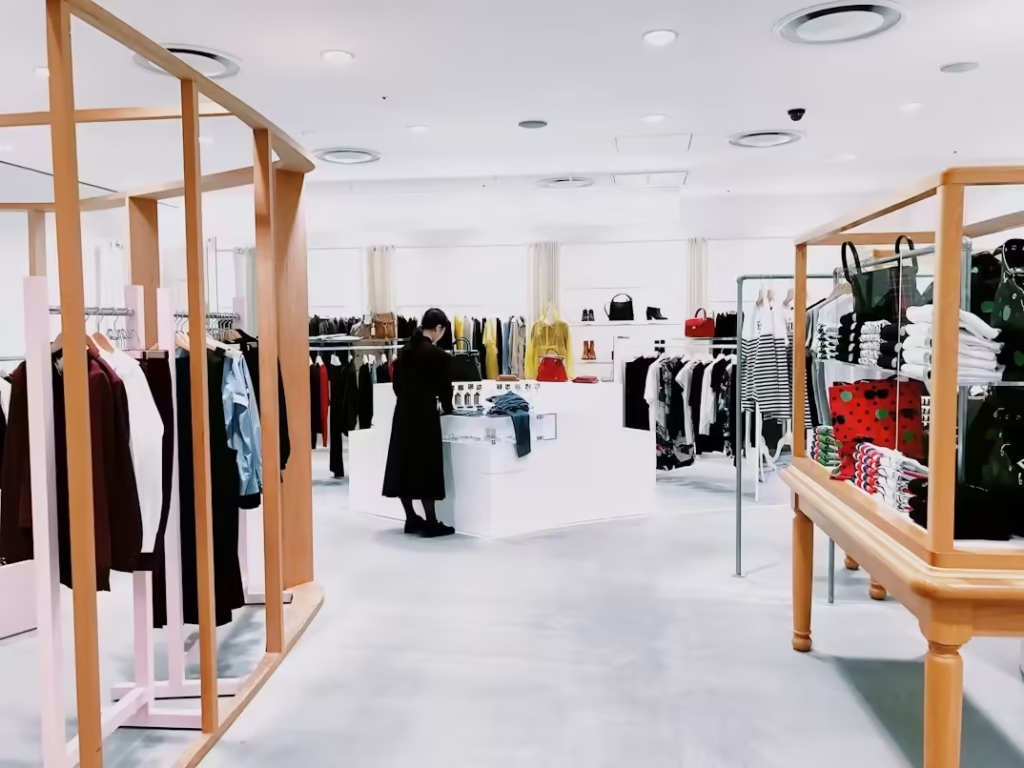
And even details like installing large format porcelain tile in certain areas can subtly break up movement and make people slow down without realising it. It shifts them from walking to browsing, which is where decisions start to happen.
Source: Unsplash (CC0)
Making your space feel open and easy to explore
No one likes feeling boxed in while they’re trying to shop. Narrow aisles. Tall fixtures blocking the view. All of these little frustrations can add up quickly. So keeping clear sightlines makes a difference. Lower displays at the front. Taller ones further back. It gives people a sense of the whole store without feeling overwhelmed.
Have you ever walked into a store and immediately felt comfortable just because it felt open? That’s not accidental. It’s about making sure people can see where they’re going and don’t feel trapped in the layout. It helps them find what they’re looking for more easily. It guides them to the products that they want to see.
Using lighting to shape behaviour and mood
Lighting does more than just help people see. It changes how a space feels. Brighter lighting tends to feel more practical. Faster. More efficient. Softer lighting, on the other hand, can make people slow down and stay longer. It’s more comfortable. It feels a bit more inviting and isn’t as harsh on your eyes.
So, depending on the kind of experience you want to create, adjusting the lighting can guide how people move through your store. It’s subtle, but it works in the background without needing much attention.
Avoiding small mistakes that push people away
Sometimes it’s not the big things that cause problems. It’s the smaller details that people don’t always notice until they feel uncomfortable. For example, tight spaces where people brush past each other can make someone leave without thinking twice. It’s a quick reaction. They just don’t feel comfortable staying.
Have you ever been browsing somewhere and suddenly felt like you were in the way? That’s enough to cut the experience short. Giving people enough space to move freely makes everything feel more relaxed.
Ending the experience in a way that feels natural
The final part of the store journey matters just as much as the beginning. It’s where everything comes together. Placing the checkout in a spot that feels like the end of a natural path can make the process smoother. It shouldn’t feel like an interruption. More like the final step.
And when that flow works well, the whole experience feels more complete. People leave with a better impression, even if they don’t consciously think about why.
Store design has a surprisingly powerful influence on how people move, feel, and shop. From the moment someone walks in to the point they leave, every detail shapes the experience. So keep things simple, open, and thoughtfully arranged. It becomes a whole lot easier to create a space that feels comfortable and encourages people to stay longer and engage more naturally.