
US consumer spending forecast August 2026 is something every entrepreneur and business owner should have on their radar—because what shoppers do with their money over the next few months will directly shape your revenue. We’ve seen a lot of mixed signals this year: a strong rebound in Q2, tariff pressures squeezing household budgets, and a labor market that’s softening but hasn’t broken. Knowing what’s coming helps you plan smarter, not harder. In this article, we’re going to be taking a look at the US consumer spending forecast August 2026, and how you can position your business to capture demand and protect your margins. If you would like to find out more, feel free to read on.
Pic – CC0 License
Where Spending Stands Heading Into August 2026
The headline number is encouraging. Real consumer spending rebounded sharply in Q2 2026, rising 3.2% after a sluggish 0.5% in Q1, according to the Bureau of Economic Analysis. That rebound was fueled by bigger-than-usual tax refunds from the 2025 reconciliation act, a resilient job market, and rising wealth among higher-income households.
But here’s the honest picture: that momentum is expected to cool as we move into August. The Congressional Budget Office projects real consumer spending growth of 1.8% for the full year 2026—solid, but not spectacular. Inflation is still running above the Fed’s 2% target at around 2.7%, and tariff-driven price increases haven’t fully worked their way through the system yet.
For your business, that means shoppers are still spending—but they’re being choosier about where every dollar goes.
The US Consumer Spending Forecast August 2026: Who Is Actually Spending?
This is the part most business advice skips over, and it’s genuinely important. Not all consumers are in the same boat right now.
The top 10% of US households now account for roughly half of all consumer spending—the highest share on record going back to 1989. Upper-income shoppers are benefiting from strong financial markets and are much less sensitive to tariff-driven price increases. Lower and middle-income households, on the other hand, are tightening their belts. Savings rates fell to a low of 2.6% of after-tax income earlier this year, and the average household’s cost of living is estimated to have risen by around $2,500 annually due to tariff pass-throughs, according to TD Economics.
If your customer base skews toward mid-market or budget-conscious buyers, you’ll feel this more than a luxury brand will. Price and value are the top factors driving purchase decisions right now—69% of shoppers rank them as their most important criteria heading into the second half of 2026.
Key Sectors to Watch This August
Not every category is moving the same direction. Here’s where consumer money is flowing right now:
- Electronics & Apparel: These led spending gains through mid-2026 and are expected to stay active.
- Food & Healthcare: Prices here are rising fastest due to tariff exposure, which is squeezing budgets and shifting consumer behavior.
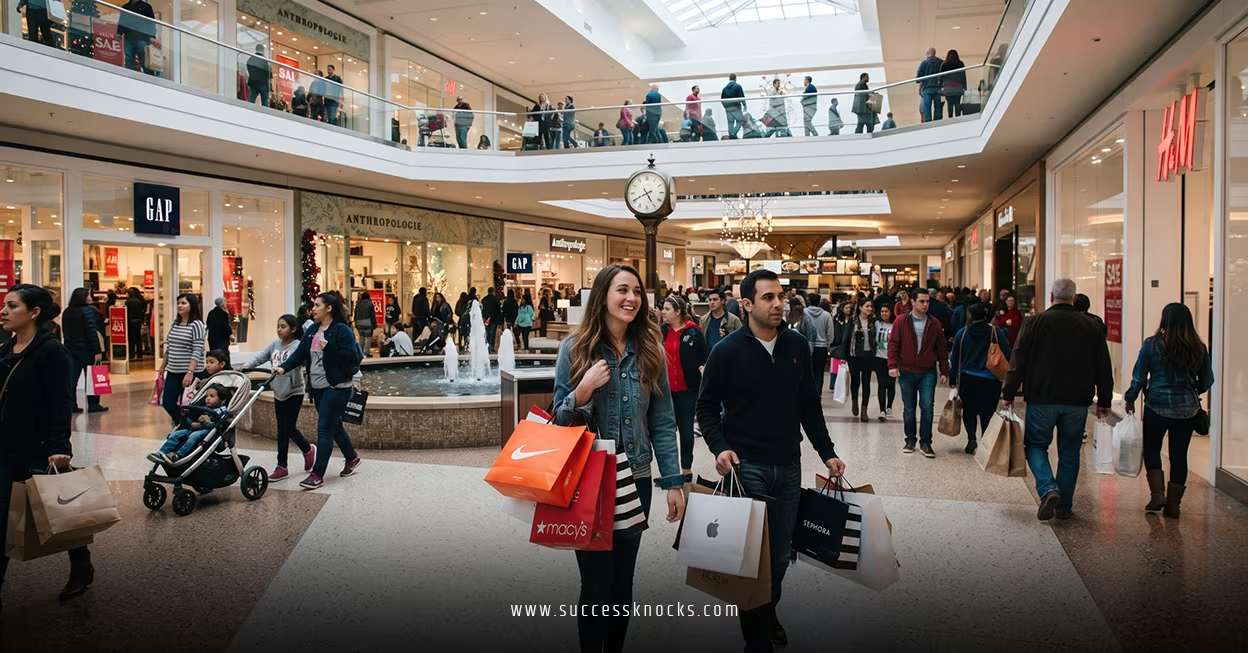
- Retail (in-store vs. online): In-store is making a quiet comeback. Over 35% of shoppers say they plan to shop in physical stores, edging out online shopping at 31%. If you have a bricks-and-mortar presence, lean into it.
- Small Businesses: The opportunity is real. 41% of total consumer spending this holiday season is estimated to go toward small businesses—that’s a $109 billion window, according to Intuit’s 2026 data.
What the US Consumer Spending Forecast August 2026 Means for Your Strategy
So what do you actually do with this information? A few things stand out.
First, lead with value. Consumers are spending, but they want to feel smart about it. Price increases are the number-one reason shoppers say they’d abandon a retailer they otherwise like. Be transparent about pricing and give people a reason to feel the purchase is worth it.
Second, target the right customer. If your product or service appeals to higher-income buyers, now is a strong time to invest in marketing—this group is active and confident. If you serve a budget-conscious audience, emphasize deals, bundles, and loyalty rewards.
Third, prep for the holiday run-up early. August is the unofficial starting gun for Q4 planning. Last year, retail sales grew 4% in value terms, and e-commerce was up close to 8% year-over-year through the holiday weeks. The businesses that captured that growth started planning in summer, not October.
Fourth, watch your own costs. Allianz Research forecasts retail sales volume growth of just ~1% in 2026, with most of the nominal 4% growth coming from higher prices rather than higher unit sales. If you’re passing on cost increases, do it carefully and communicate clearly.
Staying Ahead of the Uncertainty
There are still headwinds worth keeping an eye on: student loan burdens, a slowing housing market, and the lagged effects of tariff inflation that are expected to peak around Q1 2027. None of these are guaranteed to derail spending, but they could create bumps—especially for businesses that haven’t built financial cushions.
The good news? Uncertainty creates gaps. While some competitors freeze, businesses that plan around these conditions tend to come out ahead.
A Quick Note for International Entrepreneurs (UK, AUS, Singapore, Dubai)
If you’re operating in markets outside the US but selling to American consumers or trading in USD-linked goods, the softening in US consumer confidence matters to you too. A cautious US shopper buys fewer imports, delays decisions, and pushes back harder on price. Factor this into your Q3 and Q4 export or e-commerce strategies.
We hope that you have found this article enlightening in some way, and that the US consumer spending forecast August 2026 gives you a clearer picture of what’s ahead for your business. The data is telling a nuanced story—spending is there, but it’s selective, and the businesses that understand why customers are buying (and why they’re holding back) will make sharper decisions. Use August to plan, not just react. Your Q4 depends on it. 🙂