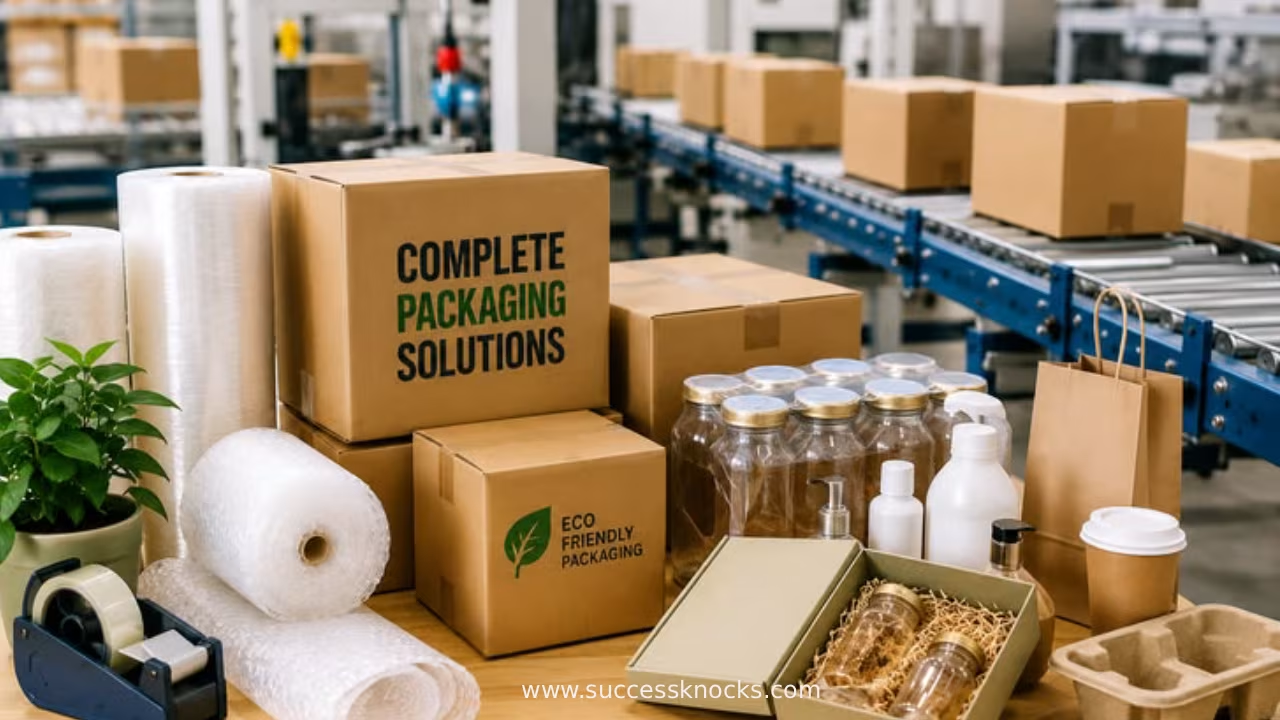
Reusable packaging logistics: return and reuse systems explained is the operational backbone that turns durable containers, mailers, and crates from one-trip waste into multi-trip assets. Without solid reverse logistics, the whole model collapses into higher costs and lost inventory.
- Return and reuse systems collect empty packaging from customers, clean and inspect it, then put it back into circulation.
- They rely on reverse logistics, tracking (QR/RFID), cleaning hubs, and incentives like deposits.
- High return rates (ideally 90%+) determine whether the system beats single-use on cost and impact.
- Models range from customer drop-off and mail-back to coordinated backhaul with next delivery.
- For U.S. e-commerce brands in 2026, these systems are shifting from pilot projects to practical infrastructure.
If you want the bigger picture on building an entire reusable packaging business for online retail, the full guide covers strategy, startup steps, and market positioning.
Here’s the thing: shipping a product in a reusable box is the easy part. Getting that box back, ready for the next order, is where most programs succeed or stall.
How Reusable Packaging Logistics Actually Works
At its core, a return and reuse system is a closed loop. Product goes out in durable packaging. Customer unpacks. Packaging comes back. It gets cleaned, checked, and sent out again.
Two main models dominate e-commerce and retail right now.
Return-from-home relies on the customer folding or collapsing the packaging and mailing it back with a prepaid label, or scheduling a pickup. Providers like RePack pioneered the mail-back approach in Europe; U.S. players adapt similar postal returns or carrier backhauls.
Return-on-the-go asks the customer to drop the empty packaging at a store, reverse-vending machine, or dedicated collection point. Deposit systems or app-based accountability keep participation high.
Many systems now blend both. Flat-fold boxes that fit through a letterbox make postal returns almost as easy as tossing a letter. QR codes or RFID tags let operators track every unit’s location, cycle count, and condition.
Reusable packaging logistics: return and reuse systems explained Cleaning and inspection sit at the center of the loop. Returned items move to a wash facility or in-house station. They get sanitized, quality-checked for damage, and either returned to the active fleet or retired. Tracking data feeds the next decision: which units go where, how many cycles remain, and when to reorder stock.
The entire process is reverse logistics with extra steps. Forward shipping is one-directional. Reuse requires planning the return trip so it doesn’t erase the environmental or cost gains.
Reusable Packaging Logistics: Return and Reuse Systems Explained in Practice
Think of it like a library system for boxes and bags. Customers “borrow” the packaging with their order. The system’s job is to get the asset back into circulation quickly and in usable condition.
Key operational pieces include:
- Unique identification on every unit so you know what is out, where it is, and how many trips it has completed.
- Convenient return options that match how your customers already behave (mailbox, carrier drop-off, next-delivery pickup).
- Centralized or regional cleaning hubs that handle volume efficiently.
- Inventory buffers so you never run short while units are in transit or being washed.
- Clear customer communication and incentives (deposits, reminders, easy instructions).
In my experience, the programs that scale treat packaging as a tracked asset, not a disposable cost. Software that shows “next action needed” for each unit—idle, in transit, washing, ready—beats simple location tracking every time.
For U.S. operators, existing carrier networks and postal infrastructure already handle a large share of returns. The opportunity is piggybacking on those flows instead of building parallel fleets from scratch.
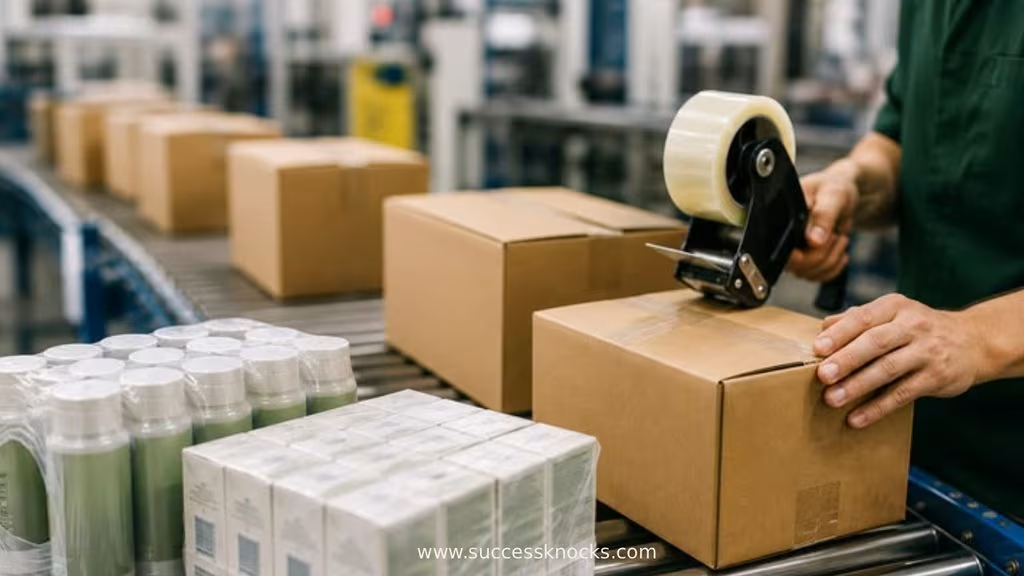
Step-by-Step Action Plan for Setting Up a Return and Reuse System
If you’re starting or upgrading a system, follow this sequence.
- Map your current shipping and return patterns. Look at order volume by region, average package size, and existing product-return rates. High product-return categories (fashion, for example) can piggyback packaging returns more easily.
- Choose the packaging format and ownership model. Decide between brand-owned fleet or network/pool model. Flat-fold designs simplify customer returns. Set target cycle life (how many uses before retirement).
- Design the return path. Prepaid mail labels, carrier drop-off points, coordinated backhaul with next delivery, or store collection. Test convenience first—customers will not go far out of their way.
- Add tracking and incentives. QR or RFID on every unit. Pair with a simple deposit or post-paid accountability so non-returns get charged. Automated reminders improve return speed.
- Build or partner for cleaning and inspection. Decide in-house versus third-party wash facilities. Define pass/fail criteria and sanitation standards.
- Pilot in one region or product line. Measure return rate, average cycle time, loss rate, and cost per use. Adjust before expanding.
- Scale with data. Use cycle counts and location data to right-size inventory and optimize transport routes.
Reusable packaging logistics: return and reuse systems explained What I’d do if I were launching tomorrow: start with a limited SKU set in one metro area, use existing postal returns, and instrument everything with unique IDs from day one. Guesswork kills these systems faster than high cleaning costs.
Comparison of Common Return Models
| Model | How Customer Returns | Typical Strengths | Typical Challenges | Best Fit |
|---|---|---|---|---|
| Mail-back / postal | Fold/collapse + prepaid label into mailbox | High convenience, leverages existing network | Postage cost, variable return speed | National e-commerce |
| Next-delivery backhaul | Leave empty for driver on next stop | Low extra miles, high control | Requires dense delivery routes | Subscription or local delivery |
| Drop-off / RVM / store | Bring to collection point or machine | Immediate refund possible, centralized intake | Customer effort, density of points needed | Retail or dense urban |
| Hybrid | Multiple options offered | Higher overall return rates | More complex tracking and messaging | Growing programs |
Return rates above 90% are the practical floor for most economic models. Lower rates mean you keep buying replacement units and the cost-per-use stays high.
Common Mistakes & How to Fix Them
Underestimating reverse logistics distance is common. If empties travel long dedicated trips, the carbon and cost math can flip against reuse. Fix: design for short loops or piggyback on existing delivery routes.
Skipping unique tracking leads to “lost” inventory that is really just sitting in a customer’s closet or a warehouse corner. Fix: serialize every unit and use simple scan points at outbound, return, wash, and redeploy.
Making the return process harder than the original delivery kills participation. Fix: prioritize customer convenience over operator preference. Flat-fold designs and prepaid labels remove friction.
Ignoring cleaning capacity creates bottlenecks. Units pile up dirty while new orders wait. Fix: size wash capacity to expected return volume plus buffer, or partner early with specialists.
Treating deposits as optional softens accountability. Fix: clear, automatic charging for non-returns within a set window, with easy refund paths.
Why Return Rates and Logistics Efficiency Matter Most
A reusable unit only delivers value after multiple trips. Every lost or delayed unit raises the effective cost. Logistics decisions—how far empties travel, how quickly they return, how reliably they get cleaned—directly control both the environmental outcome and the per-use economics.
U.S. brands face a patchwork of state extended producer responsibility rules and growing retailer pressure for circular options. Systems that already track rotations and can report data are better positioned as those requirements tighten. For a deeper look at the regulatory drivers shaping 2026 decisions, see the dedicated regulations overview in this cluster.
External resources worth bookmarking include guidance from the U.S. Plastics Pact on retail reuse pilots, standards work from the Reusable Packaging Association, and broader packaging frameworks referenced by the U.S. Environmental Protection Agency.
Key Takeaways
- Return and reuse systems succeed or fail on reverse logistics, not on the packaging design alone.
- Aim for return rates of 90% or higher; anything lower keeps costs elevated.
- Customer convenience (mail-back, letterbox-friendly folds, simple drop-off) drives participation more than lectures about sustainability.
- Tracking every unit turns packaging into a manageable asset instead of a black hole.
- Cleaning and inspection capacity must match expected volume or the loop stalls.
- Start small, measure cycle time and loss rate, then expand.
- Hybrid return options usually outperform single-path systems.
- Data on rotations and location is becoming as important as the physical packaging itself.
Reusable packaging logistics: return and reuse systems explained is not abstract theory. It is the practical difference between a pilot that looks good in a press release and a system that actually lowers cost per shipment while cutting waste. Get the return path right, instrument the assets, and treat every unit like inventory that needs to come home. That’s the work that compounds.
Next step: audit one high-volume shipping lane this week. Map current return options, estimate realistic return rates under a deposit or reminder system, and decide whether a mail-back pilot or partner network makes more sense for your density. The data from that single lane will tell you more than any high-level report.
FAQs
What is the biggest operational hurdle in reusable packaging logistics: return and reuse systems explained?
Getting packaging back reliably and quickly. Design, cleaning standards, and customer messaging all matter, but low or slow returns destroy the economics faster than almost any other factor.
How do return rates affect the viability of reusable packaging logistics?
High return rates (90%+) allow each unit to complete enough cycles to undercut single-use costs. Lower rates force continuous replacement purchases and raise the true cost per use.
Can small U.S. e-commerce brands run their own return and reuse systems?
Yes, especially with mail-back models and third-party cleaning partners. Start with limited geography or SKUs, add unique IDs early, and keep the customer return step as frictionless as possible.