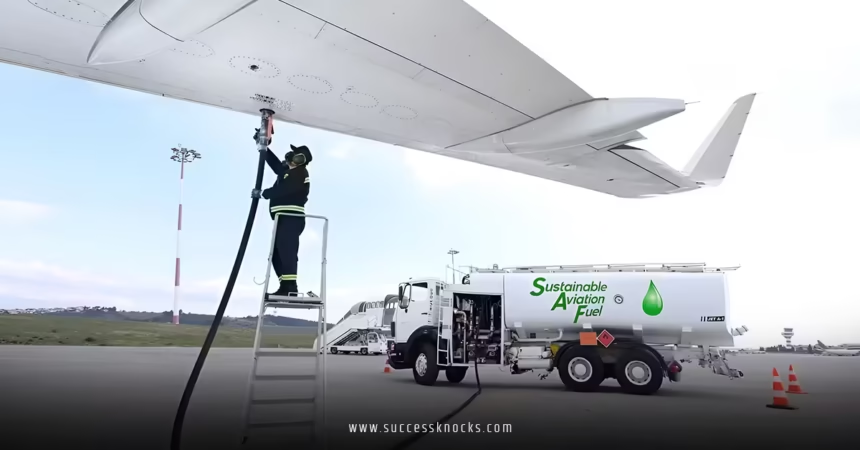
Sustainable aviation fuel production methods are revolutionizing how we power the skies, turning everyday waste into high-octane jet fuel that slashes carbon emissions. If you’ve ever wondered how airlines like Delta are greening their fleets, these methods are the secret sauce.
Picture this: your next long-haul flight humming along on fuel brewed from cooking oil or captured CO2, not ancient dinosaurs. Sustainable aviation fuel production methods make that reality, offering up to 80% lower lifecycle emissions than traditional jet fuel. From startups to giants, the industry’s buzzing because aviation needs this now—it’s 2% of global CO2, and growing. In this guide, we’ll break down the top methods, their pros, cons, and real-world wins, all in plain English.
Why Sustainable Aviation Fuel Production Methods Matter Now
Aviation’s dirty secret? Jet fuel from fossil sources belches greenhouse gases. Enter SAF, certified by ASTM to drop into existing engines—no mods required. Sustainable aviation fuel production methods use renewables like biomass, waste oils, or synthetics, certified sustainable to avoid deforestation pitfalls.
By 2030, we need 10 billion gallons yearly for net-zero goals. Today’s output? A measly 1 million. These methods bridge the gap, with costs tumbling from $10/gallon to potentially $3 as scale hits. Governments fuel the fire—U.S. tax credits, EU mandates—making SAF economically viable.
The Urgency: Emissions and Scalability
Rhetorical question: Can electric planes replace Boeing 777s? Nope, batteries weigh too much. SAF wins because it’s energy-dense and scalable. Methods vary by feedstock, but all chase that holy grail: abundant, cheap inputs without food-vs-fuel wars.
Key Sustainable Aviation Fuel Production Methods Explained
Diving deep, here are the star players in sustainable aviation fuel production methods. Each has unique tech, feedstocks, and trade-offs—think of them as recipes in a green cookbook.
1. Hydroprocessed Esters and Fatty Acids (HEFA)
HEFA is the current champ, powering 90% of today’s SAF. How? Take waste oils (used cooking grease, animal fats) and hydrotreat them: hydrogen strips oxygen, yielding hydrocarbons mimicking Jet A.
Process Breakdown:
- Feedstock: Lipids from restaurants, slaughterhouses.
- Steps: Pretreatment → Hydrodeoxygenation → Isomerization → Fractionation.
- Yield: 40-50% jet fuel from input mass.
Pros? Proven—Neste churns millions of gallons. Cons? Feedstock limits; oils compete with biodiesel. Output: Low aromatics, super clean burn.
Delta’s loving HEFA in their Delta Air Lines 2026 sustainable aviation fuel initiatives, blending it fleet-wide.
2. Fischer-Tropsch (FT) Synthesis
FT is like industrial magic: gasify solid biomass (wood chips, crop residues) into syngas (CO + H2), then catalyze into liquids. Developed in WWII for Nazi tanks, now greenwashed for skies.
Core Steps:
- Gasification: Heat biomass sans oxygen.
- Cleaning: Scrub impurities.
- FT Reactor: Cobalt/iron catalysts polymerize syngas.
- Upgrading: Hydrocrack to jet specs.
Yields 20-30% jet fuel. Pros: Handles trashy feedstocks, no food conflict. Cons: Energy-hungry, pricey catalysts. Fulcrum BioEnergy’s plants hit commercial scale.
3. Alcohol-to-Jet (ATJ)
Sugars or alcohols (ethanol, isobutanol) ferment, dehydrate, oligomerize into jet-range chains. LanzaJet’s pathway shines, using fermented sugars.
Workflow:
- Fermentation: Crops/waste to alcohols.
- Dehydration: Alcohols → olefins.
- Oligomerization: Build long chains.
- Hydrogenation: Stabilize.
Pros: Sugar abundance, co-products like diesel. Cons: Water-intensive. Gevo’s corn-based ATJ powers test flights.
4. Power-to-Liquid (PtL) or Electrofuels
Future-forward: Use renewable electricity to split water (H2) + capture CO2, synthesize via FT or methanol routes. Infinite feedstock—air’s CO2!
Steps:
- Electrolysis: Green H2.
- CO2 Capture: Direct air or industrial.
- Synthesis: Reverse combustion.
Pros: Truly carbon-neutral, unlimited scale. Cons: Solar/wind dependency, high energy (4x fossil). Prometheus Fuels pilots this.
5. Alcohol-to-Jet Syntroleum (ATJ-S) and Others
Emerging stars: Catalytic hydrothermolysis (CH)—lipids + steam → biojet. Pyrolysis oils upgraded. Each tweaks for higher yields.
| Method | Feedstock | Yield (Jet %) | Maturity | Cost ($/gal est.) |
|---|---|---|---|---|
| HEFA | Oils/Fats | 40-50 | Commercial | 3-5 |
| FT | Biomass | 20-30 | Demo | 5-7 |
| ATJ | Sugars/Alcohols | 30-40 | Commercial | 4-6 |
| PtL | CO2/H2 | 15-25 | Pilot | 7-10 |
Challenges in Sustainable Aviation Fuel Production Methods
No silver bullet here. Feedstock scarcity bites—global waste oils top 5 billion gallons, but aviation craves more. Costs? Still premium, though IRA credits help.
Energy intensity plagues FT/PtL; water use nags ATJ. Certification drags—new pathways need years. Supply chains? Rural biomass logistics cost big.
Solutions on the Horizon
Innovation attacks: Enzyme tech boosts yields 20%. Modular plants cut capex. Policy? Biden’s $3B hub grants turbocharge U.S. output.
Real-World Applications and Case Studies
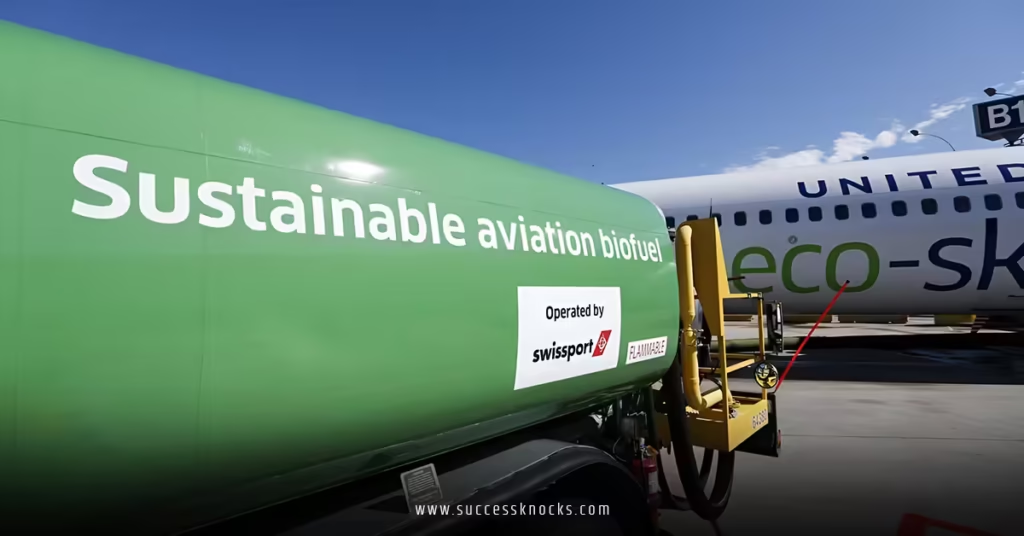
Airlines aren’t waiting. United’s HEFA-powered LAX-SFO flights. Lufthansa’s PtL tests. Production? World Energy’s Paramount plant hits 170M gallons/year.
Economically, SAF unlocks premiums—buyers pay 2-3x for green cred. Jobs? 100,000 by 2030 per IATA.
The Path Forward for Sustainable Aviation Fuel Production Methods
Sustainable aviation fuel production methods evolve fast—hybrids like HEFA+FT loom. By 2026, expect 2B gallons globally. Your role? Demand it; vote with wallets.
Wrapping up, from HEFA’s oily prowess to PtL’s futuristic flair, sustainable aviation fuel production methods pave aviation’s green runway. They’re not perfect, but they’re flying us toward net-zero. Next flight, think SAF—and soar cleaner.
Frequently Asked Questions (FAQs)
What are the most common sustainable aviation fuel production methods?
HEFA and ATJ lead, using oils and alcohols for quick, scalable sustainable aviation fuel production methods.
How do sustainable aviation fuel production methods reduce emissions?
By recycling carbon from renewables, these methods cut lifecycle CO2 by 50-80% versus fossil jet fuel.
Which sustainable aviation fuel production method is cheapest?
HEFA edges out at $3-5/gallon, but PtL could win long-term in sustainable aviation fuel production methods.
Can all sustainable aviation fuel production methods use waste?
Yes—FT and pyrolysis excel with biomass waste, key to circular sustainable aviation fuel production methods.
What’s the future of sustainable aviation fuel production methods?
PtL scales with cheap renewables, targeting 100% synthetic SAF by 2050.